


The viability of a US-backed proposal to wind down the eight-month-long war in Gaza was cast into doubt yesterday after Israeli Prime Minister Benjamin Netanyahu said he would only be willing to agree to a “partial” ceasefire deal that would not end the war, comments that sparked an uproar from families of hostages held by Hamas.
In an interview broadcast late on Sunday on Israeli Channel 14, the Israeli leader said he was “prepared to make a partial deal — this is no secret — that will return to us some of the people,” referring to the roughly 120 hostages still held in the Gaza Strip.
“But we are committed to continuing the war after a pause, in order to complete the goal of eliminating Hamas. I’m not willing to give up on that,” he added.

Photo: Bloomberg
Netanyahu’s comments did not deviate dramatically from what he has said previously about his terms for a deal, but they come at a sensitive time as Israel and Hamas appear to be moving further apart over the latest ceasefire proposal.
Netanyahu’s comments stood in sharp contrast to the outlines of the deal detailed late last month by US President Joe Biden, who framed the plan as an Israeli one and which some in Israel refer to as “Netanyahu’s deal.”
The three-phased plan would bring about the release of the remaining hostages in exchange for hundreds of Palestinians imprisoned by Israel, but disputes and mistrust persist between Israel and Hamas over how the deal plays out.
Hamas has insisted it would not release the remaining hostages unless there is a permanent ceasefire and a full withdrawal of Israeli forces from Gaza.
In the interview, Netanyahu said that the current phase of fighting is ending, setting the stage for Israel to send more troops to its northern border to confront the Lebanese militant group Hezbollah, in what could open up a new war front.
However, he said that did not mean the war in Gaza was over.
Hamas said that Netanyahu’s comments represented “unmistakable confirmation of his rejection” of the US-supported deal. In a statement late on Sunday, the Palestinian militant group said his position was “in contrast” to what the US administration said that Israel had approved.
The group said that its insistence that any deal should include a permanent ceasefire and the withdrawal of all Israeli forces out of the entire Gaza Strip “was an inevitable necessity to block Netanyahu’s attempts of evasion, deception and perpetuation of aggression and the war of extermination against our people.”
Netanyahu shot back and in a statement from his office said Hamas opposed a deal.
He said Israel would not withdraw from Gaza until all 120 hostages are returned.

Taiwan Semiconductor Manufacturing Co (TSMC, 台積電), the world’s largest foundry service provider, yesterday said that global semiconductor revenue is projected to hit US$1.5 trillion in 2030, after the figure exceeds US$1 trillion this year, as artificial intelligence (AI) demand boosts consumption of token and compute power. “We are still at the beginning of the AI revolution, but we already see a significant impact across the whole semiconductor ecosystem,” TSMC deputy cochief operating officer Kevin Zhang (張曉強) said at the company’s annual technology symposium in Hsinchu City. “It is fair to say that in the past decade, smartphones and other mobile devices were
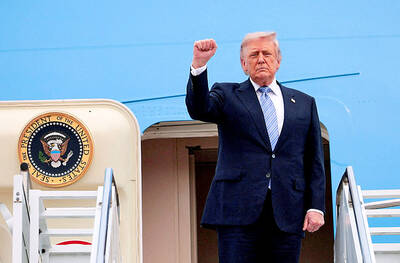
US-CHINA SUMMIT: MOFA welcomed US reassurance of no change in its Taiwan policy; Trump said he did not comment when Xi talked of opposing independence US President Donald Trump yesterday said he has not made a decision on whether to move forward with a major arms package for Taiwan after hearing concerns about it from Chinese President Xi Jinping (習近平). Trump’s comments on Taiwan came as he flew back to Washington after wrapping up critical talks in which both leaders said important progress was made in stabilizing US-China relations even as deep differences persist between the world’s two biggest powers on Iran and Taiwan. “I will make a determination,” Trump said, adding: “I’ll be making decisions. But, you know, I think the last thing we need right

TAIWAN ISSUE: US treasury secretary Scott Bessent said on the first day of meetings that ‘it wouldn’t be a US-China summit without the Taiwan issue coming up’ There were no surprises on the first day of the summit between US President Donald Trump and Chinese President Xi Jinping (習近平), the Mainland Affairs Council (MAC) said yesterday, as the government reiterated that cross-strait stability is crucial to the Asia-Pacific region, as well as the world. As the two presidents met for a highly anticipated summit yesterday, Chinese state media reported that Xi warned Trump that missteps regarding Taiwan could push their two countries into “conflict.” Trump arrived in China with accolades for his host, calling Xi a “great leader” and “friend,” and extending an invitation to visit the White House
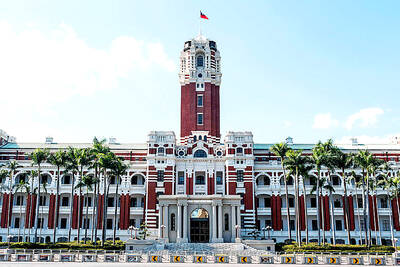
SECURITY: Taipei presses the US for arms supplies, saying the arms sales are not only a reflection of the US security commitment to Taiwan but also serve as a mutual deterrent against regional threats Taiwan is committed to preserving the cross-strait “status quo” and contributing to regional peace and stability, the Presidential Office said yesterday. “It is an undeniable fact that the Republic of China is a sovereign and independent democratic nation,” Presidential Office spokeswoman Karen Kuo (郭雅慧) reiterated, adding that Beijing has no right to claim sovereignty over Taiwan. The statements came after US President Donald Trump warned against Taiwanese independence. Trump wrapped up a state visit to Beijing on Friday, during which Chinese President Xi Jinping (習近平) had pressed him not to support Taiwan. Taiwan depends heavily on US security backing to deter China from carrying


 RSS
RSS