


Indian Prime Minister Narendra Modi yesterday readied to unveil his coalition government after a surprise election setback lost his Hindu-nationalist party an overall majority.
The 71 members of his government took the oath of office after Modi on Sunday, with 11 posts going to coalition allies who extracted them in exchange for their support — including five in the top 30 Cabinet posts.
There are no Muslim lawmakers among his third-term lineup, unlike his past two governments, both formed after his right-wing Bharatiya Janata Party (BJP) won a majority. Modi’s decade as prime minister has seen him cultivate an image as an aggressive champion of the nation’s majority Hindu faith, worrying minorities, including the country’s 200-million-plus Muslim community.
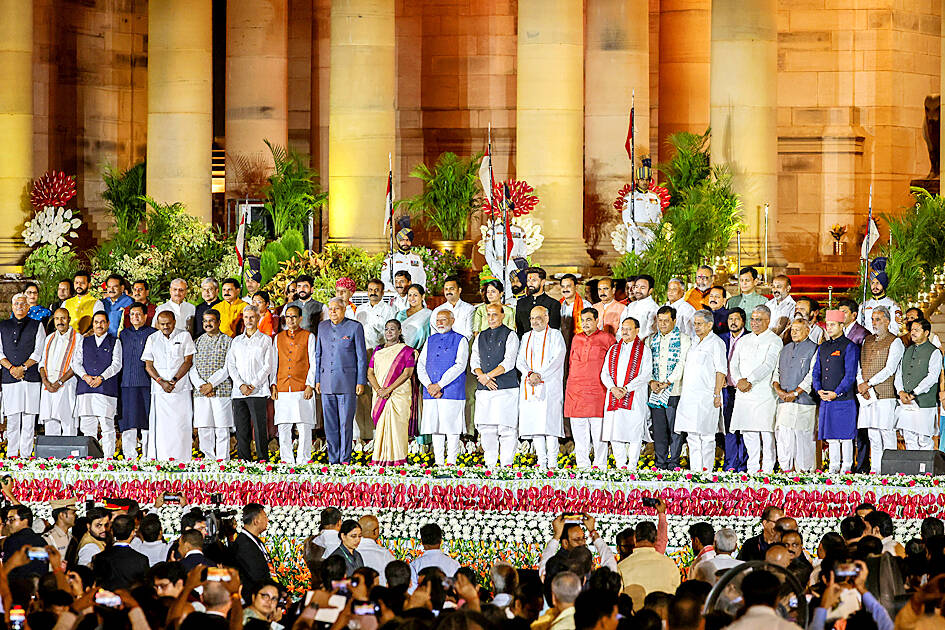
Photo: EPA-EFE
“Honoured to serve Bharat,” he posted on social media after being sworn into office, using the nation’s name in Sanskrit, a word dating back to ancient Hindu scriptures.
Modi had been forced into quick-fire talks with coalition partners in the National Democratic Alliance, whose 293 seats guaranteed him the parliamentary numbers to govern.
The portfolios assigned to each Cabinet member have not been released, but Modi called his council of ministers “a great blend of youth and experience.”
Indian media reported that Modi was to hold his first Cabinet meeting last night, although there was no official confirmation.
The BJP old guard dominate the list, including Rajnath Singh, Amit Shah, Nitin Gadkari and Nirmala Sitharaman — defense, interior and transport and finance ministers in his last government respectively.
Powerful BJP President Jagat Prakash Nadda is also included in the Cabinet.
Earlier yesterday, Modi took his first action, approving the latest tranche of a cash handout for 93 million farmers. Two-thirds of India’s 1.4 billion people draw their livelihood from agriculture, which accounts for nearly one-fifth of the nation’s GDP.
Two posts were handed to each of the largest coalition members, the Telugu Desam Party, from Andhra Pradesh, and the Janata Dal (United) party of Bihar.

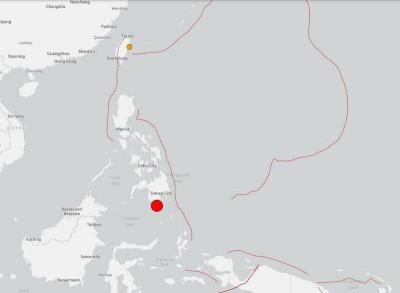
A magnitude 7.8 earthquake struck off the southern coast of Mindanao in the Philippines at 7:38am today, prompting the US Tsunami Warning System to issue an alert for neighboring countries, including Taiwan. The system issued a purple alert indicating a "tsunami threat." The potential threat zone includes Taiwan, the Philippines, Papua New Guinea, Yap and Palau. There were no immediate reports of major damage in the Philippines or Indonesia. The quake struck at a depth of 10km, said the German Research Centre for Geosciences, which had earlier pegged the earthquake at magnitude 8.2. Phivolcs, the Philippine agency, said the quake was magnitude 7 and

RESILIENCE: Taiwan plays a key role in semiconductors, energy, information infrastructure and advanced manufacturing, AIT Director Raymond Greene said Taiwan’s continued investment in deterrence and resilience remains vital, especially in uncrewed systems and other emerging technologies, American Institute in Taiwan (AIT) Director Raymond Greene said yesterday. Greene made the remarks at the annual National Strategic Summit on Supply Chain Resilience held by the Research Institute for Democracy, Society and Emerging Technology (DSET), a government-backed think tank. As Taiwan last year became the US’ fourth-largest trading partner and supply chain security is becoming more important, cooperation in emerging technologies continues to deepen between the two countries, he said. The US is committed to accelerating innovation, building key infrastructure, strengthening cooperation

The National Chungshan Institute of Science and Technology yesterday showcased its locally developed variants of the Vision 60 robotic patrol dog, which it plans to deploy on the nation’s outlying territories in the South China Sea. The variants were produced under the Joint Lab project — created by the institute and domestic companies — and assembled with domestically produced motors, lenses and artificial intelligence (AI) systems alongside licensed tech from the US, Missile and Rocket Systems Research Division deputy director Jen Kuo-kang (任國光) told the media event at a military base in Taipei’s Dazhi (大直) area. Taiwan has built up its strengths
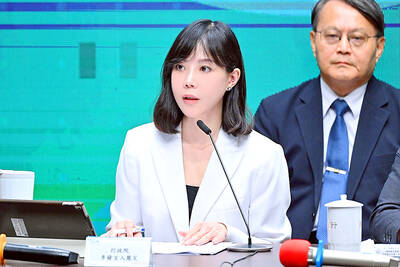
RIGHT DIRECTION: Taiwan’s efforts to prevent forced labor include a proposal to ‘fully prohibit’ employers from withholding workers’ documents, an official said Taiwan is to establish a mechanism to restrict imports of goods linked to forced labor, the Executive Yuan said yesterday, after the US proposed imposing additional tariffs on Taiwanese goods over labor concerns. “The Ministry of Labor and the Ministry of Economic Affairs are to establish an interministerial review procedure,” Executive Yuan spokesperson Michelle Lee (李慧芝) said at a news briefing in Taipei. “The government is to use the Foreign Trade Act [貿易法] as the legal basis to restrict imports of goods produced with forced labor” and bring its supply chain governance more in line with international standards on human rights, resilience


 RSS
RSS