

The Solomon Islands is next week expected to call a national election for April, with China security ties emerging as a key issue as political parties launch campaigns in the Pacific Islands nation.
Solomon Islands Prime Minister Manasseh Sogavare switched diplomatic ties from Taiwan to China soon after the 2019 election that brought him to power, later forging a security pact with Beijing that alarmed Washington and Canberra, and set off a race for influence in the strategically located Pacific Islands.
Opposition United Party political wing leader Peter Kenilorea Jr said that he wanted the China security pact reviewed, and would also seek to re-establish diplomatic ties with Taiwan, the Solomon Star newspaper reported yesterday.
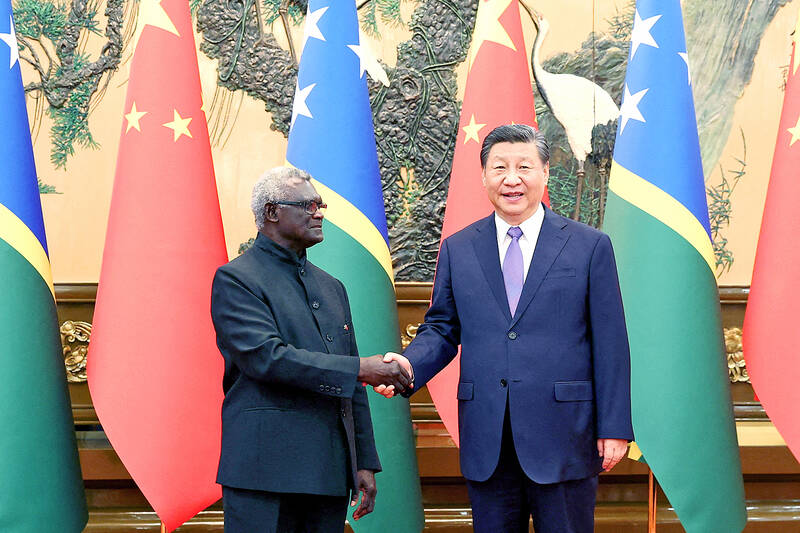
Photo: Reuters
Opposition leader Matthew Wale said at a campaign launch for a coalition of democratic parties that a referendum could be held to decide the Solomon Islands’ relationship with China.
“China is a super power both militarily and economically, and there is much also to be gained from a relationship with China... We need to see what our national interest is,” Wale said at the livestreamed event.
He criticized Sogavare for not consulting the provinces before switching ties to China, which led to the largest province, Malaita, refusing to cooperate with Beijing for several years.
“The possibility of a referendum is a very real possibility to decide it once and for all,” Wale said.
At his campaign launch, Sogavare pointed to the Pacific Games held in Honiara, with stadiums donated by China, as a major achievement.
His party pledged to “strengthen the relationship with China through a ‘look North’ foreign policy, while nurturing ties with other traditional partners such as Australia,” a statement said.
The election is officially to be called by the Solomon Islands governor-general on Tuesday next week.
Wale said that April 17, which is expected to be the polling date, would be “a day for accountability,” after Sogavare had “prioritized Pacific Games over medicines.”
Honiara’s operating theaters leaked in the rain and patients slept on the floor at the hospital, he said.
In his campaign speech, Wale was critical of “elite capture.”
“We have a government that is not controlled by Solomon Islanders... A government that receives money to make sure that the status quo continues,” he said.
Wale did not name China in the speech, but the Prime Minister’s Office previously confirmed that China had provided US$2.49 million for a fund spent at Sogavare’s discretion, with payments made to 39 out of 50 lawmakers.
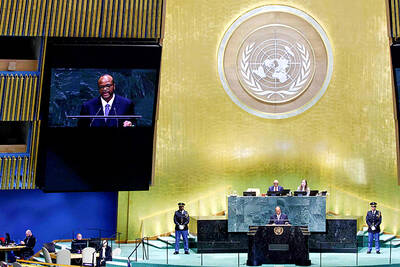
UNITY: Lai thanked the nations who spoke up for Taiwan, saying that democracies must stand together to face global authoritarian expansion Taiwan yesterday thanked eight European and Indo-Pacific countries for opposing unilateral changes to the “status quo” in the Taiwan Strait in a joint statement earlier this week, as well as three of Taiwan’s allies for speaking up for the nation’s participation in the UN at the body’s General Assembly in New York. Minister of Foreign Affairs Lin Chia-lung (林佳龍) welcomed the support and expressed his appreciation for the countries’ stance, the Ministry of Foreign Affairs said in a statement. Foreign ministers and senior representatives of Australia, France, Germany, Japan, New Zealand, Poland, South Korea and the UK issued a statement on Tuesday
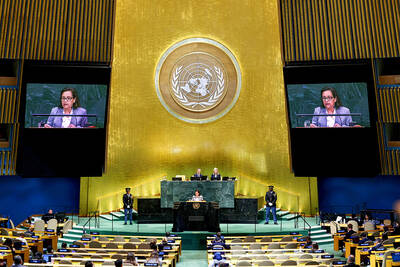
PLEA: How the UN addresses Taiwan’s security issue would be a test of its strength and relevance, Marshall Islands President Hilda Heine told the UN General Assembly Only Taiwan’s elected government can represent the people of Taiwan, Marshall Islands President Hilda Heine said on Friday at the UN General Assembly, calling for the nation’s inclusion in the UN. Taiwan and its 23 million people are a reality, and only its democratically elected government can represent it, Heine said when addressing the 81st session of the UN General Assembly General Debate. Appropriate ways must be found for Taiwan’s substantive participation in UN meetings if the UN is to be truly inclusive and effective in years to come, she said. UN member states would experience pressure to accept a
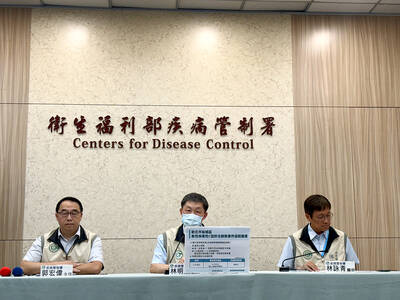
AT-RISK GROUPS: Of the accumulated 1,586 severe cases and 304 related deaths in this flu season, 65.8% were older people and 83.2% had chronic diseases, an official said The Centers for Disease Control (CDC) yesterday said that 165 severe flu cases and 30 flu-related deaths were reported last week, the highest weekly numbers in this flu season, and that cases might continue to increase, urging people to take precautions. Medical visits for flu-like illnesses increased by 1.4 percent to 141,374 last week, with 11.8 percent being emergency visits, showing that the seasonal flu is still in its epidemic period, CDC Epidemic Intelligence Center Director Guo Hung-wei (郭宏偉) said. From Tuesday last week to Monday, 165 severe flu cases and 30 flu-related deaths were confirmed, the highest weekly numbers
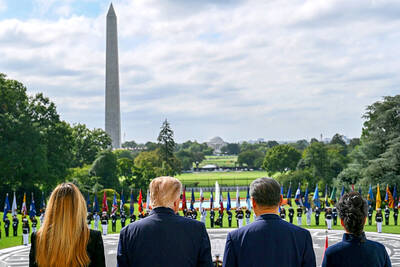
FACTS DISTORTION: The MAC rejected Xi’s remarks that the US and ‘China’ fought side-by-side during WWII, saying the ROC was Washington’s true ally during the war Taiwan yesterday denounced Chinese President Xi Jinping’s (習近平) comments to US President Donald Trump on the nation’s future, after Xi appeared to push Trump for a subtle change in stance that could erode US support for Taiwan. Xi told Trump in Washington on Thursday that he hoped the US would adhere to the “correct position” of opposing Taiwanese independence, according to a Chinese readout of the talks. That would be a tougher version of Washington’s long-standing formulation that it does not “support” independence. There was no immediate White House readout of the exchange. Xi’s remarks represent “the consistent Chinese approach of distorting facts


 RSS
RSS