


The Chinese Communist Party’s (CCP) deployment of warplanes and ships on frequent military exercises near Taiwan as well as spy balloons is aimed at intimidating Taiwan and restricting its defense space, a report by the Mainland Affairs Council (MAC) on China in the fourth quarter of last year said.
Chinese President Xi Jinping (習近平) had denied that Beijing plans to invade Taiwan by 2027 or 2035 at a meeting with US President Joe Biden on the sidelines of the APEC meeting in San Francisco in November last year, the report said.
Since that meeting, the US and China have pursued a series of initiatives on diplomacy, strategy, the economy, climate change and combating illegal drugs, showing that both sides are mending fences and keeping channels of dialogue open, it said.
China last year faced a series of natural disasters, including earthquakes, heavy snowfall and mining accidents, which severely tested its emergency response capabilities and social stability, it said.
The country met its projected 5.2 percent economic growth for last year, but exports and foreign investments lagged, while local debt rose 25.6 percent, indicating growing financial risks, it said.
For this year, most analysts forecast that Chinese GDP would grow between 4 and 5 percent, it said.
The CCP’s Central Financial Work Commission said that strengthening party leadership, instituting financial oversight, and focusing on resolving the nation’s real-estate and local government debt issues would help negate risk, the report said.
On the social front, the report said that the number of workers demanding payment of overdue salaries from companies and governments was more than the sum of individuals demanding the same thing over the past three years.
Rising unemployment among young Chinese has given rise to terms such as “full-time children” or “delayed employment” in a silent rebuke of society’s failure, the report said.
The CCP’s pilot free-trade zones in Xinjiang and its most recent white paper on Tibet, issued on Nov. 10 last year are Beijing’s attempts to counter international criticism about its policies in the two regions, it said.
Separately, the report said that 47 high-ranking CCP members were investigated by the party last year, exceeding the number in 2022.
Last year also saw many generals and other figures in the defense industry stripped of their positions as National People’s Congress deputies or eligibility to attend the Chinese People’s Political Consultative Conference, it said.
To boost the nation’s diplomatic profile, Xi in December issued “six musts,” which include increasing Chinese influence by meeting with other heads of state or top government figures and setting a target of receiving more than 100 foreign guests from 70 countries this year, the report said.
Additional reporting by Chen Yu-fu
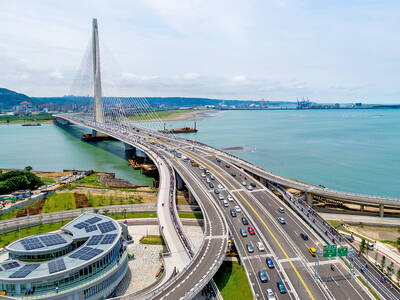
The Ministry of Transportation and Communications yesterday inaugurated the Danjiang Bridge across the Tamsui River in New Taipei City, saying that the structure would be an architectural icon and traffic artery for Taiwan. Feted as a major engineering achievement, the Danjiang Bridge is 920m long, 211m tall at the top of its pylon, and is the longest single-pylon asymmetric cable-stayed bridge in the world, the government’s Web site for the structure said. It was designed by late Iraqi-British architect Zaha Hadid. The structure, with a maximum deck of 70m, accommodates road and light rail traffic, and affords a 200m navigation channel for boats,
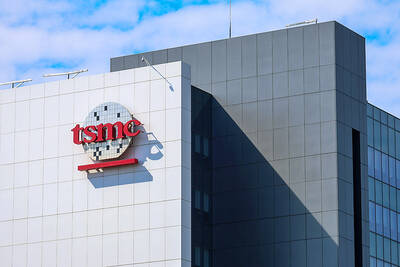
Taiwan Semiconductor Manufacturing Co (TSMC, 台積電), the world’s largest foundry service provider, yesterday said that global semiconductor revenue is projected to hit US$1.5 trillion in 2030, after the figure exceeds US$1 trillion this year, as artificial intelligence (AI) demand boosts consumption of token and compute power. “We are still at the beginning of the AI revolution, but we already see a significant impact across the whole semiconductor ecosystem,” TSMC deputy cochief operating officer Kevin Zhang (張曉強) said at the company’s annual technology symposium in Hsinchu City. “It is fair to say that in the past decade, smartphones and other mobile devices were
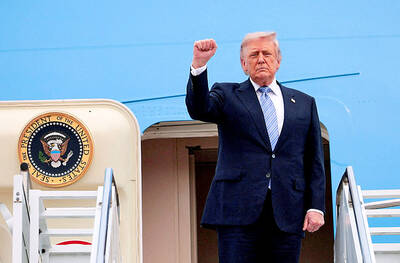
US-CHINA SUMMIT: MOFA welcomed US reassurance of no change in its Taiwan policy; Trump said he did not comment when Xi talked of opposing independence US President Donald Trump yesterday said he has not made a decision on whether to move forward with a major arms package for Taiwan after hearing concerns about it from Chinese President Xi Jinping (習近平). Trump’s comments on Taiwan came as he flew back to Washington after wrapping up critical talks in which both leaders said important progress was made in stabilizing US-China relations even as deep differences persist between the world’s two biggest powers on Iran and Taiwan. “I will make a determination,” Trump said, adding: “I’ll be making decisions. But, you know, I think the last thing we need right
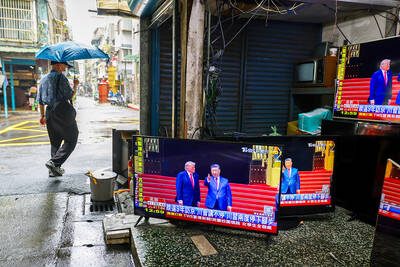
TAIWAN ISSUE: US treasury secretary Scott Bessent said on the first day of meetings that ‘it wouldn’t be a US-China summit without the Taiwan issue coming up’ There were no surprises on the first day of the summit between US President Donald Trump and Chinese President Xi Jinping (習近平), the Mainland Affairs Council (MAC) said yesterday, as the government reiterated that cross-strait stability is crucial to the Asia-Pacific region, as well as the world. As the two presidents met for a highly anticipated summit yesterday, Chinese state media reported that Xi warned Trump that missteps regarding Taiwan could push their two countries into “conflict.” Trump arrived in China with accolades for his host, calling Xi a “great leader” and “friend,” and extending an invitation to visit the White House


 RSS
RSS