


The military four times last month drove away Chinese forces attempting to approach the nation’s sensitive contiguous zone in a ramped-up campaign by Beijing to “intimidate” voters before key elections, security officials said.
Officials have repeatedly said that China is trying to sway voters toward candidates seeking closer ties with Beijing, which has framed the Jan. 13 presidential and legislative elections as a choice between “peace and war” and urged Taiwanese to make the “right choice.”
Over the past four years, Taiwan has reported regular Chinese military incursions.
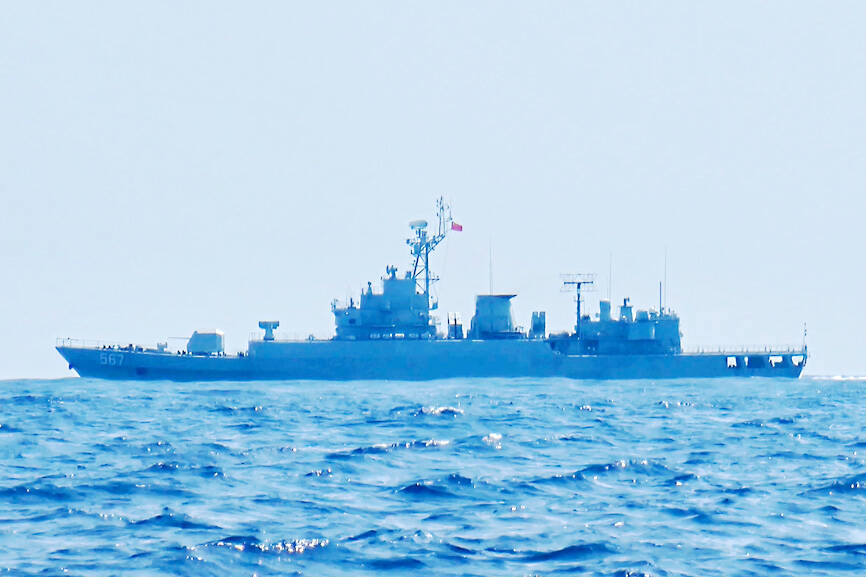
Photo: Screen grab from Taiwan ADIZ Facebook page
China has stepped up such missions as election campaigning has kicked into high gear, security officials and Taipei-based diplomats have said.
Last month, China’s air and naval forces staged four coordinated maneuvers that appraoched Taiwan’s contiguous zone, which is 24 nautical miles (44km) from its coast, said multiple security officials and an internal Taiwanese memo summing up China’s activities.
The Chinese military maneuvers were part of a “multi-front campaign of voting interference” that included exchange activities with Taiwanese politicians and the spread of misinformation to sway public opinion, the memo said.
The contiguous zone drills were “simulating an intrusion and testing the response of our national military,” said one of the officials, who asked to remain anonymous because of the sensitivity of the matter.
Taiwan dispatched forces to drive the Chinese away, the source said.
China’s Taiwan Affairs Office and Ministry of National Defense did not respond to requests for comment.
Chinese activities last month also included balloons that crossed the median line in the Taiwan Strait for two days in a row, as well as marine research ships approaching close to the contiguous zone off Taiwan’s eastern and western shores, the officials said.
A Chinese commercial tugboat also entered Taiwan’s territorial waters in the south, which are 12 nautical miles from its coast, they said.
“Through these military and non-military [maneuvers], they were making a statement that they can do something to Taiwan anytime while keeping the tensions up,” an official said. “It is evident psychological warfare. They are spreading the message of peace and war every day.”
A second official described the Chinese maneuvers as part of Beijing’s escalating campaign of “gray zone” warfare, seeking to wear Taiwan down with repeated drills and to “intimidate” voters.
“They want to make it look like their prophecy might come true,” the person said, referring to the narrative that if the Democratic Progressive Party (DPP) stays in power, a war with China is likely.
Vice President William Lai (賴清德), the DPP’s presidential candidate, and DPP vice presidential candidate Hsiao Bi-khim (蕭美琴) are leading in the polls. China has rebuffed Lai’s offers of talks.
The Ministry of National Defense said that 12 Chinese fighter jets and a suspected weather balloon had crossed the median line last week.
Taiwan on Monday sent its forces to monitor a Chinese carrier strike group, led by the aircraft carrier Shandong, sailing through the Taiwan Strait.

‘NO SECURITY RISK’: The Railway Bureau reassured the public that the technicians’ activities were limited to technical guidance and did not involve sensitive systems The Railway Bureau yesterday said it had invited eight Chinese technicians to assist with an airport MRT construction project. The bureau issued the confirmation after an Internet user said Chinese nationals had entered the construction zone of Taiwan Taoyuan International Airport’s Terminal 3 project. They asked why “individuals from an enemy state” were allowed access to such a major national infrastructure project, which raised serious concerns over Taiwan’s industrial safety, sensitive systems and information security. The bureau’s Northern Region Engineering Branch Office said subcontractor Taiwan Handle Industrial Co (台灣手把工業) of the Taoyuan airport MRT’s “Contract No. CU05 Project A14 Station Civil, MEP &

A US uncrewed surface vessel (USV) encountered multiple Chinese warships during an autonomous transit of the Taiwan Strait, US defense company Seasats said in a statement on Wednesday. Seasats announced that a Lightfish USV had completed the first autonomous transit of the Taiwan Strait. Over five days, the USV traversed the entire length of the Strait while constantly monitoring surface vessel traffic, the company said. The Lightfish encountered multiple Chinese warships, one of which was a Chinese People’s Liberation Army Navy (PLAN) Type 056 corvette, it said. The Chinese vessels were operating “well within Taiwan’s exclusive economic zone without transmitting their identity via the
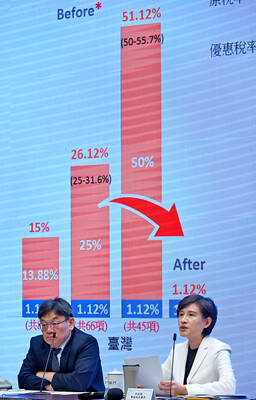
GREATER REACH? Auto parts and wood products would face tariffs of up to 15%, matching those targeting the EU, Japan and South Korea, Vice Premier said The US has announced that preferential tariff treatment for Taiwan’s non-semiconductor Section 232 goods would take effect retroactively from May 1, the Executive Yuan said yesterday. The US government yesterday posted a notice on the Federal Register’s public inspection Web site previewing tariff concessions for Taiwan under a memorandum of understanding (MOU) on Taiwan-US investment after two months of negotiations. The MOU signed on Jan. 15 stipulated three major preferential tariff arrangements: a 15 percent “reciprocal” tariff rate for Taiwan without stacking most-favored nation (MFN) rates; preferential Section 232 treatment for semiconductors and related products; and preferential Section 232 treatment for non-semiconductor
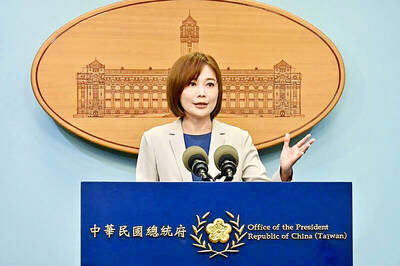
TIT-FOR-TAT: The US allegedly revoked the visa of a Chinese national working at Xinhua News Agency in the US in response to Beijing’s expulsion of Vivian Wang The Presidential Office yesterday condemned China for expelling a New York Times correspondent from Beijing following the newspaper’s interview with President William Lai (賴清德), saying the move highlighted Beijing’s suppression of press freedom and its threat to international news media. Taiwan has noted a series of recent incidents in which Beijing used similar tactics to “threaten and pressure international media outlets and journalists,” Presidential Office spokeswoman Karen Kuo (郭雅慧) said in a statement. “This concerns not only press freedom and freedom of expression, but also the safety of journalists, and Taiwan and relevant partners are paying close attention to the situation,” she


 RSS
RSS