


Former British prime minister David Cameron yesterday made a shock return to high office, becoming foreign secretary in a major shakeup of the Conservative government that also saw the firing of divisive home secretary Suella Braverman.
Cameron, who led the UK government from 2010 to 2016, was appointed by British Prime Minister Rishi Sunak in a Cabinet shuffle in which he sacked Braverman, a divisive figure who drew anger for accusing police of being too lenient with pro-Palestinian protesters.
She was replaced by James Cleverly, who had been foreign secretary.
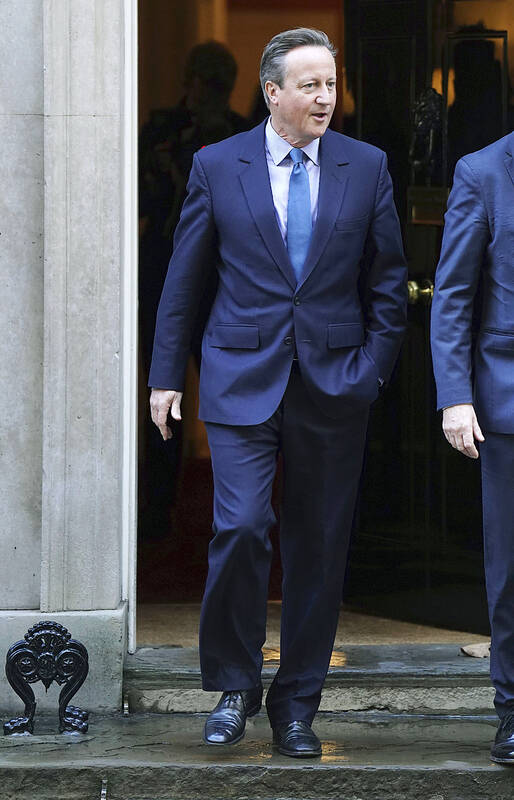
Photo: AP
Cameron’s appointment came as a surprise to seasoned politics watchers. It is rare for a non-lawmaker to take a senior government post, and it has been decades since a former prime minister held a Cabinet job.
The government said Cameron was being appointed to Parliament’s unelected upper chamber, the House of Lords.
Cameron, 57, said Britain was “facing a daunting set of international challenges, including the war in Ukraine and the crisis in the Middle East.”
“While I have been out of front-line politics for the last seven years, I hope that my experience — as Conservative leader for 11 years and prime minister for six — will assist me in helping the prime minister to meet these vital challenges,” he said in a statement.
Cameron’s appointment brings back to government a leader brought down by Britain’s decision to leave the EU. Cameron called the 2016 EU membership referendum, confident the country would vote to stay in the bloc. He resigned the day after voters opted to leave.
Sunak was a strong backer of the winning “leave” side in the referendum. Cameron’s return and Braverman’s sacking are likely to infuriate the Conservative Party’s right wing and inflame tensions in the party that Sunak has sought to soothe.
Prominent right-wing lawmaker Jacob Rees-Mogg said sacking Braverman was “a mistake, because Suella understood what the British voter thought and was trying to do something about it.”
Sunak had been under growing pressure to fire Braverman from one of the most senior jobs in government, responsible for handling immigration and policing.
Meanwhile, British environment secretary Therese Coffey resigned, saying in a letter to Sunak: “I consider it is now the right time to step back from government.”
In a letter responding to Coffey, Sunak thanked her for her “dedicated service.”
Additional reporting by Reuters
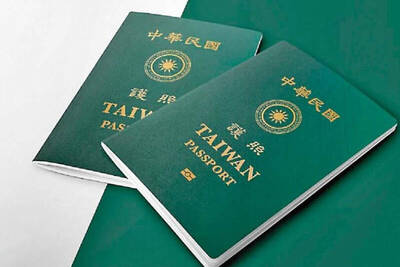
The Taiwanese passport ranked 33rd in a global listing of passports by convenience this month, rising three places from last month’s ranking, but matching its position in January last year. The Henley Passport Index, an international ranking of passports by the number of designations its holder can travel to without a visa, showed that the Taiwan passport enables holders to travel to 139 countries and territories without a visa. Singapore’s passport was ranked the most powerful with visa-free access to 192 destinations out of 227, according to the index published on Tuesday by UK-based migration investment consultancy firm Henley and Partners. Japan’s and

NATIONAL SECURITY THREAT: An official said that Guan Guan’s comments had gone beyond the threshold of free speech, as she advocated for the destruction of the ROC China-born media influencer Guan Guan’s (關關) residency permit has been revoked for repeatedly posting pro-China content that threatens national security, the National Immigration Agency said yesterday. Guan Guan has said many controversial things in her videos posted to Douyin (抖音), including “the red flag will soon be painted all over Taiwan” and “Taiwan is an inseparable part of China,” while expressing hope for expedited “reunification.” The agency received multiple reports alleging that Guan Guan had advocated for armed reunification last year. After investigating, the agency last month issued a notice requiring her to appear and account for her actions. Guan Guan appeared as required,
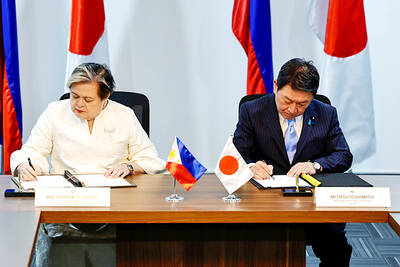
Japan and the Philippines yesterday signed a defense pact that would allow the tax-free provision of ammunition, fuel, food and other necessities when their forces stage joint training to boost deterrence against China’s growing aggression in the region and to bolster their preparation for natural disasters. Japan has faced increasing political, trade and security tensions with China, which was angered by Japanese Prime Minister Sanae Takaichi’s remark that a Chinese attack on Taiwan would be a survival-threatening situation for Japan, triggering a military response. Japan and the Philippines have also had separate territorial conflicts with Beijing in the East and South China
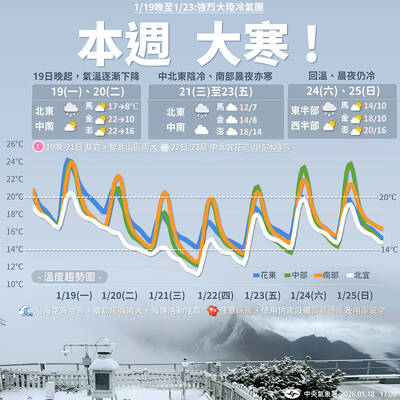
A strong cold air mass is expected to arrive tonight, bringing a change in weather and a drop in temperature, the Central Weather Administration (CWA) said. The coldest time would be early on Thursday morning, with temperatures in some areas dipping as low as 8°C, it said. Daytime highs yesterday were 22°C to 24°C in northern and eastern Taiwan, and about 25°C to 28°C in the central and southern regions, it said. However, nighttime lows would dip to about 15°C to 16°C in central and northern Taiwan as well as the northeast, and 17°C to 19°C elsewhere, it said. Tropical Storm Nokaen, currently


 RSS
RSS