


Taiwanese ate more meat than grains last year for the first time since food consumption statistics started being collected, a Ministry of Agriculture report published yesterday showed.
Taiwanese on average ate 87.4kg of rice, wheat and other grains last year, slightly less than the 87.5kg of meat they consumed, the ministry said, adding that average annual grain consumption fell by 1.9kg from the previous year.
This means that on average, most people’s daily energy intake came from animal protein containing 421.8 kilocalories (kcal), while grains accounted for 416.8kcal, it said.
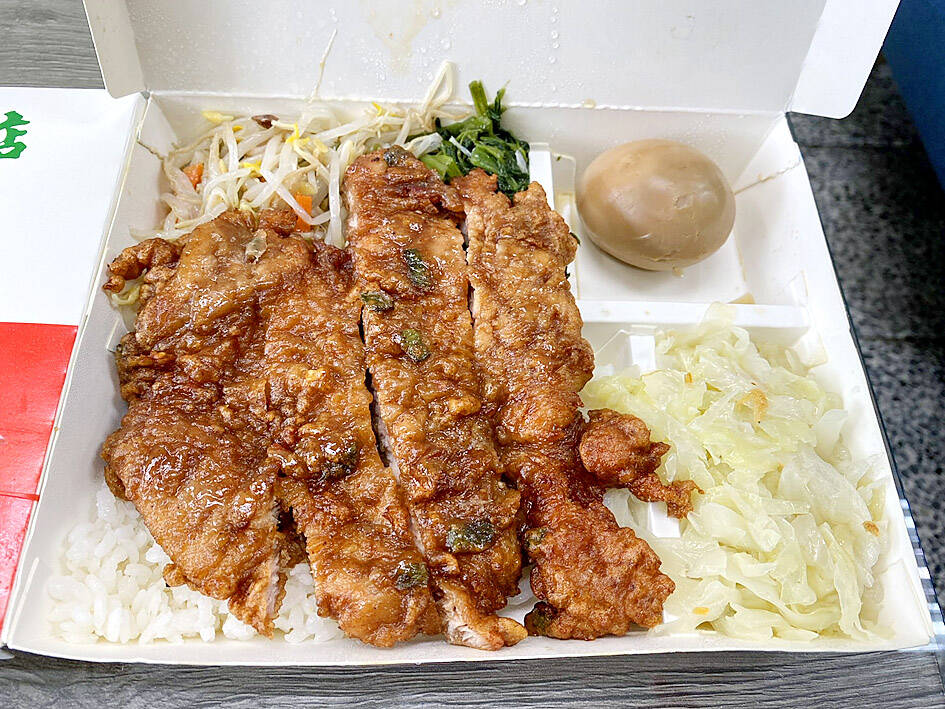
Photo: Chang Tsung-chiu, Taipei Times
Taiwanese ate significantly more chicken than any other meat, at 43.12kg per person, while beef and pork consumption reached historic highs of 7.34kg and 36kg respectively, the ministry said.
The US last year exported 63,000 tonnes of fresh and frozen beef to the nation, 10 percent more than the previous year, it said, adding that Taiwanese ate more US beef than that raised by any other source.
Poultry dethroned pork as Taiwan’s favorite meat, with the rise in chicken consumption directly responsible for the growth in meat intake, Department of Animal Industry Deputy Director-General Lee Yi-chien (李宜謙) said.
Taiwan’s increased appetite for chicken likely comes from a more health-conscious diet, as sales of chicken breast grew significantly, he said.
However, a temporary fall in pork production this year stemming from a government drive to modernize pig farms across the nation might have contributed to the ascendance of poultry, Lee said.
The nation is gradually abandoning the traditional taboo against beef eating, as evidenced by the increase in barbecue and hotpot eateries that serve beef, Taiwan Frozen Food Processors Association chairman Hsiu Chia-lin (許嘉麟) said, citing sales records.
Imports of US beef have grown, likely due to its superior marbling and texture from being grain-fed, he said, adding that the higher price of US beef did not diminish its competitiveness against Australian imports.
Meanwhile, average rice consumption continued to decline, dropping 0.05kg to 42.98kg, ministry data showed.
The consumption of tubers, including yams and potatoes, totaled 30.1kg, one of the highest quantities reported over the past decade, it said.
Yams received a boost from being a standard food item sold in convenience stores and fast-food restaurants, Agriculture and Food Agency Grain and Specialty Division Director Lin Chuan-chi (林傳琦) said, referring to baked yams and sweet potato fries.
The agency encourages the sale of yam products by the local food service industry, including bubble tea venues and bakeries, he said.

MORE VISITORS: The Tourism Administration said that it is seeing positive prospects in its efforts to expand the tourism market in North America and Europe Taiwan has been ranked as the cheapest place in the world to travel to this year, based on a list recommended by NerdWallet. The San Francisco-based personal finance company said that Taiwan topped the list of 16 nations it chose for budget travelers because US tourists do not need visas and travelers can easily have a good meal for less than US$10. A bus ride in Taipei costs just under US$0.50, while subway rides start at US$0.60, the firm said, adding that public transportation in Taiwan is easy to navigate. The firm also called Taiwan a “food lover’s paradise,” citing inexpensive breakfast stalls
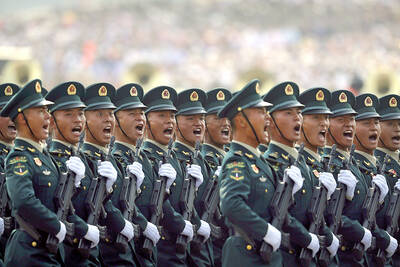
US PUBLICATION: The results indicated a change in attitude after a 2023 survey showed 55 percent supported full-scale war to achieve unification, the report said More than half of Chinese were against the use of force to unify with Taiwan under any circumstances, a survey conducted by the Atlanta, Georgia-based Carter Center and Emory University found. The survey results, which were released on Wednesday in a report titled “Sovereignty, Security, & US-China Relations: Chinese Public Opinion,” showed that 55.1 percent of respondents agreed or somewhat agreed that “the Taiwan problem should not be resolved using force under any circumstances,” while 24.5 percent “strongly” or “somewhat” disagreed with the statement. The results indicated a change in attitude after a survey published in “Assessing Public Support for (Non)Peaceful Unification

The CIA has a message for Chinese government officials worried about their place in Chinese President Xi Jinping’s (習近平) government: Come work with us. The agency released two Mandarin-language videos on social media on Thursday inviting disgruntled officials to contact the CIA. The recruitment videos posted on YouTube and X racked up more than 5 million views combined in their first day. The outreach comes as CIA Director John Ratcliffe has vowed to boost the agency’s use of intelligence from human sources and its focus on China, which has recently targeted US officials with its own espionage operations. The videos are “aimed at

Four former Hong Kong opposition lawmakers jailed in the territory’s largest national security case were released yesterday after more than four years in prison, the first among dozens convicted last year to regain their freedom. Former legislators Claudia Mo (毛孟靜), Jeremy Tam (譚文豪), Kwok Ka-ki (郭家麒) and Gary Fan (范國威) were part of a group of 47 public figures — including some of Hong Kong’s best-known democracy advocates — who were charged with subversion in 2021 for holding an informal primary election. The case fell under a National Security Law imposed on the territory by Beijng, and drew international condemnation and warnings


 RSS
RSS