


The Ministry of Foreign Affairs yesterday expressed its gratitude for a statement released by US Secretary of State Antony Blinken supporting Taiwan’s bid to take part in the annual World Health Assembly (WHA) this month.
It was the third consecutive year that the US’ top diplomat has backed Taiwan’s bid to participate in the decisionmaking body of the WHO, actions that Taiwan welcomes and is grateful for, the ministry said in a statement.
Taiwan would continue to work closely with the US and other like-minded countries to contribute to global pandemic control and public health affairs, it said.
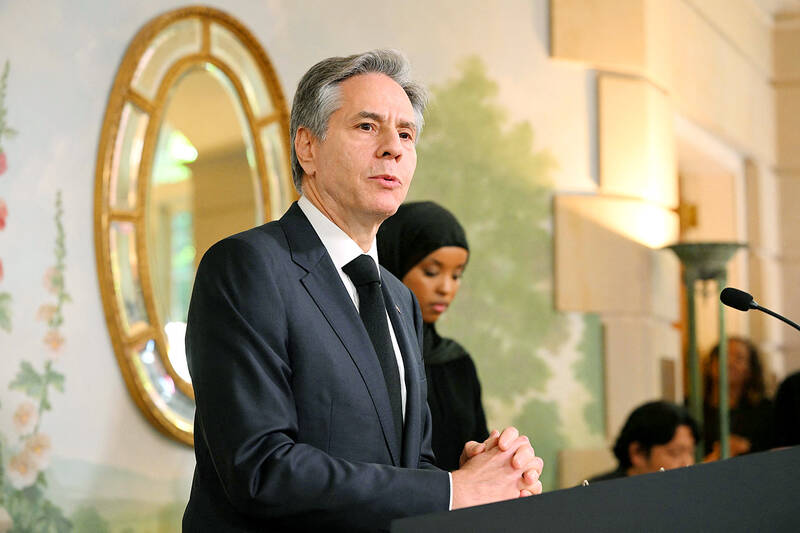
Photo: Reuters
The ministry was responding to a statement issued by Blinken on Tuesday in which he said that the US strongly encourages the WHO to invite Taiwan to participate as an observer at this year’s WHA meeting, “so it may lend its expertise to the discussions.”
“Inviting Taiwan as an observer would exemplify the WHO’s commitment to an inclusive, ‘health for all’ approach to international health cooperation,” Blinken said in the statement.
He said Taiwan is a “highly capable, engaged and responsible member of the global health community, and has been invited to participate as an observer in previous WHA meetings.”
“Taiwan’s distinct capabilities and approaches — including its significant public health expertise, democratic governance and advanced technology — bring considerable value that would inform the WHA’s deliberations,” he said.
He said that Taiwan’s isolation from the WHA was “unjustified, and undermines inclusive global public health cooperation and security, which the world demands.”
Similar appeals in past years by the US and other countries have fallen on deaf ears, as China has successfully blocked Taiwan’s participation from the meeting since 2017.
This year the WHA is to hold its annual meeting from May 21 to 30 in Geneva, Switzerland, to discuss global public health priorities.
Taiwan was expelled from the WHO in 1972 after it lost its seat in the UN due to the issue of “China’s representation.”
Since then, Taiwan has not been able to attend the WHA — except from 2009 to 2016 — due to objections from China.
Asked about the possibility of Taiwan being invited to this year’s WHA, Minister of Foreign Affairs Joseph Wu (吳釗燮) said in Taipei that the ministry is still working on the issue, while thanking the US for its long-term support.
A growing number of “like-minded countries” are joining the effort alongside the US, and support for Taiwan at the WHA is expected to reach its highest level in the past few years, Wu said on the sidelines of a legislative session.
Separately, Wu said that having President Tsai Ing-wen (蔡英文) attend the APEC leaders’ meeting in November would be “extremely difficult.”
APEC makes its decisions based on consensus, meaning that all of its members would have to approve such an invitation, or at least not raise objections to Tsai’s participation, Wu told lawmakers.
That means it would be “extremely difficult” for Tsai to take part, Wu said, an apparent reference to China’s membership.
Wu was responding to a question from Democratic Progressive Party Legislator Liu Shyh-fang (劉世芳) after 21 US representatives called for Taiwan to be represented at the annual summit by Tsai instead of a proxy, as has been the case in previous years.
In a letter to Blinken dated April 18, the Republican signatories, led by US Representative Lance Gooden of Texas, said that prohibiting Taiwan from sending its president to the leaders’ summit was “tantamount to the US asking China for a permission slip to conduct bilateral foreign relations.”
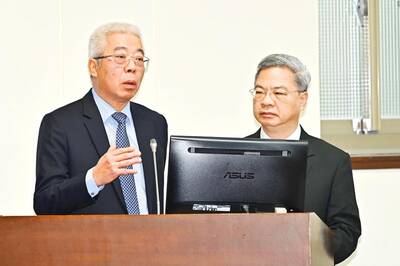
Taiwan has arranged for about 8 million barrels of crude oil, or about one-third of its monthly needs, to be shipped from the Red Sea this month to bypass the Strait of Hormuz and ease domestic supply pressures, CPC Corp, Taiwan (CPC, 台灣中油) said yesterday. The state-run oil company has worked with Middle Eastern suppliers to secure routes other than the Strait of Hormuz, through which about 20 percent of the world’s oil and liquefied natural gas typically passes, CPC chairman Fang Jeng-zen (方振仁) said at a meeting of the legislature’s Economics Committee in Taipei. Suppliers in Saudi Arabia have indicated they
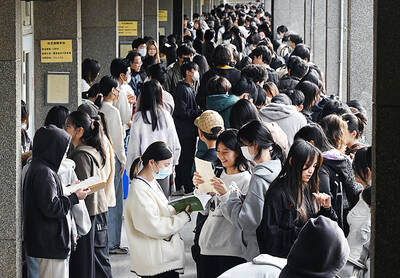
A global survey showed that 60 percent of Taiwanese had attained higher education, second only to Canada, the Ministry of the Interior said. Taiwan easily surpassed the global average of 43 percent and ranked ahead of major economies, including Japan, South Korea and the US, data from the Organisation for Economic Co-operation and Development (OECD) for 2024 showed. Taiwan has a high literacy rate, data released by the ministry showed. As of the end of last year, Taiwan had 20.617 million people aged 15 or older, accounting for 88.5 percent of the total population, with a literacy rate of 99.4 percent, the data
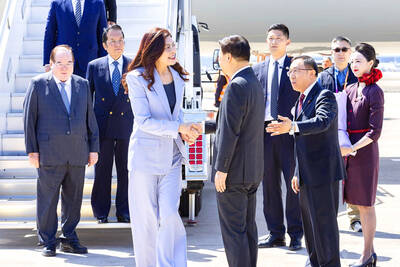
CCP ‘PAWN’? Beijing could use the KMT chairwoman’s visit to signal to the world that many people in Taiwan support the ‘one China’ principle, an academic said Chinese Nationalist Party (KMT) Chairwoman Cheng Li-wun (鄭麗文) yesterday arrived in China for a “peace” mission and potential meeting with Chinese President Xi Jinping (習近平), while a Taiwanese minister detailed the number of Chinese warships currently deployed around the nation. Cheng is visiting at a time of increased Chinese military pressure on Taiwan, as the opposition-dominated Legislative Yuan stalls a government plan for US$40 billion in extra defense spending. Speaking to reporters before going to the airport, Cheng said she was going on a “historic journey for peace,” but added that some people felt uneasy about her trip. “If you truly love Taiwan,
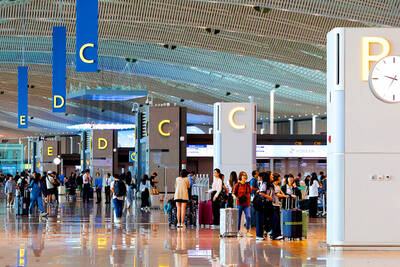
South Korea has adjusted its electronic arrival card system to no longer list Taiwan as a part of China, a move that the Ministry of Foreign Affairs said would help facilitate exchanges between the two sides. South Korea previously listed “Taiwan” as “Taiwan (China)” in the drop-down menus of its online arrival card system, where people had to fill out where they came from and their next destination. The ministry had requested South Korea make a revision and said it would change South Korea’s name on Taiwan’s online immigration system from “Republic of Korea” to “Korea (South),” should the issue not be


 RSS
RSS