


Taiwan Power Co (Taipower, 台電) is looking into potential sites to store enough coal to generate up to 50 days of electricity in the event Taiwan faces a blockade or war, a source said on Saturday.
Government regulations require the utility to store up to 30 days of coal, but Taipower generally maintains a reserve of 40 to 42 days.
However, following China’s drills in August last year, during which it imposed a partial blockade around Taiwan proper, the company might further increase its coal storage to 50 days, the source said.
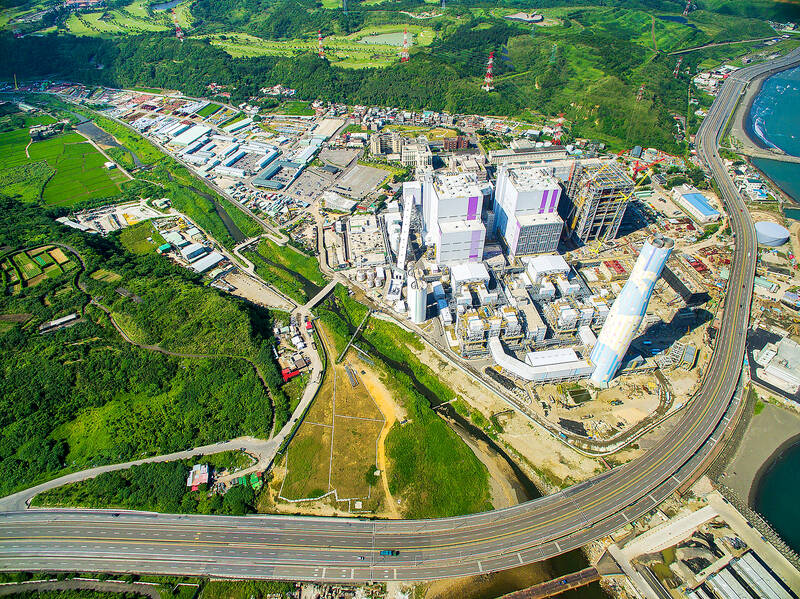
Photo courtesy of Taiwan Power Co
Another reason is rising coal inventories due to the nation’s transition to clean energy, as well as some coal-fired power plants shutting down during winter to reduce air pollution, they said.
“If a coal shipment arrives at a port and existing stocks have not been depleted, this causes port congestion,” the source said.
“However, Taipower has only just started looking for storage sites and it would take at least a year to conduct a feasibility study on the plan,” the source said.
The company wants to find a site near a coal-fired power plant, particularly one like the ultra-supercritical plant in New Taipei City’s Linkou District (林口), the source said.
“Another option would be Taichung Power Plant. It will decommission its coal burners and switch to natural gas, but the coal burners would be used as a backup if the need arises,” the source said.
However, Taipower would not restart coal plants in areas where they have caused public discontent, and any restarted plants would use ash ponds to reduce the amount of airborne pollutants, the source said.
Taipower hopes that the central government would subsidize the expenses that would arise from expanding coal storage capacity, especially as the plan would improve national security, the source added.
Separately, CPC Corp, Taiwan (CPC, 台灣中油), which maintains stocks of liquefied natural gas (LNG), said it has a combined stock of 100 days of LNG across all of its facilities nationwide — exceeding the mandated minimum of 90 days.
However, to improve energy security, the company would install additional storage tanks at receiving stations, including those at Taoyuan’s Guantang Industrial Park (觀塘工業區), Kaohsiung’s Yongan Port (永安) and the terminal in Taichung.
The additional tanks would increase storage capacity at each facility from 16 days to 24 days, the company said.

RESILIENCE: Taiwan plays a key role in semiconductors, energy, information infrastructure and advanced manufacturing, AIT Director Raymond Greene said Taiwan’s continued investment in deterrence and resilience remains vital, especially in uncrewed systems and other emerging technologies, American Institute in Taiwan (AIT) Director Raymond Greene said yesterday. Greene made the remarks at the annual National Strategic Summit on Supply Chain Resilience held by the Research Institute for Democracy, Society and Emerging Technology (DSET), a government-backed think tank. As Taiwan last year became the US’ fourth-largest trading partner and supply chain security is becoming more important, cooperation in emerging technologies continues to deepen between the two countries, he said. The US is committed to accelerating innovation, building key infrastructure, strengthening cooperation

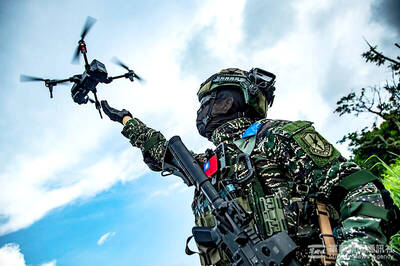
The National Chungshan Institute of Science and Technology yesterday showcased its locally developed variants of the Vision 60 robotic patrol dog, which it plans to deploy on the nation’s outlying territories in the South China Sea. The variants were produced under the Joint Lab project — created by the institute and domestic companies — and assembled with domestically produced motors, lenses and artificial intelligence (AI) systems alongside licensed tech from the US, Missile and Rocket Systems Research Division deputy director Jen Kuo-kang (任國光) told the media event at a military base in Taipei’s Dazhi (大直) area. Taiwan has built up its strengths

RIGHT DIRECTION: Taiwan’s efforts to prevent forced labor include a proposal to ‘fully prohibit’ employers from withholding workers’ documents, an official said Taiwan is to establish a mechanism to restrict imports of goods linked to forced labor, the Executive Yuan said yesterday, after the US proposed imposing additional tariffs on Taiwanese goods over labor concerns. “The Ministry of Labor and the Ministry of Economic Affairs are to establish an interministerial review procedure,” Executive Yuan spokesperson Michelle Lee (李慧芝) said at a news briefing in Taipei. “The government is to use the Foreign Trade Act [貿易法] as the legal basis to restrict imports of goods produced with forced labor” and bring its supply chain governance more in line with international standards on human rights, resilience
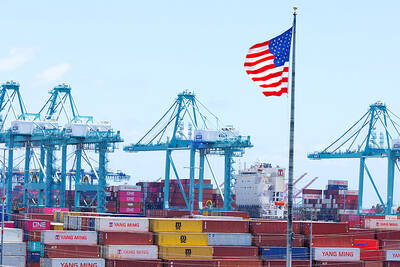
NOT IMMEDIATE: Taiwan has a chance to appeal the proposed 10 percent tariff before it starts, while other countries face a 12.5 percent tariff from the trade office Taiwan is among 60 economies determined by the US to have failed to impose or enforce a ban on the importation of goods produced with forced labor, according to a notice released on Tuesday by the Office of the US Trade Representative (USTR), which proposed imposing an additional 10 percent or more tariff on them. The USTR in a statement said that following an investigation, it had determined under Section 301 of the Trade Act of 1974 that the failure of the 60 economies to impose and effectively enforce a prohibition on the importation of goods produced with forced labor is


 RSS
RSS