


A European Parliament committee last month sent a letter to the UN Framework Convention on Climate Change (UNFCCC) calling for Taiwan’s inclusion in the group, the Paris Agreement and related mechanisms.
The letter, dated Oct. 27 and addressed to UNFCCC Executive Secretary Simon Stiell, was signed by 10 members of the parliament’s Committee on the Environment, Public Health and Food Safety.
As Taiwan is not an official member of the UN, only non-governmental organizations are allowed to represent Taiwan at its meetings, including the UNFCCC’s COP27 climate summit, which is taking place in Egypt until Friday next week.

Photo: AP
Member of the European Parliament Liudas Mazylis shared the letter on social media during the opening of the summit on Sunday.
In the letter, the lawmakers highlight Taiwan’s “30 years of pragmatic and constructive contributions” to combating climate change.
They wrote that Taiwan has a crucial role in the effort to decarbonize supply chains due to its information and communications technology and semiconductor industries, with 20 major firms being members of the RE100 initiative.
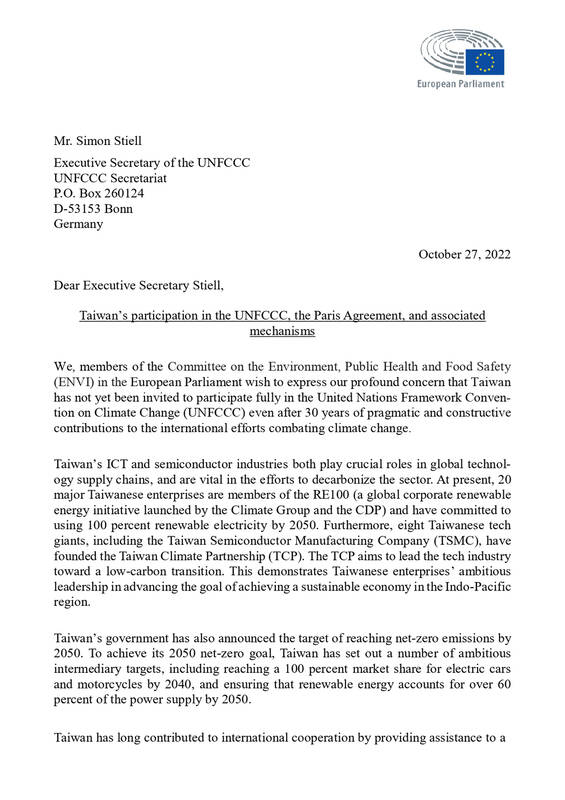
Photo: Screengrab from EP member Liudas Mažylis' Facebook
Eight Taiwanese tech companies, including Taiwan Semiconductor Manufacturing Co (台積電), have created the Taiwan Climate Partnership to lead the tech industry toward a low-carbon future, the letter says.
“This demonstrates Taiwanese enterprises’ ambitious leadership in advancing the goal of achieving a sustainable economy in the Indo-Pacific region,” it says.
The lawmakers also refer to the government’s goal to achieve net zero emissions by 2050 and its “ambitious” intermediary targets, including a complete transition to electric vehicles by 2040 and 60 percent renewable energy by 2050.
The letter highlights Taiwan’s global contributions to climate efforts by assisting its allies and developing nations to build capacity to address climate challenges.
It particularly mentions initiatives in Belize, the Marshall Islands and Saint Kitts and Nevis, as well as cooperation with the European Bank for Reconstruction and Development to implement green financing throughout eastern Europe and central Asia.
“Taiwan stands jointly with other nations in facing the immense impact caused by extreme weather events,” the letter says, adding that it has contributed a lot toward building a “net zero world.”
“Facing unprecedented climate disasters, the international community should put aside political considerations and turn challenges into new opportunities so as to protect and uphold the common fate of humanity,” it says.

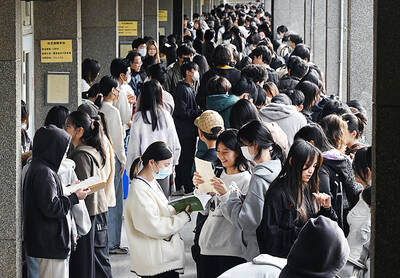
A global survey showed that 60 percent of Taiwanese had attained higher education, second only to Canada, the Ministry of the Interior said. Taiwan easily surpassed the global average of 43 percent and ranked ahead of major economies, including Japan, South Korea and the US, data from the Organisation for Economic Co-operation and Development (OECD) for 2024 showed. Taiwan has a high literacy rate, data released by the ministry showed. As of the end of last year, Taiwan had 20.617 million people aged 15 or older, accounting for 88.5 percent of the total population, with a literacy rate of 99.4 percent, the data

NEW LOW: The council in 2024 based predictions on a pessimistic estimate for the nation’s total fertility rate of 0.84, but last year that rate was 0.69, 17 percent lower An expected National Development Council (NDC) report expects the nation’s population to drop below 12 million by 2065, with the old-age dependency ratio to top 100 percent sooner than 2070, sources said yesterday. The council is slated to release its latest population projections in August, using an ultra-low fertility model, the sources said. The previous report projected that Taiwan’s population would fall to 14.37 million by 2070, but based on a new estimate of the total fertility rate (TFR) — the average number of children born to a woman over her lifetime — the population is expected to reach 12 million by
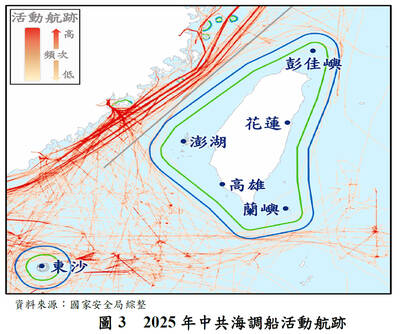
INTENSIFYING THREATS: Beijing’s tactics include massive attacks on the government service network, aircraft and naval vessel incursions and damaging undersea cables China is prepared to interfere in November’s nine-in-one local elections by launching massive attacks on the Taiwanese government’s service network (GSN), a report published by the National Security Bureau showed. The report was submitted to the Legislative Yuan ahead of the bureau’s scheduled briefing at the Foreign Affairs and National Defense Committee tomorrow. The national security team has identified about 13,000 suspicious Internet accounts and 860,000 disputed messages, the bureau said of China’s cognitive warfare against Taiwan. The disputed messages focus on major foreign affairs, national defense and economic issues, which were produced using generative artificial intelligence (AI) and distributed through Chinese

COUNTERING HOSTILITY: The draft bill would require the US to increase diplomatic pressure on China and would impose sanctions on those who sabotage undersea cable networks US lawmakers on Thursday introduced a bipartisan bill to bolster the resilience of Taiwan’s submarine cables to counter China’s hostile activities. The proposal, titled the critical undersea infrastructure resilience initiative act, was cosponsored by Republican representatives Mike Lawler and Greg Stanton, and Democratic Representative Dave Min. US Senators John Curtis and Jacky Rosen also introduced a companion bill in the US Senate, which has passed markup at the chamber’s Committee on Foreign Relations. The House’s version of the bill would prioritize the deployment of sensors to detect disruptions or potential sabotage in real-time and enhance early warning capabilities through global intelligence sharing frameworks,


 RSS
RSS