


Production of Apple Inc’s iPhones could slump by as much as 30 percent at one of the world’s biggest factories next month due to tightening COVID-19 curbs in China, a person with direct knowledge of the matter said yesterday.
Hon Hai Precision Industry Co (鴻海精密), also known as Foxconn Technology Group (富士康科技集團), is working to boost production at another factory in Shenzhen to make up for the shortfall, said the person, declining to be identified as the information was private.
Its main Zhengzhou plant in Henan Province, which employs about 200,000 people, has been rocked by discontent over stringent measures to curb the spread of COVID-19, with several workers fleeing the site over the weekend.
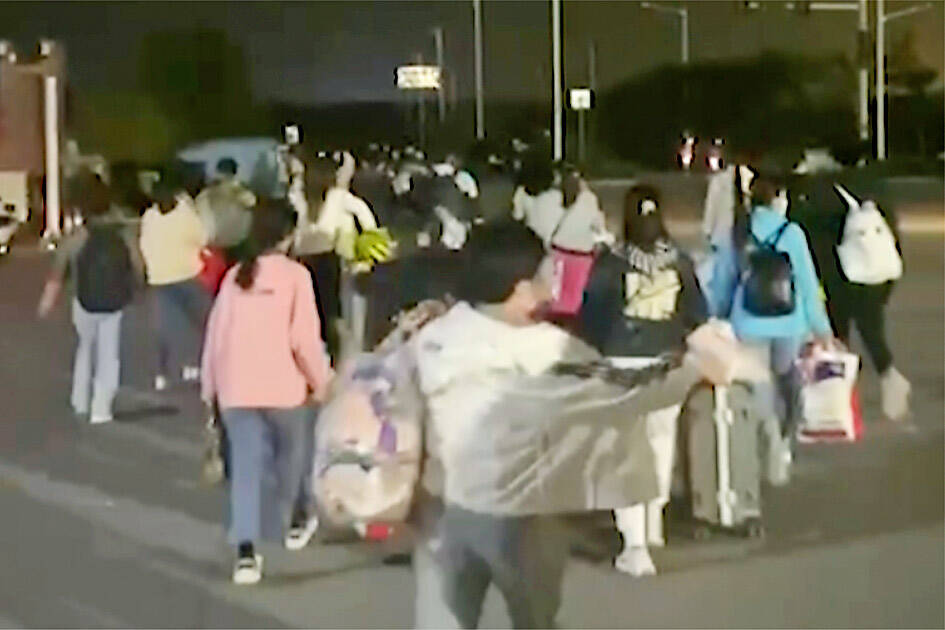
Photo: AP / Hangpai Xingyang
The possible effect on production comes amid a usually busy time for electronics makers ahead of the year-end holiday season, which is also a prime time for vendors such as Apple.
Foxconn on Sunday said it was bringing the situation under control and would coordinate back-up production with other plants to reduce any potential effects. Apple did not respond to a request for comment.
A second person familiar with the situation said many workers remained at the Zhengzhou plant and that production was continuing.

Photo: AFP
Under China’s strict COVID-19 policies, localities must act swiftly to quell outbreaks, with measures including full-scale lockdowns.
Factories in affected areas are often allowed to stay open on condition they operate under a “closed loop” system where staff live and work on-site.
Businesses have said such arrangements pose numerous difficulties.
Foxconn on Oct. 19 banned dining at canteens at the Zhengzhou plant and required workers to eat meals in dormitories.
It said production was normal.
The measures led to people who said they worked at the site venting frustration about their treatment and provisions via social media.
Scores fled the site over the weekend, with photographs and videos on social media purporting to show Foxconn staff trekking across fields in daytime and along roads at night.
Foxconn has not disclosed whether any workers at the Zhengzhou site had been diagnosed with COVID-19.
Authorities have since Oct. 19 reported 264 locally transmitted COVID-19 cases in Zhengzhou.
New cases in China hit 2,898 on Sunday, topping 2,000 for a second straight day, a tiny number by global standards.
Rising case numbers from numerous outbreaks across China have prompted a tightening of local curbs and lockdowns, including in parts of big cities such as the southern metropolis of Guangzhou, where the number of new locally transmitted cases totaled 1,110 from Monday last week to Sunday, up from 402 over the previous seven days.
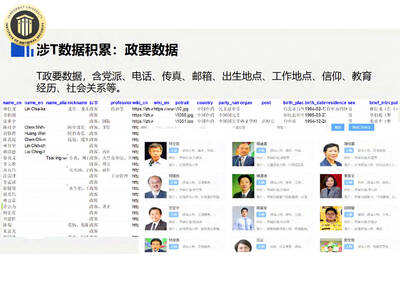
NETWORK-MAPPING PROJECT: The database contains 170 detailed files of Taiwanese politicians and about 23 million records of household registration data in Taiwan China has developed a network-mapping project targeting political figures and parties in Taiwan to monitor public opinion during elections and to craft tailored influence campaigns aimed at dividing Taiwanese society, according to documents leaked by Chinese technology firm GoLaxy (中科天璣). The documents, collected by Taipei-based Doublethink Lab, showed a database was specifically created to gather detailed information on Taiwanese political figures, including their political affiliations, job histories, birthplaces, residences, education, religion and a brief biography about them. Several notable Taiwanese politicians are in the database, including President William Lai (賴清德), former president Tsai Ing-wen (蔡英文), Minister of Foreign Affairs Lin Chia-lung (林佳龍),
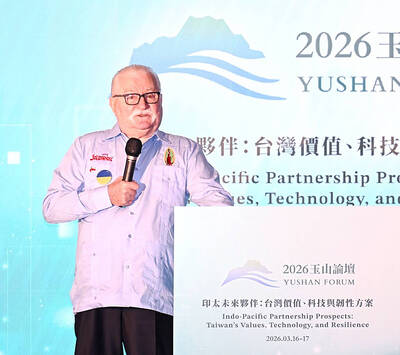
RECOGNITION: Former Fijian prime minister Mahendra Chaudhry said that Taiwan’s New Southbound Policy serves as a stabilizing force in the Indo-Pacific region Taiwan can lead the unification of the Chinese people, Nobel Peace Prize laureate and former Polish president Lech Walesa said in Taipei yesterday, adding that as the world order is changing, peaceful discussion would find good solutions, and that the use of force and coercion would always fail. Walesa made the remarks during his keynote address at a luncheon of the Yushan Forum in Taipei, titled “Indo-Pacific Partnership Prospects: Taiwan’s Values, Technology and Resilience,” organized by the Taiwan-Asia Exchange Foundation with the Ministry of Foreign Affairs. Walesa said that he had been at the forefront of a big peaceful revolution and “if
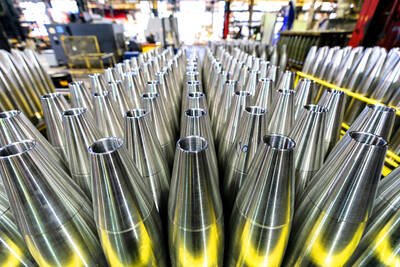
UPGRADED MISSILE: The Chungshan Institute of Science and Technology is reportedly to conduct a live-fire test of the Hsiung Feng III anti-ship missile on Thursday next week The US Army is planning to build new facilities to boost explosives production and strengthen its supply chain, a move aimed at addressing munitions shortages and supporting obligations to partners including Taiwan, Ukraine and Israel, Defense News reported. The army has issued a sources sought notice for a proposed Center of Excellence at the Blue Grass Army Depot in Kentucky, the report said. The facility would serve as a hub within the US industrial base for the production of key military explosives, including research department explosives (RDX) and high melting explosives (HMX), while also supporting research and development of next-generation materials. The proposed
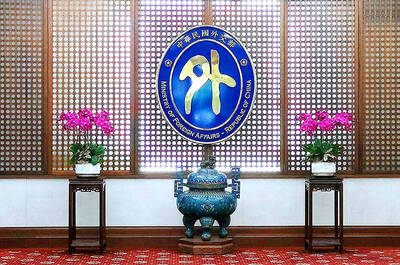
SOUTH KOREA DISPUTE: If Seoul continues to ignore its request, Taiwan would change South Korea’s designation on its arrival cards, the foreign ministry said If South Korea does not reply appropriately to a request to correct Taiwan’s name on its e-Arrival card system before March 31, the government would take corresponding measures to change how South Korea is labeled on the online Taiwan Arrival Card system, the Ministry of Foreign Affairs said yesterday. South Korea’s e-Arrival card system lists Taiwan as “China (Taiwan)” in the “point of departure” and “next destination” fields. Taipei has asked Seoul to change the wording. Since March 1, South Koreans who hold government-issued Alien Resident Certificates (ARC) have been identified as from “South Korea” rather than the “Republic of Korea,” the


 RSS
RSS