

The National Health Insurance Administration (NHIA) has expanded National Health Insurance (NHI) coverage of telemedicine services to include divisions of cardiology, gastroenterology, neurology and pulmonology starting this month, in a change that is expected to benefit nearly 800,000 people.
The NHIA last year started covering telemedicine services used by people living in mountainous areas and on outlying islands amid increased need during the COVID-19 pandemic, but the coverage was limited to divisions of ophthalmology, dermatology and medicine focused on conditions of the head and neck, as well as emergency treatment.
The administration’s plan increases the amount allocated for telemedicine from NT$100 million (US$3.34 million) last year to NT$170 million for hospitals and clinics providing consultations remotely or making visits to patients’ homes.
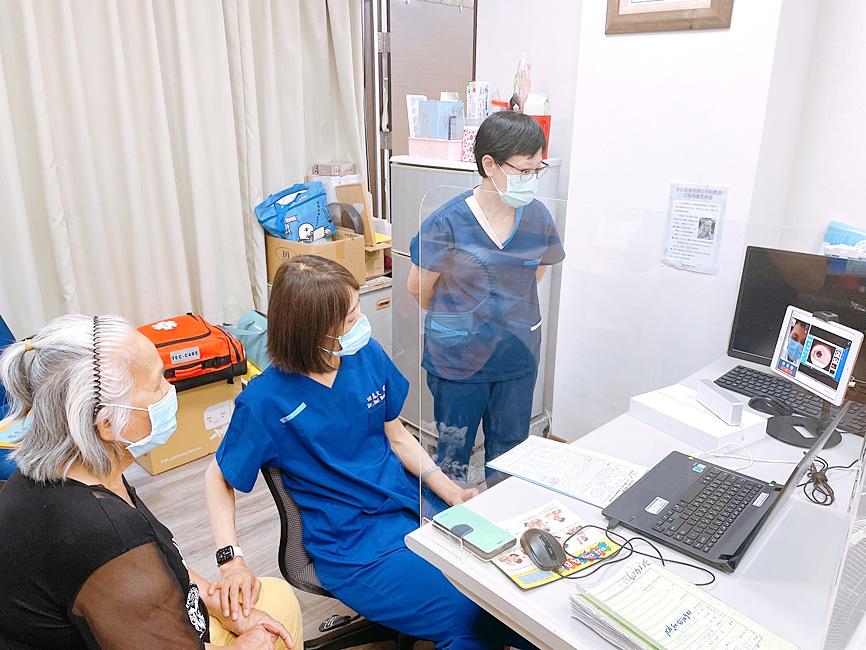
Photo provided by the Hualien Bureau of Health
It is also lifting a restriction limiting participation in the telemedicine program to one hospital or clinic in each area, it said.
To encourage more people to use “virtual” NHI cards, the administration said it would offer a monetary reward to hospitals and clinics that help people apply for them.
The virtual cards are used by more than 285,000 people, with nearly 110,000 applying for the cards after the application procedure was simplified on May 16, it said.
Medical resources are insufficient in mountainous areas and on outlying islands, where 2 percent of Taiwanese live, but only 0.75 percent of physicians work, NHIA Director-General Lee Po-chang (李伯璋) said on Saturday, adding that expanding the coverage gives residents in the areas access to more medical services.
People living in mountainous areas and on outlying islands seek medical treatment more often than the national average, sometimes as much as 14.4 times the national average, NHIA official Yu Hui-chen (游慧真) said.
Many of these places lack physicians who specialize in areas other than general and internal medicine, so telemedicine is needed to give people access to doctors who can consult remotely, she said.
Telemedicine covered by the NHI is different from the remote consultations adopted during the pandemic, which would eventually no longer be offered, she said.
Among the people who sought medical treatment through telemedicine in the first half of the year, 86 percent were over the age of 40 and more than 90 percent of them sought ophthalmology and dermatology care, NHIA data showed.
Telemedicine consultations are usually provided by doctors of a certain specialty at certain times, which might not always meet people’s needs.
To provide better care, Linkou Chang Gung Memorial Hospital set up the “Hua Ling medical station” in Taoyuan’s Fusing Township (復興) in 2002.
Local physicians can invite doctors with specialties to provide treatment remotely to people during the times they usually provide outpatient services by registering on-site or in advance, Chang Gung Medical Foundation CEO Pan Yen-chien (潘延健) said.
The government is promoting telemedicine through several programs, he said, adding that they can be integrated to popularize their use.
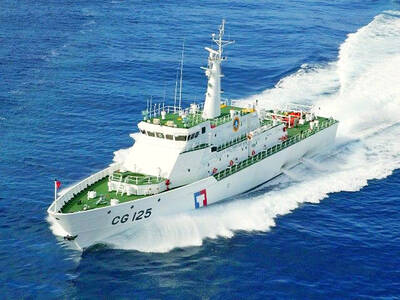
GEOPOLITICAL SIGNIFICANCE: The CGA’s nonmilitary role makes it a tool to avert diplomatic issues, an official said, while confirming the donation of a ship to Manila Coast Guard Administration (CGA) ships are scheduled to sail to the Philippines bearing the words “Taiwan Coast Guard” in a high-profile visit in October next year, the first such visit by a Taiwanese maritime law enforcement vessel to the Southeast Asian nation, the agency said yesterday. The CGA also confirmed that it had donated one of its decommissioned patrol vessels to the Philippines in a rare transfer of a retired ship to a nondiplomatic ally. The Republic of China (ROC) Navy last made such a visit in 1974, shortly before the Philippines switched diplomatic recognition to the People’s Republic of China in

‘GLOBAL WARNING’: The infiltration is not just a local problem, as Beijing has been deploying the same tactics worldwide against Western democracies, a report said Between 50,000 and 100,000 Chinese spies are operating in Taiwan, far more than the National Security Bureau’s previous estimate of 5,000, German journalist and author Jurgen Kremb said on Monday. Kremb presented his research, titled “The War of Spies: How China’s Intelligence Services Are Infiltrating Taiwan — and What Europe Must Learn from It,” at a joint event held by the Taiwan offices of the Friedrich Naumann Foundation and the European Values Center for Security Policy. The report was published in June in the Ministry of Justice Investigation Bureau’s Prospect & Exploration Monthly (展望與探索月刊). By spies, he said he was referring to informants,

PRICE STABILIZATION: The Ministry of Economic Affairs has urged the legislature to support the Cabinet’s supplementary budget for state-owned energy companies State-owned oil supplier CPC Corp, Taiwan (CPC, 台灣中油) on Saturday announced that it would raise domestic gasoline prices by NT$0.7 (US$0.02) per liter and diesel prices by NT$0.6 per liter this week after international crude oil prices rose above US$100 per barrel last week. Formosa Petrochemical Corp (台塑石化) yesterday said that it matched CPC’s price adjustments for this week. The decisions end a six-week period during which CPC and Formosa kept fuel prices in Taiwan unchanged. Retail gasoline prices this week would rise to NT$31.2, NT$32.7 and NT$34.7 per liter for 92, 95 and 98-octane unleaded gasoline respectively at CPC
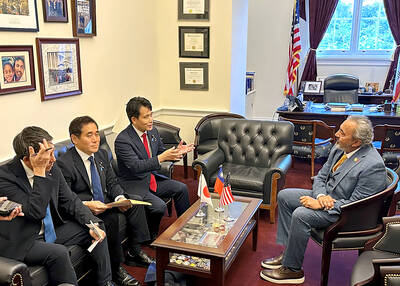
WASHINGTON MEETING: Japan’s Hirofumi Takinami said participants rejected the idea that the US should limit its defensive perimeter to the Second Island Chain US and Japanese lawmakers agree that the US must defend the First Island Chain, including Taiwan, and should not fall back to the Second Island Chain, while “a Taiwan contingency is a Japan contingency and therefore a US-Japan alliance contingency,” media reported after a meeting between officials of the two nations in Washington on Tuesday. A delegation of Japanese lawmakers from the Liberal Democratic Party met with US Senator Thom Tillis, co-chair of the Senate Taiwan Caucus, and US Representative Ami Bera, co-chair of the US Congressional Taiwan caucus, to discuss issues concerning East Asia and the Taiwan Strait. The Japanese and


 RSS
RSS