


Taiwan’s local COVID-19 case count might reach 10,000 per day by the end of the month and a cummulative total of more than 1 million Taiwanese might be infected by the end of this wave of outbreak, Minister of Health and Welfare Chen Shih-chung (陳時中), who heads the Central Epidemic Command Center (CECC), said yesterday, as the nation posted a daily record of 1,209 new domestic cases.
Chen said that rather than suppressing the spread of the ongoing outbreak involving the Omicron variant of SARS-CoV-2, the nation should strive to reduce its damage, as Omicron cases usually have mild or no symptoms.
The means to that end should be raising the COVID-19 vaccination coverage rate, preparing enough medicine, separating COVID-19 patients who have serious symptoms from less serious cases and expanding testing capacity, he added.
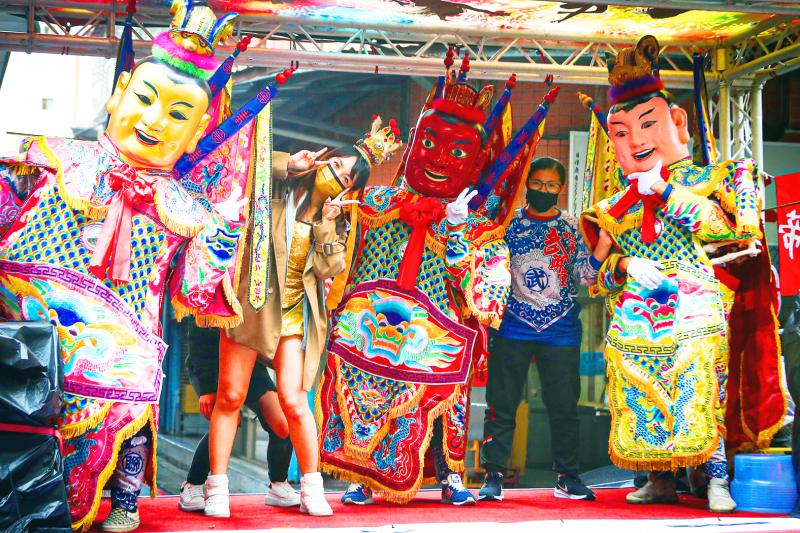
Photo: CNA
People should “not sacrifice their normal life too much because of the rising case numbers,” Chen said.
Yesterday’s case count, which exceeded 1,000 for the first time in Taiwan, was nearly 40 percent higher than the day before, when the nation recorded 874 local cases.
New Taipei City yesterday had the most cases, with 328, followed by Taoyuan with 290, Hualien County with 146, Taipei with 140, Kaohsiung with 58 and Keelung with 48, the CECC said.
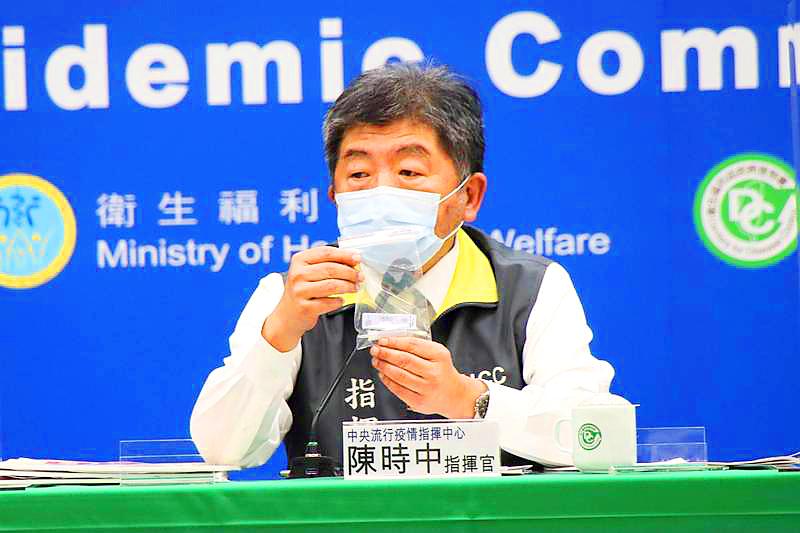
Photo courtesy of the Central Epidemic Command Center
The center also reported 10 new moderate or serious COVID-19 cases, bringing this year’s total to 29.
The CECC said that among those cases — aged 40 to 80 — six were not fully vaccinated, while two had received three shots.
None of them were in intensive care, the CECC said.
One case had been released from quarantine, but the others remained hospitalized, but were in stable conditions, it added.
Of the 6,543 domestic COVID-19 cases recorded nationwide this year until Thursday, the CECC classified 27 as moderate and two as severe, while the others, accounting for 99.56 percent of the total, were either mild or asymptomatic.
The CECC yesterday added Hualien County and Kaohsiung to its list of high-risk COVID-19 areas — which also includes New Taipei City, Taipei, Taoyuan and Keelung — where people whom doctors suspect to have the virus can obtain COVID-19 rapid antigen tests free of charge.
Starting from Friday next week, a third vaccine dose would be mandatory for people in the first, second, third and seventh vaccination priority groups, including medical personnel, frontline workers with higher infection risks, central or local government personnel working on disease prevention, and workers in the energy, water resources, media, transportation and other industries, the CECC said.
The rule would also apply to people working in correctional institutions, funeral homes and 24 other types of workplace, it added.
Those who have frequent contact with members of the public or cannot maintain social distance would also have to get a booster shot if they have a high risk of infection and are old enough to be vaccinated, it added.
This would include people planning to attend the ongoing Dajia Matsu pilgrimage, take group tours or go to the gym, it said.
The CECC announced that travelers arriving from Australia, Canada, New Zealand and the US would be tested for COVID-19 upon arrival with saliva tests rather than with nasal swab tests starting on Monday, Chen said.
The decision was made based on the test positivity rate among travelers from those countries, as saliva tests are slightly less sensitive than nasal swab tests, he added.
Arrivals from Southeast Asia, India, South Korea, the Middle East, and Europe will still be subject to nasal swab testing upon landing, he said.
Taiwan began on Jan. 11 to require passengers on long- haul flights to the country to take rapid polymerase chain reaction (PCR) tests upon arrival. The requirement was later expanded to cover arrivals on short-haul flights.
Taiwan also reported 75 new imported cases, the CECC said.
South Korea has adjusted its electronic arrival card system to no longer list Taiwan as a part of China, a move that the Ministry of Foreign Affairs said would help facilitate exchanges between the two sides. South Korea previously listed “Taiwan” as “Taiwan (China)” in the drop-down menus of its online arrival card system, where people had to fill out where they came from and their next destination. The ministry had requested South Korea make a revision and said it would change South Korea’s name on Taiwan’s online immigration system from “Republic of Korea” to “Korea (South),” should the issue not be

Tainan, Taipei and New Taipei City recorded the highest fines nationwide for illegal accommodations in the first quarter of this year, with fines issued in the three cities each exceeding NT$7 million (US$220,639), Tourism Administration data showed. Among them, Taipei had the highest number of illegal short-term rental units, with 410. There were 3,280 legally registered hotels nationwide in the first quarter, down by 14 properties, or 0.43 percent, from a year earlier, likely indicating operators exiting the market, the agency said. However, the number of unregistered properties rose to 1,174, including 314 illegal hotels and 860 illegal short-term rental
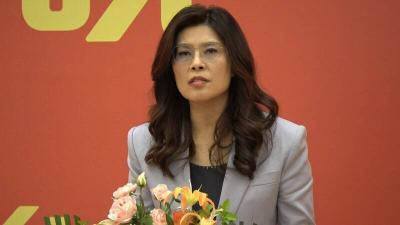
Both sides of the Taiwan Strait share a political foundation based on the “1992 consensus” and opposition to Taiwanese independence, Chinese Nationalist Party (KMT) Chairwoman Cheng Li-wun (鄭麗文) today said during her meeting with Chinese President Xi Jinping (習近平). Both sides of the Strait should plan and build institutionalized and sustainable mechanisms for dialogue and cooperation based on that foundation to make peaceful development across the Strait irreversible, she said. Peace is a shared moral value across the Strait, and both sides should move beyond political confrontation to seek institutionalized solutions to prevent war, she said. Mutually beneficial cross-strait relations are what the
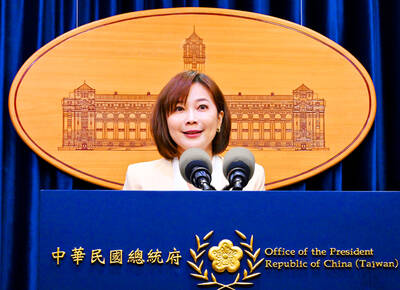
ECONOMIC COERCION: Such actions are often inconsistently applied, sometimes resumed, and sometimes just halted, the Presidential Office spokeswoman said The government backs healthy and orderly cross-strait exchanges, but such arrangements should not be made with political conditions attached and never be used as leverage for political maneuvering or partisan agendas, Presidential Office spokeswoman Karen Kuo (郭雅慧) said yesterday. Kuo made the remarks after China earlier in the day announced 10 new “incentive measures” for Taiwan, following a landmark meeting between Chinese President Xi Jinping (習近平) and Chinese Nationalist Party (KMT) Chairwoman Cheng Li-wun (鄭麗文) in Beijing on Friday. The measures, unveiled by China’s Xinhua news agency, include plans to resume individual travel by residents of Shanghai and China’s Fujian


 RSS
RSS