


Criminal libel laws are a human rights issue that Taiwan should address, the US Department of State said in its 2021 Country Reports on Human Rights Practices, which also expressed concern that China allegedly suppresses freedom of the press in Taiwan.
“Significant human rights issues included the existence of criminal libel laws,” said the chapter on Taiwan in the report, which was released on Tuesday.
It is the second consecutive year that the state department has criticized Taiwan for making defamation and public humiliation criminal offenses.
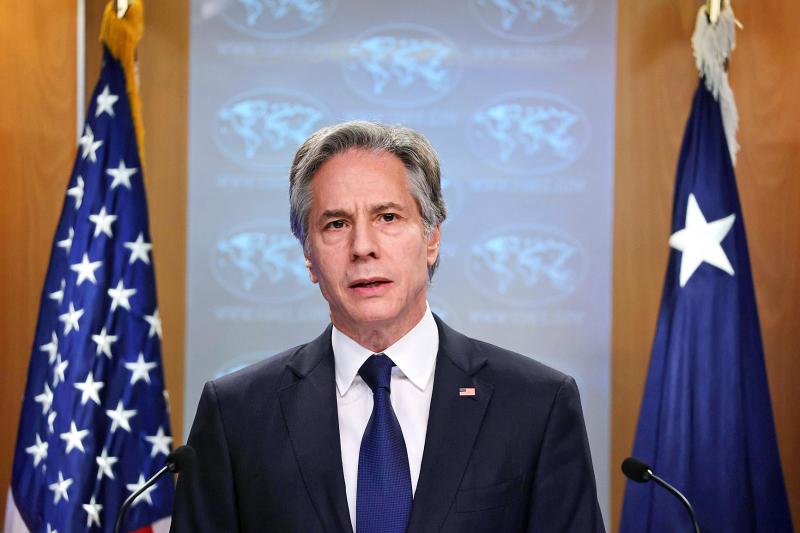
Photo: AFP
Reporters in Taiwan face online bullying and the threat of legal action under “liberal libel laws,” the report said.
“Under the law, those who commit slander or libel by ‘pointing out or disseminating a fact which will injure the reputation of another’ are subject to a sentence of up to two years or a fine,” it added.
People who are slandered can ask for financial compensation and actions to rehabilitate their reputations, provisions that “allow the subjects of unfavorable press coverage to press criminal and civil charges directly against journalists and media outlets for defamation,” it said.
In practice, journalists are rarely convicted for criminal defamation, as the law also specifies that a person who makes “fair comment on a fact subject to public criticism” with “bona fide intent ... shall not be punished,” it added.
However, some legal academics and non-governmental organizations continue to urge that libel be exclusively treated as a civil matter, it said.
Regarding freedom of the press, the report said that Chinese officials “reportedly continued to influence Taiwanese media outlets through pressure on the business interests of their parent companies in the PRC [People’s Republic of China].”
It said that Taiwanese journalists reported difficulty publishing content critical of China, alleging that authorities in Beijing pressure Taiwanese businesses with operations in China to refrain from advertising with Taiwanese media firms that publish such material.
The report also highlighted a decision by Taipei in December 2020 not to renew CTi News’ (中天新聞台) broadcast license, which forced it to close down its cable news channel and switch to an online-only format.
The move was seen by opposition politicians, as well as some academics and commentators, “as a politically motivated retaliation for CTi News’ criticism of the ruling party,” the report said.
In the report, US Secretary of State Antony Blinken listed 10 countries and territories — Russia, China, North Korea, Nicaragua, Syria, Myanmar, Belarus, Cuba, Sudan and Hong Kong — that have had declines in human rights and democracy.
Blinken said that over the years, there have been worrying declines in democracy, the rule of law and respect for human rights in many parts of the world.
“Unfortunately, the recession has continued” since the state department released its previous human rights report in March last year, he said.

PROVOCATIVE: Chinese Deputy Ambassador to the UN Sun Lei accused Japan of sending military vessels to deliberately provoke tensions in the Taiwan Strait China denounced remarks by Japan and the EU about the South China Sea at a UN Security Council meeting on Monday, and accused Tokyo of provocative behavior in the Taiwan Strait and planning military expansion. Ayano Kunimitsu, a Japanese vice foreign minister, told the Council meeting on maritime security that Tokyo was seriously concerned about the situation in the East China and South China seas, and reiterated Japan’s opposition to any attempt to change the “status quo” by force, and obstruction of freedom of navigation and overflight. Stavros Lambrinidis, head of the EU delegation to the UN, also highlighted South China Sea

The final batch of 28 M1A2T Abrams tanks purchased from the US arrived at Taipei Port last night and were transported to the Armor Training Command in Hsinchu County’s Hukou Township (湖口), completing the military’s multi-year procurement of 108 of the tanks. Starting at 12:10am today, reporters observed more than a dozen civilian flatbed trailers departing from Taipei Port, each carrying an M1A2T tank covered with black waterproof tarps. Escorted by military vehicles, the convoy traveled via the West Coast Expressway to the Armor Training Command, with police implementing traffic control. The army operates about 1,000 tanks, including CM-11 Brave Tiger
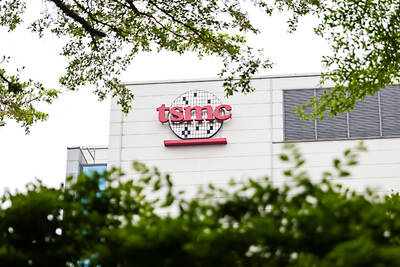
Taiwan Semiconductor Manufacturing Co (TSMC, 台積電), the world’s largest contract chipmaker, said it expects its 2-nanometer (2nm) chip capacity to grow at a compound annual rate of 70 percent from this year to 2028. The projection comes as five fabs begin volume production of 2-nanometer chips this year — two in Hsinchu and three in Kaohsiung — TSMC senior vice president and deputy cochief operating officer Cliff Hou (侯永清) said at the company’s annual technology symposium in Silicon Valley, California, last week. Output in the first year of 2-nanometer production, which began in the fourth quarter of last year, is expected to

Taiwan’s drone exports surged past US$100 million in the first quarter, exceeding last year’s full-year total, with the Czech Republic emerging as the largest buyer, the Ministry of Economic Affairs said. Exports of complete drones reached US$115.85 million in the period, about 1.2 times the total recorded for all of last year, the ministry said in a report. Exports to the Czech Republic accounted for about US$100 million, far outpacing other markets. Poland, last year’s top destination, recorded about US$11.75 million in the first quarter. Taiwan’s drone exports have expanded rapidly in the past few years, with last year’s total


 RSS
RSS