


Chinese Nationalist Party (KMT) Legislator Chiang Wan-an (蔣萬安) on Friday proposed changing the name of the Chiang Kai-shek Memorial Hall in Taipei to the “Taiwan Development Memorial Hall” (台灣建設紀念館), to commemorate all Taiwanese who helped build the nation over the past seven decades.
Taiwanese should look at the larger picture when determining the memorial hall’s role in history, Chiang said.
Former presidents Chiang Kai-shek (蔣介石) and his son Chiang Ching-kuo (蔣經國) protected the Republic of China and contributed greatly to the development of Taiwan during the Cold War era, an achievement that should be the goal of any political party in Taiwan, Chiang Wan-an said.
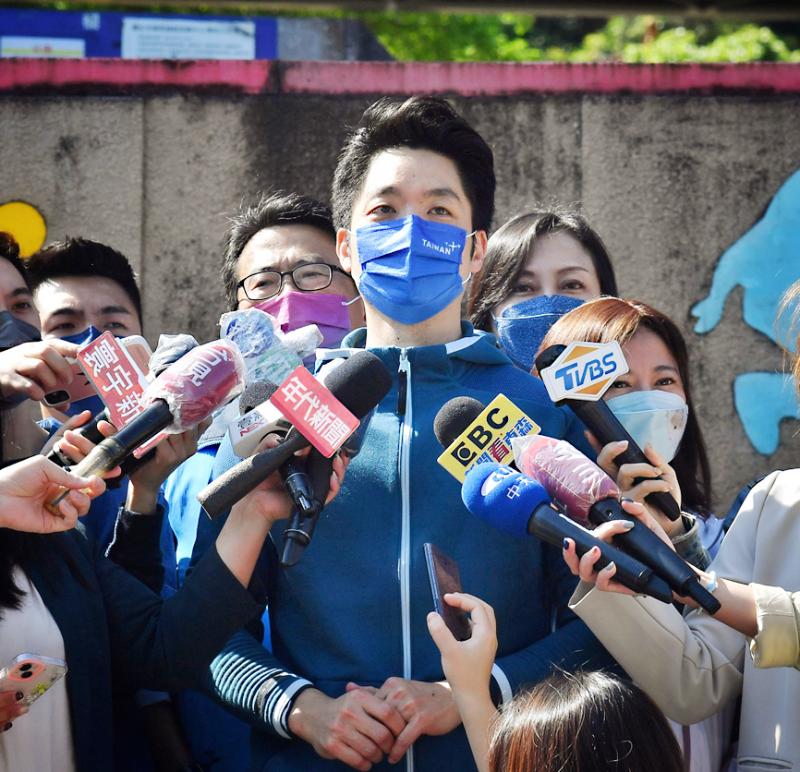
Photo: CNA
No political party or organization should seek to incite hatred or confrontation in society by their treatment or handling of places dedicated to the two former presidents, he added.
Chiang Wan-an said he believes Taiwanese would like to face the truth of the past seven decades and put it behind them, and focus on the future and moving toward it.
Chiang Wan-an is the son of former KMT vice chairman John Chiang (蔣孝嚴), who claims to be a son of Chiang Ching-kuo.
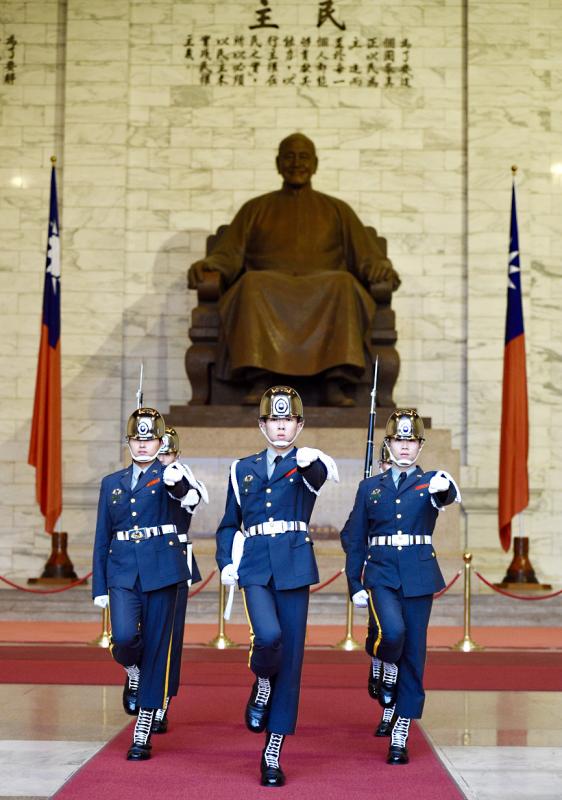
Photo: Lo Pei-der, Taipei Times
Minister of Culture Lee Yung-te (李永得) said that certain clarifications first need to be made on how the memorial hall would be rebranded, such as the fate of the statue of Chiang Kai-shek housed in the main hall and the building itself.
The Ministry of Culture stands by three main principles: first, any repurposing should remove elements suggesting reverence of authoritarian figures while retaining other historic elements, Lee said, adding that renaming the hall is an integral part of removing authoritarian elements.
Second, an effort must be made to highlight the “basic values” of Taiwan, namely having the courage to stand up against authoritarian figures, he said.
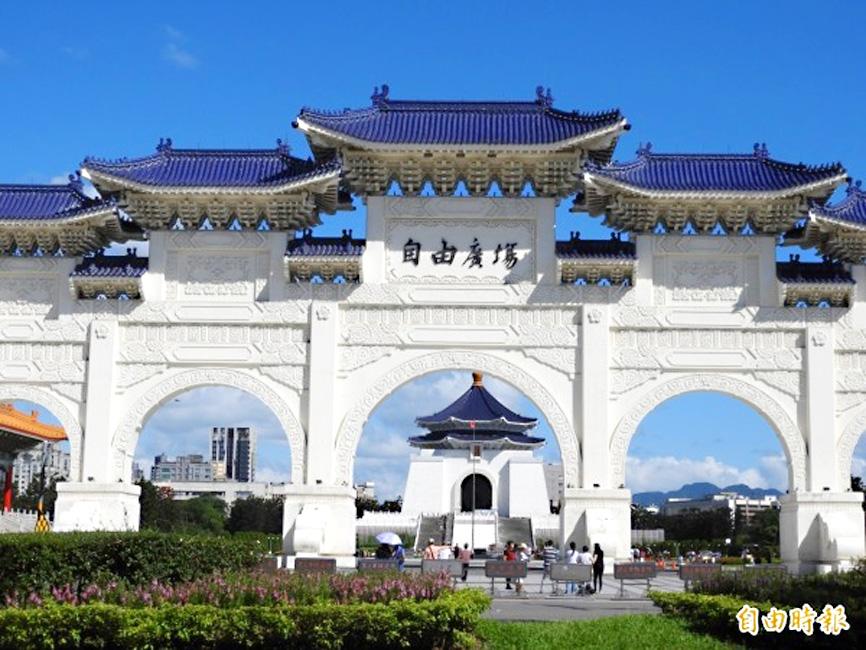
Photo: Photo: Chen Yu-fu, Taipei Times
Third, a sense of “dynamic historic views” should be established, he added.
The ministry is happy to support Chiang Wan-an’s suggestion provided all three principles are observed, Lee said, but added that renaming should be discussed with the public.
Chiang Wan-an’s comments came as a surprise to the KMT, a source in the party said yesterday, speaking on condition of anonymity
His remarks are bold and forward-thinking, but he must be prepared to endure mounting pressure from within the party, the source said.
Chiang Wan-an’s statements could benefit Taipei Deputy Mayor Vivian Huang (黃珊珊), who is rumored to be interested in running for Taipei mayor in November’s local elections, the source added.
Huang could attract 3 to 5 percent of the KMT’s voter base if she were to express her respect for Chiang Kai-shek and Chiang Ching-kuo and oppose any changes to the memorial park, the source said.
Chiang Wan-an is seen as the most likely candidate to run for Taipei mayor on the KMT ticket, although he has yet not been officially nominated.
Additional reporting by CNA

PROVOCATIVE: Chinese Deputy Ambassador to the UN Sun Lei accused Japan of sending military vessels to deliberately provoke tensions in the Taiwan Strait China denounced remarks by Japan and the EU about the South China Sea at a UN Security Council meeting on Monday, and accused Tokyo of provocative behavior in the Taiwan Strait and planning military expansion. Ayano Kunimitsu, a Japanese vice foreign minister, told the Council meeting on maritime security that Tokyo was seriously concerned about the situation in the East China and South China seas, and reiterated Japan’s opposition to any attempt to change the “status quo” by force, and obstruction of freedom of navigation and overflight. Stavros Lambrinidis, head of the EU delegation to the UN, also highlighted South China Sea
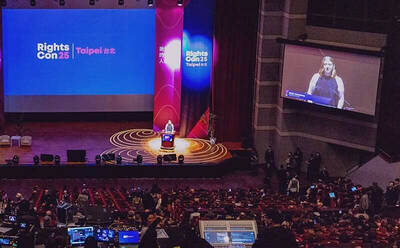
SILENCING CRITICS: In addition to blocking Taiwan, China aimed to prevent rights activists from speaking out against authoritarian states, a Cabinet department said The Ministry of Foreign Affairs (MOFA) yesterday condemned transnational repression by Beijing after RightsCon, a major digital human rights conference scheduled to be held in Zambia this week, was abruptly canceled due to Chinese pressure over Taiwanese participation. This year’s RightsCon, the world’s largest conference discussing issues “at the intersection of human rights and technology,” was scheduled to take place from tomorrow to Friday in Lusaka, and expected to draw 2,600 in-person attendees from 150 countries, along with 1,100 online participants. However, organizers were forced to cancel the event due to behind-the-scenes pressure from China, the ministry said, expressing its “strongest condemnation”
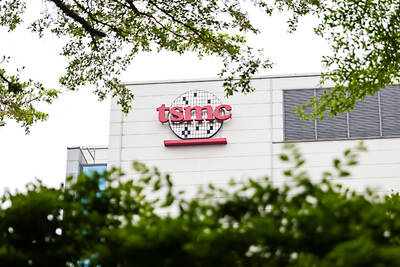
Taiwan Semiconductor Manufacturing Co (TSMC, 台積電), the world’s largest contract chipmaker, said it expects its 2-nanometer (2nm) chip capacity to grow at a compound annual rate of 70 percent from this year to 2028. The projection comes as five fabs begin volume production of 2-nanometer chips this year — two in Hsinchu and three in Kaohsiung — TSMC senior vice president and deputy cochief operating officer Cliff Hou (侯永清) said at the company’s annual technology symposium in Silicon Valley, California, last week. Output in the first year of 2-nanometer production, which began in the fourth quarter of last year, is expected to
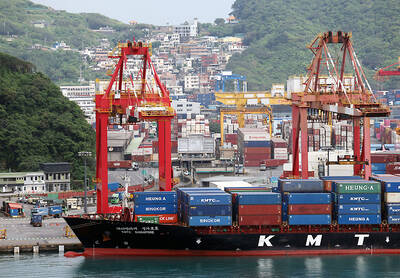
Taiwan’s economy grew far faster than expected in the first quarter, as booming demand for artificial intelligence (AI) applications drove a surge in exports, spilling over into investment and consumption, the Directorate-General of Budget, Accounting and Statistics (DGBAS) said yesterday. GDP growth was 13.69 percent year-on-year during the January-to-March period, beating the DGBAS’ February forecast by 2.23 percentage points and marking the most robust growth in nearly four decades, DGBAS senior official Chiang Hsin-yi (江心怡) told a news conference in Taipei. The result was powered by exports, which remain the backbone of Taiwan’s economy, Chiang said. Outbound shipments jumped 51.12 percent year-on-year to


 RSS
RSS