


Yilan County Commissioner Lin Zi-miao (林姿妙) of the Chinese Nationalist Party (KMT) is among a group of officials facing corruption charges related to an economic renewal project, the Yilan District Prosecutors’ Office said yesterday.
Suspects linked to an investigation of a NT$5 billion (US$181 million at the current exchange rate) economic renewal project would likely face charges of corruption, money laundering, forgery, bid-rigging, possessing personal assets of unknown origin and financial irregularities related to county government projects, prosecutors told a news conference in Yilan.
Persons of interest identified by prosecutors include: Luodong Township (羅東) Mayor Wu Chiu-ling (吳秋齡) and former Yilan County councilor Liu Shih-chun (劉石純), both of the KMT; Yilan County Bureau of Land Administration Director Yang Tsung-ming (楊崇明); county Economic Development officials Chao Hong-hsun (趙竑勳) and Huang Yao-chih (黃耀智); former Yilan County Chamber of Commerce chairman Chen Cheng-hsun (陳正勳); Lin’s daughter, Lin Yi-lin (林羿伶); and former county KMT National Assembly representative Lin Shu-mei (林束梅), who is Lin Zi-miao’s cousin.
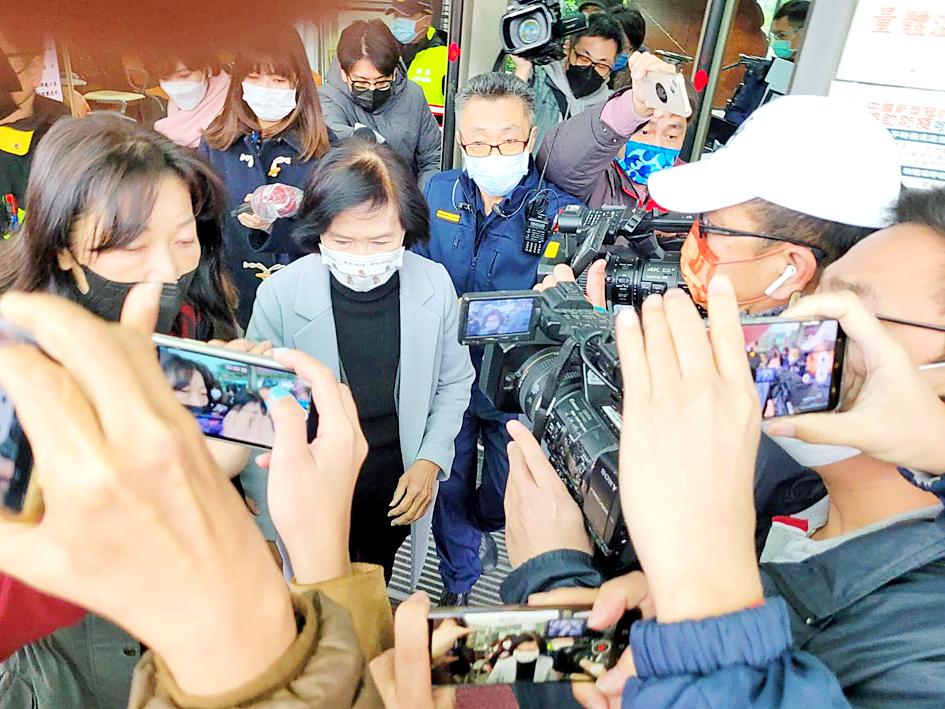
Photo: CNA
Prosecutors on Thursday searched 30 locations with Agency Against Corruption officers and served summonses to question more than 30 people in connection with the corruption probe.
The investigation centers on a 105-hectare project in Luodong Township, where prosecutors said that land originally designated as protected was rezoned for agricultural use in 2018, with a provision allowing for construction of residential buildings and public infrastructure.
Prosecutors said there were disputes and financial improprieties throughout the process.
An investigation also found apparent financial irregularities on another Luodong project to rezone industrial land to construct a residential building in 2020, and officials were suspected of profiting from a public tender project in 2019, prosecutors said.
Lin Yi-lin’s Yi Hsing Mining Co (益興礦業) was also implicated, prosecutors said.
Lin Zi-miao, 69, and Wu, 65, were transferred to the Yilan District Prosecutors’ Office for questioning before being released without posting bail yesterday.
Yilan County Department of Economic Affairs Acting Director Wu Chao-chin (吳朝琴) and the Yilan County Department of Agriculture’s agricultural affairs director Wu Tung-yuan (吳東原) were detained following questioning and a bail hearing yesterday to prevent tampering with evidence and possible collusion of testimony, Yilan County Chief Prosecutor Liang Kuang-tsung (梁光宗) said.
Legal experts and political pundits said that it was the first time an incumbent local head and township mayor have been questioned in connection with a corruption case, especially as they are seeking re-election later this year.
The KMT said that the Democratic Progressive Party orchestrated the probe to maximize its chances of winning seats in the year-end elections.
Summoning a county commissioner for questioning, without concrete evidence or indication of what laws have been contravened, tarnishes the commissioner’s reputation, KMT Chairman Eric Chu (朱立倫) said.
KMT Culture and Communications Director-General Lin Tao (凌濤) said that the judiciary should remain neutral in reviewing the matter, adding that the KMT would defend Lin Zi-miao’s reputation.
Additional reporting by Shih Hsiao-kuang

The National Chungshan Institute of Science and Technology yesterday showcased its locally developed variants of the Vision 60 robotic patrol dog, which it plans to deploy on the nation’s outlying territories in the South China Sea. The variants were produced under the Joint Lab project — created by the institute and domestic companies — and assembled with domestically produced motors, lenses and artificial intelligence (AI) systems alongside licensed tech from the US, Missile and Rocket Systems Research Division deputy director Jen Kuo-kang (任國光) told the media event at a military base in Taipei’s Dazhi (大直) area. Taiwan has built up its strengths
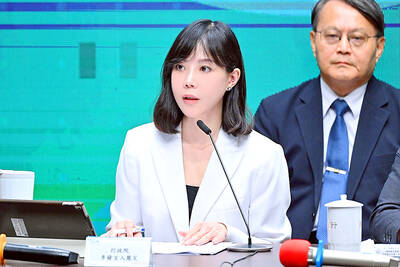
RIGHT DIRECTION: Taiwan’s efforts to prevent forced labor include a proposal to ‘fully prohibit’ employers from withholding workers’ documents, an official said Taiwan is to establish a mechanism to restrict imports of goods linked to forced labor, the Executive Yuan said yesterday, after the US proposed imposing additional tariffs on Taiwanese goods over labor concerns. “The Ministry of Labor and the Ministry of Economic Affairs are to establish an interministerial review procedure,” Executive Yuan spokesperson Michelle Lee (李慧芝) said at a news briefing in Taipei. “The government is to use the Foreign Trade Act [貿易法] as the legal basis to restrict imports of goods produced with forced labor” and bring its supply chain governance more in line with international standards on human rights, resilience
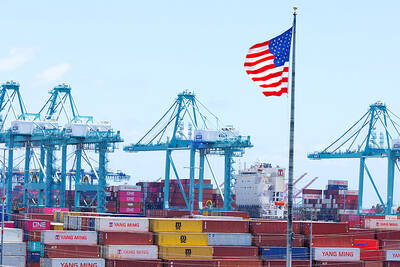
NOT IMMEDIATE: Taiwan has a chance to appeal the proposed 10 percent tariff before it starts, while other countries face a 12.5 percent tariff from the trade office Taiwan is among 60 economies determined by the US to have failed to impose or enforce a ban on the importation of goods produced with forced labor, according to a notice released on Tuesday by the Office of the US Trade Representative (USTR), which proposed imposing an additional 10 percent or more tariff on them. The USTR in a statement said that following an investigation, it had determined under Section 301 of the Trade Act of 1974 that the failure of the 60 economies to impose and effectively enforce a prohibition on the importation of goods produced with forced labor is
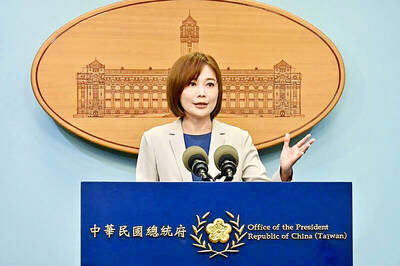
TIT-FOR-TAT: The US allegedly revoked the visa of a Chinese national working at Xinhua News Agency in the US in response to Beijing’s expulsion of Vivian Wang The Presidential Office yesterday condemned China for expelling a New York Times correspondent from Beijing following the newspaper’s interview with President William Lai (賴清德), saying the move highlighted Beijing’s suppression of press freedom and its threat to international news media. Taiwan has noted a series of recent incidents in which Beijing used similar tactics to “threaten and pressure international media outlets and journalists,” Presidential Office spokeswoman Karen Kuo (郭雅慧) said in a statement. “This concerns not only press freedom and freedom of expression, but also the safety of journalists, and Taiwan and relevant partners are paying close attention to the situation,” she


 RSS
RSS