


Technology is the nation’s security guarantee, President Tsai Ing-wen (蔡英文) said yesterday, expressing the hope to make the world “more reliant on Taiwan.”
Tsai made the remarks during visits to the Ministry of Science and Technology’s Cyber Security and Smart Technology R&D Building in Tainan and a planned science park in Kaohsiung’s Ciaotou District (橋頭).
The cybersecurity building in Gueiren District (歸仁) houses 14 cybersecurity firms and the southern branch of the ministry’s start-up incubator Taiwan Tech Arena. The building is part of the wider Shalun Smart Green Energy Science City.
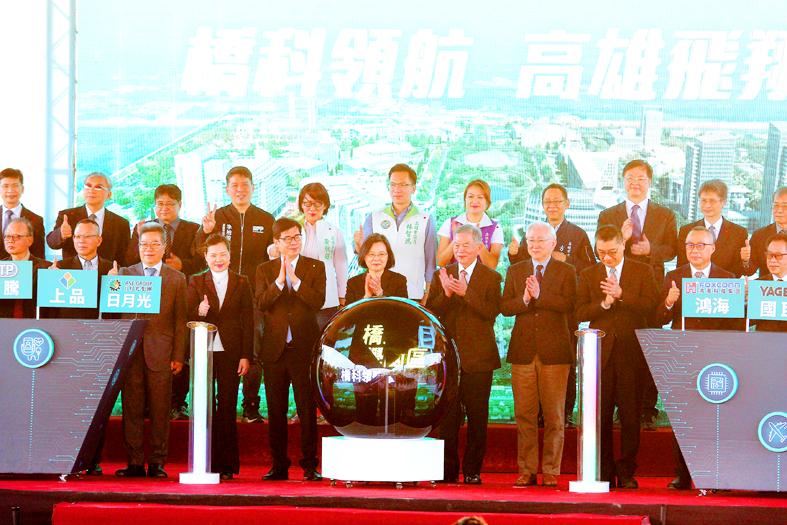
Photo: Lee Hui-chou, Taipei Times
“The world is watching Taiwan, especially its technology development,” Tsai said, adding that the nation has to speed up innovation.
Taiwan’s advanced technology and manufacturing prowess is critical to its survival and security, she said, adding that Taiwanese technology would help the nation create closer links with the world.
New high-tech industry clusters would be set up not only in northern and central Taiwan, but also in the south, she said.
“Taiwan would become the world’s biggest tech cluster,” she added.
Few people wanted to move for work to Gueiren five years ago, but the hub in the district is expected to become the cradle of Asia’s most advanced cybersecurity technology, featuring innovative start-ups, Minister of Science and Technology Wu Tsung-tsong (吳政忠) said.
A cybersecurity base managed by the ministry-affiliated National Applied Research Laboratories is on the building’s fifth floor.
The base is tasked with cultivating cybersecurity talent and promoting academia-industry cooperation, said Steven Tsai (蔡一郎), a researcher at the cybersecurity hub.
Since the COVID-19 pandemic started, businesses have increasingly adopted remote operations and placed increasing emphasis on ID certification, driving the need for cybersecurity defenses, he said.
Connected to the facilities of the National Center for High-Performance Computing, the cybersecurity base would regularly stage cyberattack and defense drills, he said.
One of the firms stationed in the new building, Systex Solutions Corp (精誠資訊), considers the new space appealing due to its proximity to the Southern Taiwan Science Park (南部科學園區), Systex operation and service division technical manager Erin Chang (張莉婷) said.
With more firms returning to Taiwan, the region is expected to attract more new businesses, she said.
Systex, which offers cybersecurity solutions, hopes to gain many clients among those firms, she added.
The Ciaotou Science Park (橋頭科學園區), which is under construction, is seeking to recruit businesses in the semiconductor, electric vehicle, and information and communications technology sectors, Southern Science Park Administration Bureau director-general Su Chen-kang (蘇振綱) said.
The planned science park would cover 352.44 hectares, including 186.49 hectares of industrial zones, 39.79 hectares of residential and commercial zones and 126.16 hectares of green land.
The park’s development plan was approved by the Environmental Protection Administration in September.
Kaohsiung Mayor Chen Chi-mai (陳其邁) said the city government would provide full assistance to businesses that seek to set up bases in the new science park, including on meeting water and electricity demand.
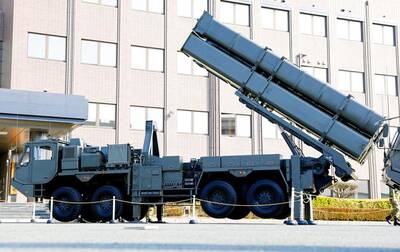
Japan has deployed long-range missiles in a southwestern region near China, the Japanese defense minister said yesterday, at a time when ties with Beijing are at their lowest in recent years. The missiles were installed in Kumamoto in the southern region of Kyushu, as Japan is attempting to shore up its military capacity as China steps up naval activity in the East China Sea. “Standoff defense capabilities enable us to counter the threat of enemy forces attempting to invade our country ... while ensuring the safety of our personnel,” Japanese Minister of Defense Shinjiro Koizumi said. “This is an extremely important initiative for
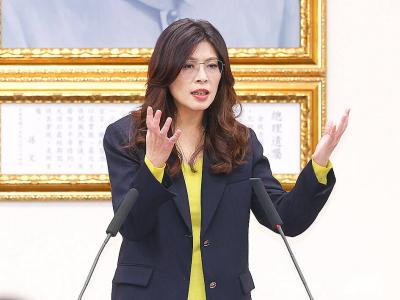
Chinese Nationalist Party (KMT) Chairwoman Cheng Li-wun (鄭麗文) today accepted an invitation from Chinese President Xi Jinping (習近平) to lead a delegation to China next month, saying she hopes to promote the peaceful development of cross-strait relations and bring stability to the Taiwan Strait. “I am grateful and happy to accept this invitation,” Cheng said in a statement from the KMT chairperson’s office. Cheng said she hopes both sides can work together to promote the peaceful development of cross-strait relations, enhance exchange and cooperation, bring stability to the Taiwan Strait and improve people’s livelihoods. At today's news conference, Cheng said any efforts to
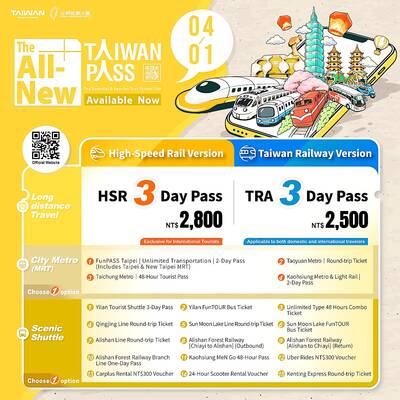
MORE POPULAR: Taiwan Pass sales increased by 59 percent during the first quarter compared with the same period last year, the Tourism Administration said The Tourism Administration yesterday said that it has streamlined the Taiwan Pass, with two versions available for purchase beginning today. The tourism agency has made the pass available to international tourists since 2024, allowing them to access the high-speed rail, Taiwan Railway Corp services, four MRT systems and four Taiwan Tourist Shuttles. Previously, five types of Taiwan Pass were available, but some tourists have said that the offerings were too complicated. The agency said only two types of Taiwan Pass would be available, starting from a three-day pass with the high-speed rail and a three-day pass with Taiwan Railway Corp. The former costs NT$2,800

The nation’s fastest supercomputer, Nano 4 (晶創26), is scheduled to be launched in the third quarter, and would be used to train large language models in finance and national defense sectors, the National Center for High-Performance Computing (NCHC) said. The supercomputer, which would operate at about 86.05 petaflops, is being tested at a new cloud computing center in the Southern Taiwan Science Park in Tainan. The exterior of the server cabinet features chip circuitry patterns overlaid with a map of Taiwan, highlighting the nation’s central position in the semiconductor industry. The center also houses Taiwania 2, Taiwania 3, Forerunner 1 and


 RSS
RSS