


The US on Nov. 8 plans to reopen its land and air borders to foreign visitors who are fully vaccinated against COVID-19, loosening a more than 18-month ban on travel from much of the globe that separated families, hobbled tourism and strained diplomatic ties.
The decision to ease restrictions was “guided by public health, stringent and consistent,” White House assistant press secretary Kevin Munoz wrote on Twitter on Friday, announcing the policy.
He said the “announcement and date applies to both international air travel and land travel.”
The new policy was quickly hailed by the EU Ambassador to the US Stavros Lambrinidis, who called it “important and very welcome news,” and wrote on Twitter that more details were expected to follow.
In an effort to slow the spread of COVID-19, US borders were closed after March last year to travelers from large parts of the world, including China, Brazil, India, the UK and the EU. Overland visitors from Mexico and Canada were also banned.
The months of restrictions affecting hundreds of millions of people helped fuel personal and economic suffering brought on by the COVID-19 pandemic.
The Airlines for America trade association said its members were “eager to begin safely reuniting ... countless families, friends and colleagues,” adding that the “reopening of borders is essential for our nation’s economic recovery.”
International Air Transport Association director-general Willie Walsh said that “for the millions who have been locked out of the US for up to 18 months, it is great news that the US will welcome fully vaccinated foreign travelers.”
Not all the technical and logistical details of the new policy have been announced, but officials had previously outlined them, saying that vaccinated air passengers would need to be tested for the virus within three days of travel, and airlines would be required to have a contact tracing system.
US health authorities have said all COVID-19 vaccines approved by the US Food and Drug Administration and the WHO would be accepted for entry by air.
This week, a White House source said the land border opening would happen in two phases.
Initially, vaccines would be required for “non-essential” trips — such as visiting family or tourism — although unvaccinated travelers would be allowed into the country for “essential” trips.
A second phase beginning in early January next year would require all visitors to be fully vaccinated to enter the US by land, no matter the reason for their trip.
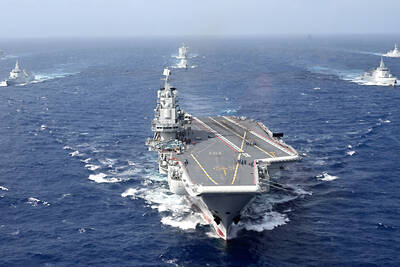
PROVOCATIVE: Chinese Deputy Ambassador to the UN Sun Lei accused Japan of sending military vessels to deliberately provoke tensions in the Taiwan Strait China denounced remarks by Japan and the EU about the South China Sea at a UN Security Council meeting on Monday, and accused Tokyo of provocative behavior in the Taiwan Strait and planning military expansion. Ayano Kunimitsu, a Japanese vice foreign minister, told the Council meeting on maritime security that Tokyo was seriously concerned about the situation in the East China and South China seas, and reiterated Japan’s opposition to any attempt to change the “status quo” by force, and obstruction of freedom of navigation and overflight. Stavros Lambrinidis, head of the EU delegation to the UN, also highlighted South China Sea
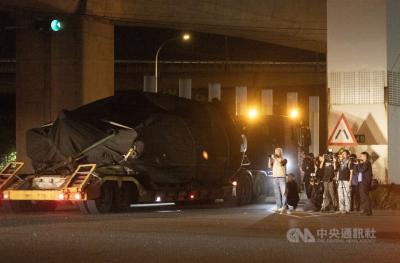
The final batch of 28 M1A2T Abrams tanks purchased from the US arrived at Taipei Port last night and were transported to the Armor Training Command in Hsinchu County’s Hukou Township (湖口), completing the military’s multi-year procurement of 108 of the tanks. Starting at 12:10am today, reporters observed more than a dozen civilian flatbed trailers departing from Taipei Port, each carrying an M1A2T tank covered with black waterproof tarps. Escorted by military vehicles, the convoy traveled via the West Coast Expressway to the Armor Training Command, with police implementing traffic control. The army operates about 1,000 tanks, including CM-11 Brave Tiger
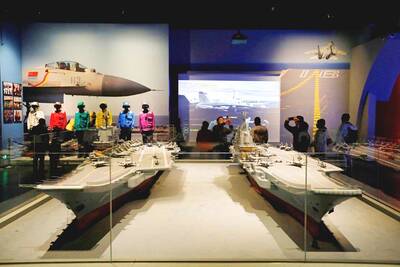
China on Wednesday teased in a video an aircraft carrier that could be its fourth, and the first using nuclear power, while making an allusion to Taiwan and vowing to further build up its islands, as it looks to boost maritime power, secure resources and bolster territorial claims. The video, issued on the eve of the 77th founding anniversary of the Chinese People’s Liberation Army Navy, featured fictional officers with names that are homophones of three commissioned aircraft carriers, the Liaoning (遼寧), Shandong (山東) and Fujian (福建). Titled Into the Deep, it showed a 19-year-old named “Hejian” (何劍) joining the group, sparking
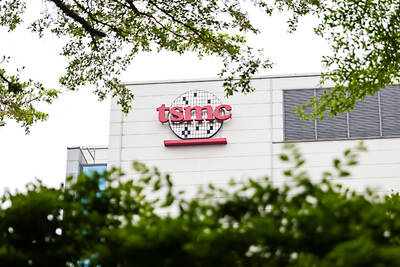
Taiwan Semiconductor Manufacturing Co (TSMC, 台積電), the world’s largest contract chipmaker, said it expects its 2-nanometer (2nm) chip capacity to grow at a compound annual rate of 70 percent from this year to 2028. The projection comes as five fabs begin volume production of 2-nanometer chips this year — two in Hsinchu and three in Kaohsiung — TSMC senior vice president and deputy cochief operating officer Cliff Hou (侯永清) said at the company’s annual technology symposium in Silicon Valley, California, last week. Output in the first year of 2-nanometer production, which began in the fourth quarter of last year, is expected to


 RSS
RSS