


The Central Epidemic Command Center (CECC) yesterday reported no new locally transmitted COVID-19 infections for the first time since before the nation’s biggest outbreak began in May.
“The confirmed local cases today are zero,” said Minister of Health and Welfare Chen Shih-chung (陳時中), who heads the center. “It was not easy.”
“I believe everyone is happy about this zero, but it doesn’t mean that COVID-19 is completely cleared in Taiwan,” Chen said. “There is still a long way to go, but this zero means that the local COVID-19 situation is relatively stable.”
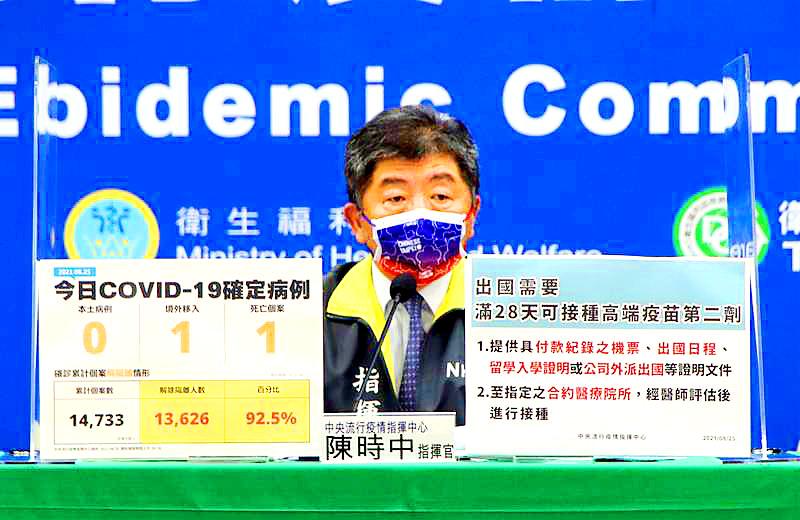
Photo courtesy of the Central Epidemic Command Center
The last time that the center reported zero local cases was 108 days ago, on May 9, but a local outbreak occurred shortly afterward, prompting Taipei and New Taipei City to be placed under a level three COVID-19 alert on May 15, followed by a nationwide alert on May 19.
“We can maintain this situation if precise contact tracing is conducted for each sporadic case,” Chen added.
Asked if COVID-19 restrictions would be further eased, Chen said: “Today is a good start, but it is important to observe the situation over the next two weeks.”

Photo courtesy of the National Palace Museum Southern Branch
People should not let their guard down, he said.
People arriving from other countries can still bring the virus with them, so border controls must be strictly implemented, Chen said, adding that illegal immigrants and smugglers are also a transmission risk, as they do not quarantine.
The center would work closely with the Coast Guard Administration to reduce the risks, he said, adding that people should immediately report any suspected illegal immigrants and smugglers to the authorities.
The center reported one imported case, an arrival from South Africa, and a death, a woman in her 70s who had underlying health conditions. She died on Sunday.
Chen said that many countries have reported a high prevalence of the Delta variant of SARS-CoV-2 when asked about reports that several travelers from Taiwan had tested positive for the variant in Xiamen, China.
Seventeen people in Taiwan had been infected with the Delta variant, but the cases were brought under control, he added.
Chen said that while he cannot be certain that the Delta variant is not spreading locally, the likelihood is very low.
Given what is happening in other countries, the Delta variant is very contagious and can become the dominant strain in a short period, but so far it has not been detected in local cluster infections, he said.
Asked whether Taiwanese can obtain special approval for a foreign family member without a residence permit to enter the nation, Chen said that such cases are handled case by case on humanitarian grounds.
Deputy Minister of the Interior Chen Tsung-yen (陳宗彥), who is deputy head of the center, said that foreigners have been banned from entering Taiwan since March 19 last year, but that the government has allowed some with special circumstances to enter the country on business or humanitarian grounds, such as they need emergency medical treatment or they have a spouse who is about to give birth.
Asked whether a foreigner who is the unmarried partner of a Taiwanese would be considered for entry, Chen Shih-chung said that couples, whether married or not, can apply to the Taiwanese consular office in their country, and the office could assess the necessity of their visiting Taiwan.
The most important thing is that all arrivals strictly comply with disease prevention rules, he added.
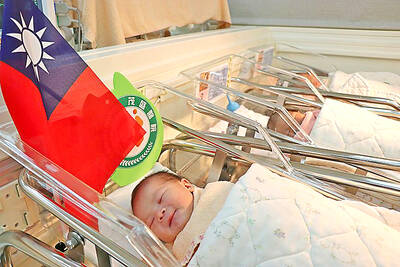
AGING: As of last month, people aged 65 or older accounted for 20.06 percent of the total population and the number of couples who got married fell by 18,685 from 2024 Taiwan has surpassed South Korea as the country least willing to have children, with an annual crude birthrate of 4.62 per 1,000 people, Ministry of the Interior data showed yesterday. The nation was previously ranked the second-lowest country in terms of total fertility rate, or the average number of children a woman has in her lifetime. However, South Korea’s fertility rate began to recover from 2023, with total fertility rate rising from 0.72 and estimated to reach 0.82 to 0.85 by last year, and the crude birthrate projected at 6.7 per 1,000 people. Japan’s crude birthrate was projected to fall below six,
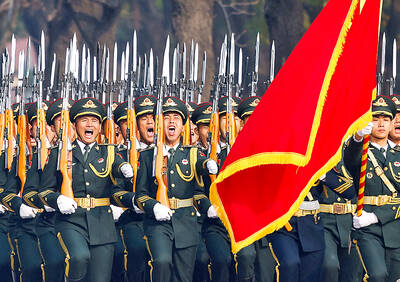
Conflict with Taiwan could leave China with “massive economic disruption, catastrophic military losses, significant social unrest, and devastating sanctions,” a US think tank said in a report released on Monday. The German Marshall Fund released a report titled If China Attacks Taiwan: The Consequences for China of “Minor Conflict” and “Major War” Scenarios. The report details the “massive” economic, military, social and international costs to China in the event of a minor conflict or major war with Taiwan, estimating that the Chinese People’s Liberation Army (PLA) could sustain losses of more than half of its active-duty ground forces, including 100,000 troops. Understanding Chinese
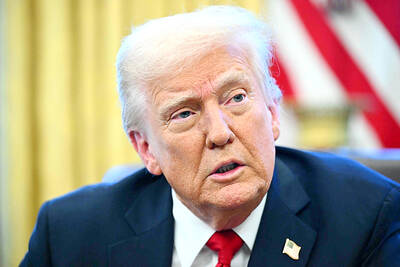
US President Donald Trump in an interview with the New York Times published on Thursday said that “it’s up to” Chinese President Xi Jinping (習近平) what China does on Taiwan, but that he would be “very unhappy” with a change in the “status quo.” “He [Xi] considers it to be a part of China, and that’s up to him what he’s going to be doing, but I’ve expressed to him that I would be very unhappy if he did that, and I don’t think he’ll do that. I hope he doesn’t do that,” Trump said. Trump made the comments in the context
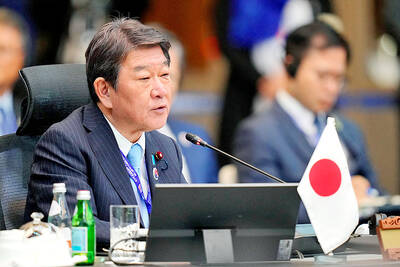
SELF-DEFENSE: Tokyo has accelerated its spending goal and its defense minister said the nation needs to discuss whether it should develop nuclear-powered submarines China is ramping up objections to what it sees as Japan’s desire to acquire nuclear weapons, despite Tokyo’s longstanding renunciation of such arms, deepening another fissure in the two neighbors’ increasingly tense ties. In what appears to be a concerted effort, China’s foreign and defense ministries issued statements on Thursday condemning alleged remilitarism efforts by Tokyo. The remarks came as two of the country’s top think tanks jointly issued a 29-page report framing actions by “right-wing forces” in Japan as posing a “serious threat” to world peace. While that report did not define “right-wing forces,” the Chinese Ministry of Foreign Affairs was


 RSS
RSS