


Canadian Prime Minister Justin Trudeau yesterday said that a Chinese court’s sentencing of Canadian businessman Michael Spavor to 11 years in prison for espionage was “absolutely unacceptable” and called for his immediate release.
The US embassy in Beijing also condemned the sentencing in a statement, saying that proceedings against Spavor and another Canadian charged with espionage were an attempt to “use human beings as bargaining leverage.”
The espionage cases are embroiled in a wider diplomatic spat involving Washington and Beijing, and Spavor’s sentencing comes as lawyers in Canada representing Huawei Technologies Co (華為) chief financial officer Meng Wanzhou (孟晚舟) make a final push to convince a court not to extradite her to the US.

Photo: AFP
“China’s conviction and sentencing of Michael Spavor is absolutely unacceptable and unjust,” Trudeau said in a statement.
“The verdict for Mr Spavor comes after more than two-and-a-half years of arbitrary detention, a lack of transparency in the legal process and a trial that did not satisfy even the minimum standards required by international law,” he said.
Trudeau called for the release of Spavor and former Canadian diplomat Michael Kovrig, who is awaiting a verdict in his espionage case.
China detained Spavor and Kovrig in late 2018, just days after Canada arrested Meng at the Vancouver International Airport on a warrant from the US.
Canadian Ambassador to China Dominic Barton, who visited Spavor at a detention center in northeastern China following the verdict, said Spavor had three messages that he asked to be shared with the outside world: “Thank you for all your support,” “I am in good spirits” and “I want to get home.”
“While we disagree with the charges, we realize that this is the next step in the process to bring Michael home, and we will continue to support him through this challenging time,” the Spavor family said in a statement.
Noting the presence of diplomats from 25 countries gathered at the Canadian embassy, Barton said: “Our collective presence and voice sends a strong signal to China and the Chinese government in particular, that all the eyes of the world are watching.”
The Dandong Intermediate Court also said that 50,000 yuan (US$7,709) of Spavor’s personal assets would be confiscated.
Spavor is to be deported upon finishing his sentence, Barton said.
The potential sentence ranged from five to 20 years.
China detained Spavor in December 2018 and he was charged with espionage in June 2019. The Dandong court concluded a one-day trial in March and waited until yesterday to announce the verdict.
In March, Spavor’s family said that the charges against him are vague and have not been made public, and that he has had “very limited access and interaction with his retained Chinese defense counsel.”
Kovrig’s espionage trial ended in March with the verdict to be announced at an unspecified date.
Some observers have said that the convictions of the two Canadians could ultimately facilitate an agreement in which they are released and sent back to Canada.
China has a conviction rate of better than 99 percent, and public and media access to trials in sensitive cases is typically limited.
Since Meng’s arrest, China has sentenced four Canadians to death over drug charges.
China has rejected the suggestion that the cases of the Canadians in China are linked to Meng’s case in Canada, although Beijing has warned of unspecified consequences unless Meng is released.
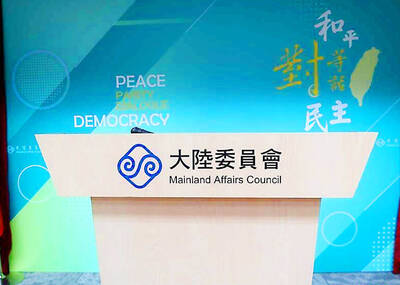
NO RECIPROCITY: Taipei has called for cross-strait group travel to resume fully, but Beijing is only allowing people from its Fujian Province to travel to Matsu, the MAC said The Mainland Affairs Council (MAC) yesterday criticized an announcement by the Chinese Ministry of Culture and Tourism that it would lift a travel ban to Taiwan only for residents of China’s Fujian Province, saying that the policy does not meet the principles of reciprocity and openness. Chinese Deputy Minister of Culture and Tourism Rao Quan (饒權) yesterday morning told a delegation of Chinese Nationalist Party (KMT) lawmakers in a meeting in Beijing that the ministry would first allow Fujian residents to visit Lienchiang County (Matsu), adding that they would be able to travel to Taiwan proper directly once express ferry

FAST RELEASE: The council lauded the developer for completing model testing in only four days and releasing a commercial version for use by academia and industry The National Science and Technology Council (NSTC) yesterday released the latest artificial intelligence (AI) language model in traditional Chinese embedded with Taiwanese cultural values. The council launched the Trustworthy AI Dialogue Engine (TAIDE) program in April last year to develop and train traditional Chinese-language models based on LLaMA, the open-source AI language model released by Meta. The program aims to tackle the information bias that is often present in international large-scale language models and take Taiwanese culture and values into consideration, it said. Llama 3-TAIDE-LX-8B-Chat-Alpha1, released yesterday, is the latest large language model in traditional Chinese. It was trained based on Meta’s Llama-3-8B

STUMPED: KMT and TPP lawmakers approved a resolution to suspend the rate hike, which the government said was unavoidable in view of rising global energy costs The Ministry of Economic Affairs yesterday said it has a mandate to raise electricity prices as planned after the legislature passed a non-binding resolution along partisan lines to freeze rates. Chinese Nationalist Party (KMT) lawmakers proposed the resolution to suspend the price hike, which passed by a 59-50 vote. The Taiwan People’s Party (TPP) voted with the KMT. Legislative Speaker Han Kuo-yu (韓國瑜) of the KMT said the resolution is a mandate for the “immediate suspension of electricity price hikes” and for the Executive Yuan to review its energy policy and propose supplementary measures. A government-organized electricity price evaluation board in March

NOVEL METHODS: The PLA has adopted new approaches and recently conducted three combat readiness drills at night which included aircraft and ships, an official said Taiwan is monitoring China’s People’s Liberation Army (PLA) exercises for changes in their size or pattern as the nation prepares for president-elect William Lai’s (賴清德) inauguration on May 20, National Security Bureau (NSB) Director-General Tsai Ming-yen (蔡明彥) said yesterday. Tsai made the comment at a meeting of the Legislative Yuan’s Foreign Affairs and National Defense Committee, in response to Democratic Progressive Party (DPP) Legislator Wang Ting-yu’s (王定宇) questions. China continues to employ a carrot-and-stick approach, in which it applies pressure with “gray zone” tactics, while attempting to entice Taiwanese with perks, Tsai said. These actions aim to help Beijing look like it has


 RSS
RSS