


The government has signed a contract to buy an additional 36 million doses of the Moderna COVID-19 vaccine, 1 million of which are to be delivered in the fourth quarter, the Executive Yuan announced yesterday, as it updated its vaccination target to 30 percent coverage by the end of the month.
The two-year deal with the US company covers “prime series” vaccines and future booster shots to protect against SARS-CoV-2 variants, Executive Yuan spokesman Lo Ping-cheng (羅秉成) quoted Premier Su Tseng-chang (蘇貞昌) as saying during an Executive Yuan meeting in Taipei.
In the two weeks since vaccine registration opened, more than 9.8 million people have signed up, while Taiwan has received more than 8.9 million doses, Su said.
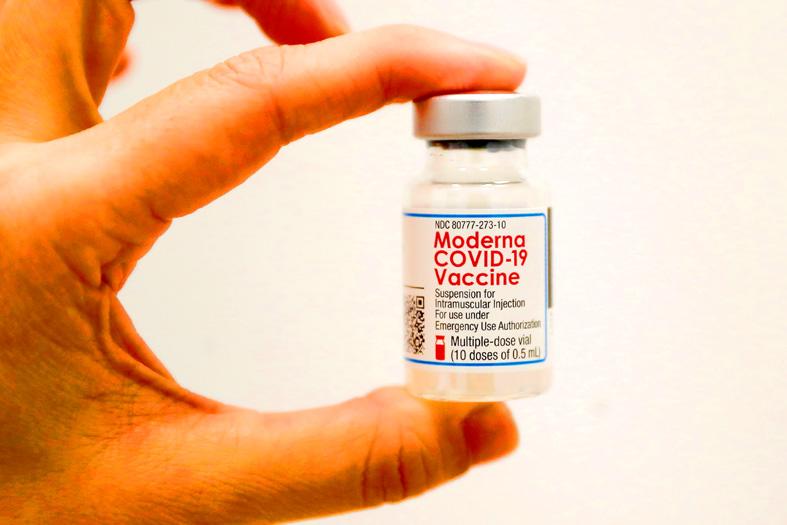
Photo: Reuters
Thanks to the efforts of local governments, vaccination coverage reached 23.5 percent as of Wednesday, with more than 5.67 million people having received at least one dose, he added.
Yesterday, the Central Epidemic Command Center (CECC) said that the rate had reached 24.35 percent.
The original target of 25 percent coverage by the end of this month is likely to be attained ahead of schedule, Su said, adding that the government now hopes to reach 30 percent.
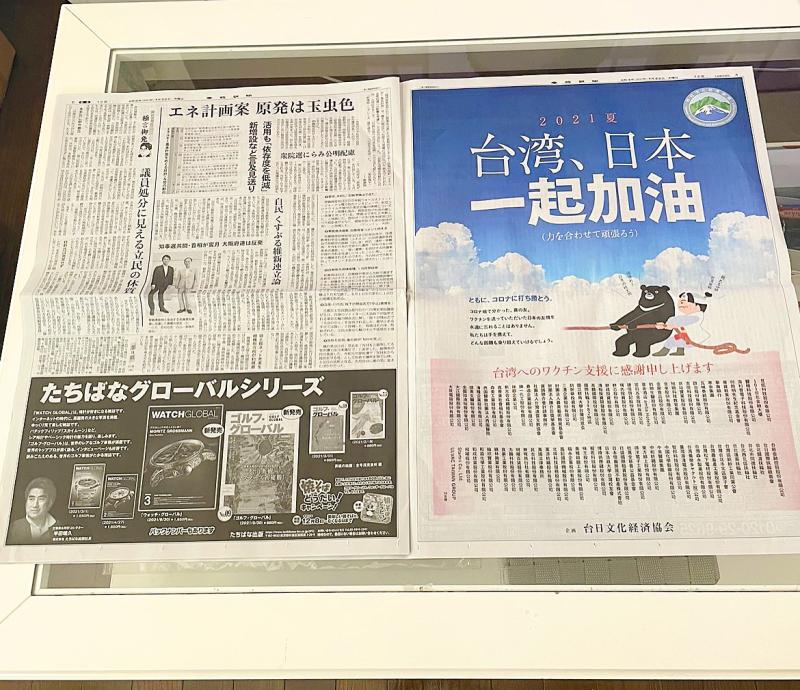
Photo courtesy of the Taipei branch of Sankei Shimbun
More vaccine options are to be added on the registration site as soon as they arrive, he added, encouraging people to be vaccinated as soon as they are eligible.
Buddhist Compassion Relief Tzu Chi Foundation on Wednesday agreeded to buy 5 million doses of BioNTech’s vaccine, which paired with similar purchases by Taiwan Semiconductor Manufacturing Co (台積電) and Hon Hai Precision Industry Co (鴻海精密)-affiliated Yonglin Foundation, has brought contributions by private donors to 15 million doses, Su said.
These donations are the “most selfless contribution to the nation,” he said, extending his gratitude to the organizations on the government’s behalf.
With Medigen Vaccine Biologics Corp’s (高端疫苗) vaccine receiving emergency use authorization, new progress in obtaining vaccines is being made every week, he said.
Su also thanked the Ministry of Health and Welfare, the Food and Drug Administration and other experts for their hard work in safeguarding the nation’s health through science and professionalism.
In related news, a group of 88 businesses and organizations yesterday took out a full-page advertisement in Sankei Shimbun to thank Japan for its vaccine donations and to express their support on the eve of the Tokyo Olympic Games’ opening ceremony.
The newspaper ad features a Formosan black bear and the Japanese folk hero Momotaro competing on the same tug-of-war team, with text saying that Taiwan will never forget Japan’s friendship during the pandemic.
Japan has donated 3.34 million doses of the AstraZeneca vaccine to Taiwan in three batches since June 4.
The Taiwan-Japan Cultural and Economic Association, which initiated the campaign, was founded in 1952 to facilitate exchanges between the two nations and boasts more than 200 members.
The US has also donated 2.5 million doses of the Moderna vaccine to Taiwan.
Lithuania last month pledged to donate 20,000 doses of the AstraZeneca vaccine to Taiwan, while Slovakia last week also pledged to donate 10,000 vaccine doses to Taiwan through the European Civil Protection Mechanism, with the vaccine brand to be determined.
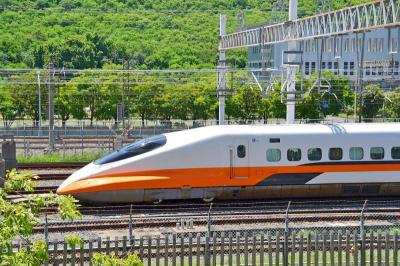
A signaling system malfunction disrupted high-speed rail (HSR) services beginning at 8am today, with trains temporarily reduced to three northbound and three southbound trains per hour as authorities conduct inspections. The malfunction occurred on a section of track in Miaoli County during pre-operation checks early this morning, forcing northbound and southbound trains to use a single track, the HSR operator said. The regular schedule has been replaced with three hourly trains offering only nonreserved seating in each direction, stopping at every station, it said, adding that business class cars would still have reserved seating. Departures from terminal stations are scheduled at the top
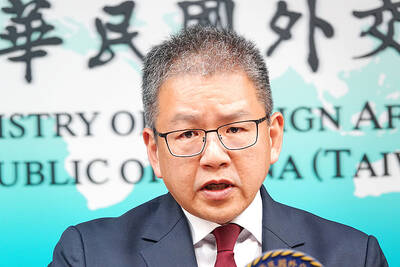
Taiwan is still in the process of assessing the possibility of recruiting workers from Eswatini, the Ministry of Foreign Affairs said yesterday, adding that its goal is to help Eswatini upgrade its vocational training centers. If there are plans to recruit workers from Eswatini, safeguarding national security, protecting public health and ensuring the employment rights of Taiwanese would be prerequisites, Department of West Asian and African Affairs Director-General Yen Chia-liang (顏嘉良) told a news conference. Key considerations would also include filling labor shortages in specific industries, and fostering bilateral professional and technical exchanges, he said. Yen was asked about the progress of labor
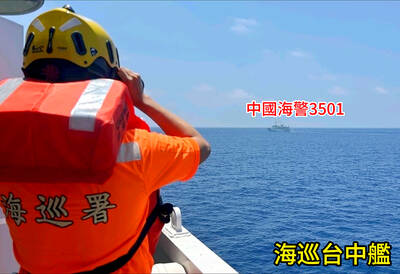
VERBOSE VESSELS: A CGA cutter and a China Coast Guard exchanged verbal barbs for more than a day in Taiwanese-controlled waters before the Chinese vessel left The Taiwanese and Chinese coast guards had a standoff near the strategically located Pratas Islands (Dongsha Islands, 東沙群島) in the north of the South China Sea, the Coast Guard Administration (CGA) said yesterday. The two sides engaged in intense radio exchanges over sovereignty claims during the 33-hour standoff. China Coast Guard vessel 3501 eventually left the restricted waters, 26.6 nautical miles (49.2km) west of the Pratas Islands, at 5pm yesterday, the CGA said. Lying approximately between southern Taiwan and Hong Kong, the Taiwan-controlled Pratas are seen by some security experts as vulnerable to Chinese attack due to their distance — more than
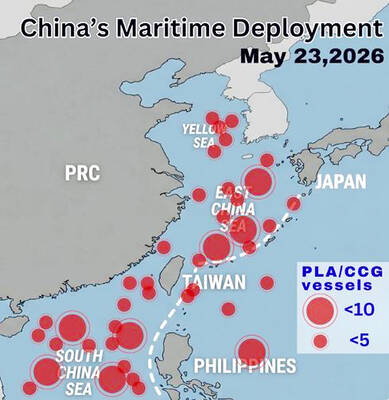
WARNING: China should stop engaging in actions that undermine regional peace and stability, as it would only build resentment among people across the Strait, the CGA said China has deployed more than 100 navy, coast guard and other vessels in waters from the Yellow Sea to the South China Sea and the western Pacific since US President Donald Trump and Chinese President Xi Jinping (習近平) met in Beijing, National Security Council Secretary-General Joseph Wu (吳釗燮) said yesterday. “In this part of the world, #China is the one & only PROBLEM wrecking the #StatusQuo & threatening regional peace & stability,” Wu wrote on X. In a separate post, he said Beijing was coercing Taiwan’s maritime domain, calling it illegal and provocative, after the Coast Guard Administration (CGA) expelled a


 RSS
RSS