


The Central Epidemic Command Center (CECC) yesterday announced enhanced measures for preventing the spread of the Delta virus variant associated with a cluster of infections in Pingtung County, as it reported 78 locally transmitted cases and 13 deaths.
Twelve confirmed cases have been linked to a grandfather and grandson who returned from Peru and tested positive for the SARS-CoV-2 Delta variant during home quarantine in Pingtung County’s Fangshan Township (枋山).
The cluster’s index case is a local taxi driver, the CECC said.
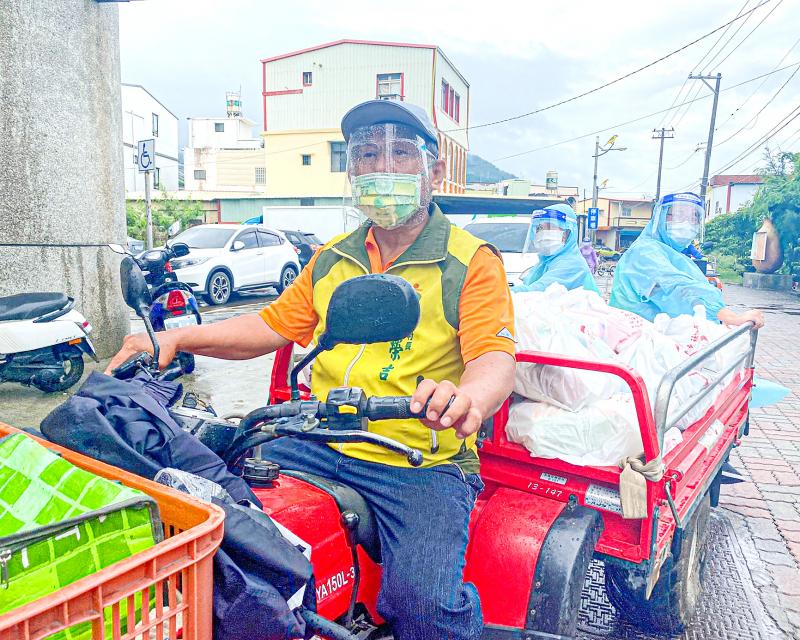
Photo courtesy of the Pingtung County Government via CNA
Contact tracing found that a passenger and two members of his family had also contracted COVID-19, and that the two family members are relatives and neighbors of the grandfather and grandson who returned from Peru, it said.
Three family members and three friends of the taxi driver, who he had meals or tea with this week, also tested positive for COVID-19, the CECC added.
Genome sequencing showed that six people in the cluster are infected with the Delta variant, said Minister of Health and Welfare Chen Shih-chung (陳時中), who heads the center, adding that results for the other six cases are not yet available.
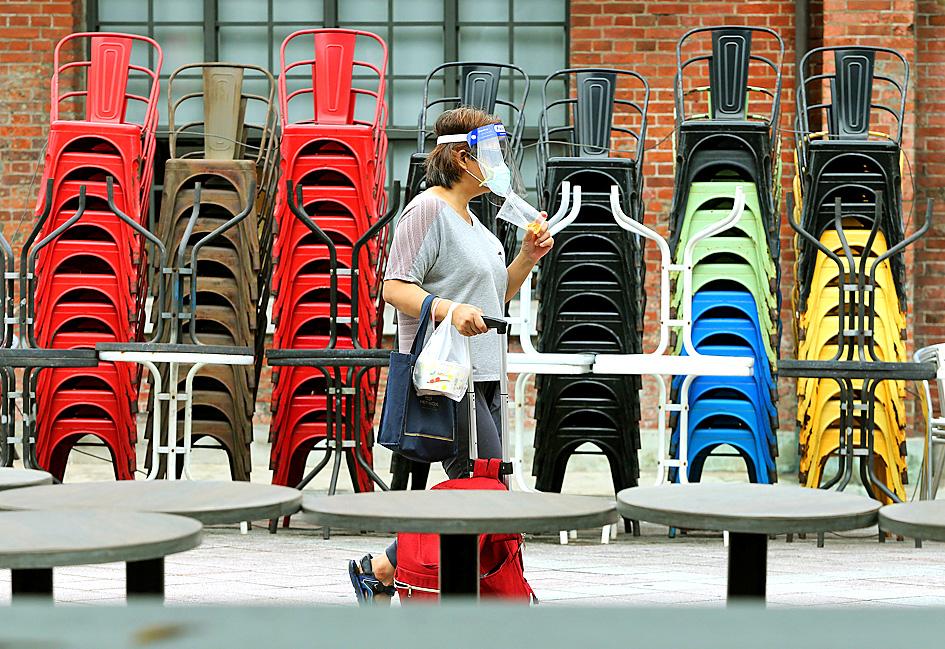
Photo: CNA
As this is the first time that the Delta variant has been found in a local community, enhanced measures are being implemented to prevent it from spreading further, he said.
The measures include “conducting precise contact tracing, expanded identification of close contacts and testing, placing close contacts in quarantine hotels for isolation, and requiring them to be tested upon ending isolation,” he said.
As of yesterday, 99 close contacts have been placed in home isolation, 32 people have been ordered to practice self-health management and five must practice self-health monitoring, he said.
A testing station was established in the township on Thursday, and people who have visited places that the confirmed cases have been to should get tested, Chen said, adding that, as of Friday, 419 people had tested negative in polymerase chain reaction testing.
Local healthcare facilities have been asked to enhance infection control measures and report any suspected COVID-19 cases for testing, he said.
Treatments, including with monoclonal antibodies and antiviral medication remdesivir, have been provided for the confirmed cases, Chen added.
Local supermarkets, convenience stores, restaurants and traditional markets in the township’s Fonggang (楓港) and Shanyu (善餘) villages have been ordered to suspend business for three days, Chen said.
Food would instead be distributed to every household by the county government, he said.
The CECC on Friday announced that inbound travelers who have visited or transited through Bangladesh, Brazil, India, Indonesia, Israel, Peru or the UK within 14 days of arriving in Taiwan would be quarantined in a centralized facility after arrival.
People arriving from other countries would be required to stay at quarantine hotels or a central quarantine facility, at their own expense, starting today.
As the tightened border controls were imposed suddenly and some travelers might have trouble finding a suitable quarantine location, the CECC would offer the option of staying at a centralized quarantine facility for NT$2,000 per person per day, Chen said, adding that there would be no charge for children under the age of 12 who are staying with a parent.
Online bookings for centralized quarantine facilities, paid out of pocket, can be made on the Ministry of Health and Welfare’s Quarantine System for Entry (入境檢疫系統) Web site, but bookings must be made at least 48 hours before arriving in Taiwan, he added.
Of the 78 local cases reported yesterday, New Taipei City reported 36 cases, followed by Taipei with 30; Keelung, Taoyuan and Pingtung County with three each; and Hsinchu, Miaoli and Changhua counties with one each, Chen said.
The center also reported 13 deaths, eight men and five women aged between 40 and 100, all of whom had underlying health conditions.
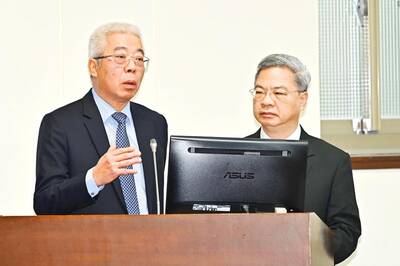
Taiwan has arranged for about 8 million barrels of crude oil, or about one-third of its monthly needs, to be shipped from the Red Sea this month to bypass the Strait of Hormuz and ease domestic supply pressures, CPC Corp, Taiwan (CPC, 台灣中油) said yesterday. The state-run oil company has worked with Middle Eastern suppliers to secure routes other than the Strait of Hormuz, through which about 20 percent of the world’s oil and liquefied natural gas typically passes, CPC chairman Fang Jeng-zen (方振仁) said at a meeting of the legislature’s Economics Committee in Taipei. Suppliers in Saudi Arabia have indicated they

South Korea has adjusted its electronic arrival card system to no longer list Taiwan as a part of China, a move that the Ministry of Foreign Affairs said would help facilitate exchanges between the two sides. South Korea previously listed “Taiwan” as “Taiwan (China)” in the drop-down menus of its online arrival card system, where people had to fill out where they came from and their next destination. The ministry had requested South Korea make a revision and said it would change South Korea’s name on Taiwan’s online immigration system from “Republic of Korea” to “Korea (South),” should the issue not be

CCP ‘PAWN’? Beijing could use the KMT chairwoman’s visit to signal to the world that many people in Taiwan support the ‘one China’ principle, an academic said Chinese Nationalist Party (KMT) Chairwoman Cheng Li-wun (鄭麗文) yesterday arrived in China for a “peace” mission and potential meeting with Chinese President Xi Jinping (習近平), while a Taiwanese minister detailed the number of Chinese warships currently deployed around the nation. Cheng is visiting at a time of increased Chinese military pressure on Taiwan, as the opposition-dominated Legislative Yuan stalls a government plan for US$40 billion in extra defense spending. Speaking to reporters before going to the airport, Cheng said she was going on a “historic journey for peace,” but added that some people felt uneasy about her trip. “If you truly love Taiwan,
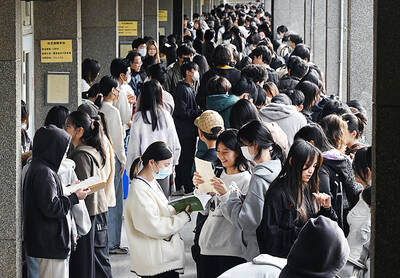
A global survey showed that 60 percent of Taiwanese had attained higher education, second only to Canada, the Ministry of the Interior said. Taiwan easily surpassed the global average of 43 percent and ranked ahead of major economies, including Japan, South Korea and the US, data from the Organisation for Economic Co-operation and Development (OECD) for 2024 showed. Taiwan has a high literacy rate, data released by the ministry showed. As of the end of last year, Taiwan had 20.617 million people aged 15 or older, accounting for 88.5 percent of the total population, with a literacy rate of 99.4 percent, the data


 RSS
RSS