


A melee rupted at the Legislative Yuan in Taipei yesterday as Democratic Progressive Party (DPP) legislators physically removed Chinese Nationalist Party (KMT) legislators from the speaker’s rostrum ahead of today’s vote on the president’s Control Yuan nominees.
DPP legislators at about 3:40pm entered the legislative chamber and began removing the KMT legislators, who had been there since Tuesday to protest the nomination of former Presidential Office secretary-general Chen Chu (陳菊) to be Control Yuan president.
An intense struggle ensued and at one point during the hour-long scuffle, KMT Legislator Lai Shyi-bao’s (賴士葆) was hit by a chair thrown across the chamber and his forehead began to bleed.
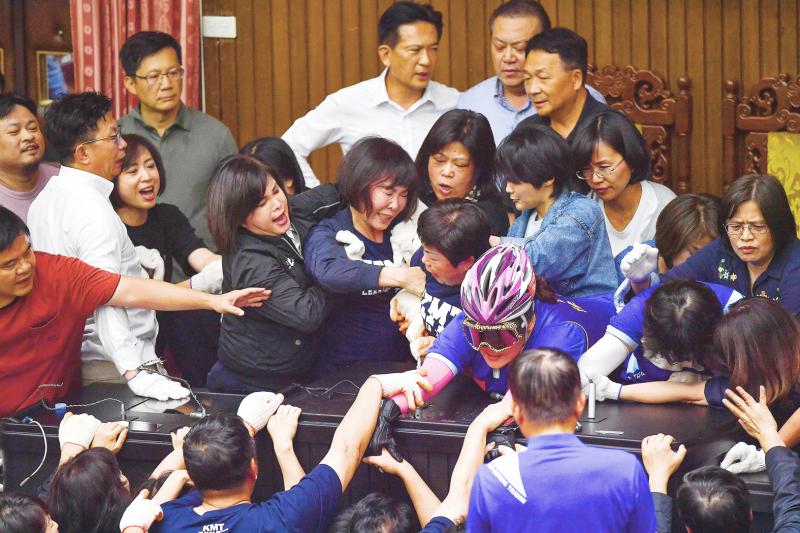
Photo: CNA
KMT legislators Cheng Li-Wun (鄭麗文), Lee Guei-min (李貴敏) and Hsieh Yi-fong (謝衣鳳) said that they began to feel unwell during the clash and went to hospital for treatment.
The DPP legislators eventually prevailed and secured the rostrum.
Surrounded by DPP legislators Ker Chien-ming (柯建銘), Kuo Kuo-wen (郭國文), Luo Chih-cheng (羅致政) and Lin Chun-hsien (林俊憲), Legislative Speaker You Si-kun (游錫堃) hastily read a motion submitted by the DPP caucus regarding today’s vote.
The motion was put to a vote amid KMT objections. It was later passed.
None of the KMT legislators voted, while all three New Power Party legislators voted against it.
The motion asserted that the vote on the nominees would proceed today as scheduled and that it would be conducted as a secret ballot.
KMT Legislator Chen Yu-chen (陳玉珍), donning a bicycle helmet and goggles, reportedly tried to snatch the microphone out of You’s hand, only to be carried away by DPP Legislator Wang Mei-hui (王美惠) and some female DPP lawmakers.
The KMT caucus later accused You of contravening legislative procedure by not handing out ballots to KMT lawmakers for the vote on the motion — an accusation that the Legislative Yuan secretary denied.
The KMT urged people to join it in a protest against the Control Yuan nominations outside the Legislative Yuan at 8:30am today.
It hopes that people from across the nation who oppose the Control Yuan nominations would “stand up” today to make their disapproval clear to the DPP and President Tsai Ing-wen (蔡英文), KMT Culture and Communications Committee chairwoman Alicia Wang (王育敏) said.
Wang called the nominations the “greenest” and “worst” in the nation’s history, and urged KMT supporters to express their “outrage” over the nominations, as well as their support for KMT legislators inside the legislative chamber.
She asked those who planned on participating in the rally to use sun protection and remain hydrated.
The protest is to be streamed on the KMT’s Web site, a party statement said.
Additional reporting by Sean Lin and Lin Liang-sheng

An Emirates flight from Dubai arrived at Taiwan Taoyuan International Airport yesterday afternoon, the first service of the airline since the US and Israel launched strikes against Iran on Saturday. Flight EK366 took off from the United Arab Emirates (UAE) at 3:51am yesterday and landed at 4:02pm before taxiing to the airport’s D6 gate at Terminal 2 at 4:08pm, data from the airport and FlightAware, a global flight tracking site, showed. Of the 501 passengers on the flight, 275 were Taiwanese, including 96 group tour travelers, the data showed. Tourism Administration Deputy Director-General Huang He-ting (黃荷婷) greeted Taiwanese passengers at the airport and

POSSIBILITIES EMERGE: With Taiwan’s victory and Japan’s narrow win over Australia, Taiwan now have a chance to advance if South Korea also beat the Aussies Taiwan has high hopes that the national baseball team would advance to the World Baseball Classic (WBC) quarter-finals after clinching a crucial 5-4 victory over South Korea in a nail-biting extra-inning game at the Tokyo Dome yesterday. Boosted by three home runs — two solo shots by Yu Chang (張育成) and Cheng Tsung-che (鄭宗哲) and a two-run homer by Stuart Fairchild — the triumph gave Taiwan a much-needed second victory in the five-team Pool C, where only the top two finishers would advance to the knockout stage in Miami, Florida. Entering extra innings with the game tied at four apiece, Taiwan scored
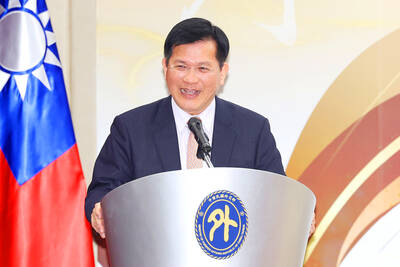
MISSION OF PEACE: The foreign minister urged Beijing to respect Taiwan’s existence as an independent nation, and work together to ensure peace and stability in the region Minister of Foreign Affairs Lin Chia-lung (林佳龍) yesterday rejected Chinese Minister of Foreign Affairs Wang Yi’s (王毅) comments about Taiwan, criticizing China as a “troublemaker” in the international community and a disruptor of cross-strait peace. Speaking at a news conference on the sidelines of the Chinese National People’s Congress, Wang said that Taiwan has always been a territory of China and that it would be impossible for it to become its own country. The “return” of Taiwan to China was the natural outcome of the Chinese people’s resistance against Japan in World War II, and that any pursuit of independence was “doomed
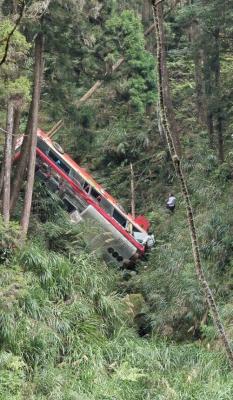
One person was killed and another seven injured today when a tourist shuttle bus plunged 30m to 40m down a ravine in Nantou County, the Tourism Administration said. The bus is suspected to have suddenly accelerated out of control near the flower center of the Sun-Link-Sea Forest Recreation Area, a popular attraction during cherry blossom season. Of the eight onboard, a 66-year-old man was killed, four were seriously injured and three sustained minor injuries, including the driver. The Nantou County Police Department said it received a report of the incident at 12:15pm and dispatched seven teams to assist. All surviving passengers have been transferred


 RSS
RSS