


The Ministry of Foreign Affairs yesterday reasserted the nation’s sovereignty rights over South China Sea islands while endorsing a rules-based international order, after US Secretary of State Mike Pompeo on Monday said that the US would treat Beijing’s pursuit of resources in the sea as illegal.
It was the latest forceful statement by US President Donald Trump’s administration to challenge China, which he has increasingly cast as an enemy ahead of the US presidential election in November.
“Beijing’s claims to offshore resources across most of the South China Sea are completely unlawful, as is its campaign of bullying to control them,” Pompeo said in a statement. “The world will not allow Beijing to treat the South China Sea as its maritime empire.”
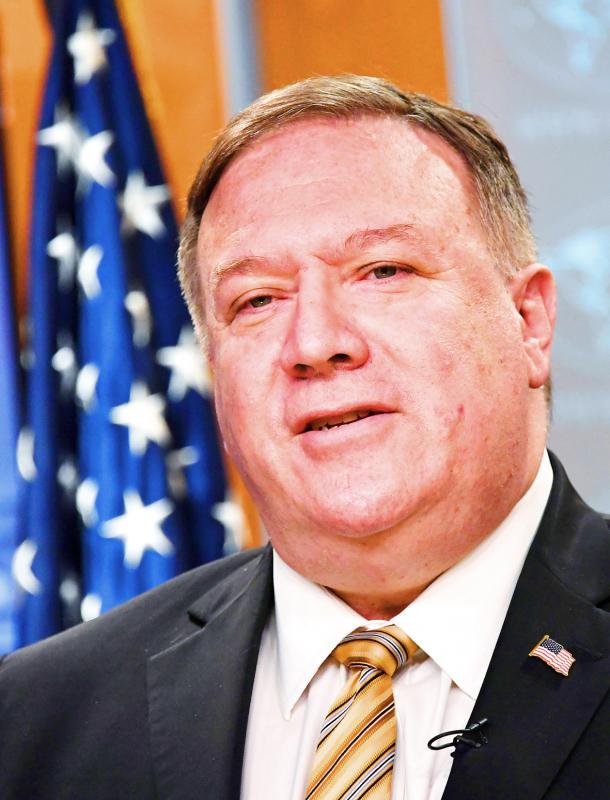
Photo: AFP
The US has long rejected Beijing’s claims in the South China Sea, which is home to valuable oil and gas deposits, and a vital waterway for the world’s commerce.
Pompeo explicitly sided with Southeast Asian nations including the Philippines and Vietnam, after years of the US saying it took no position on individual claims.
“America stands with our Southeast Asian allies and partners in protecting their sovereign rights to offshore resources, consistent with their rights and obligations under international law,” Pompeo said.
“We stand with the international community in defense of freedom of the seas and respect for sovereignty and reject any push to impose ‘might makes right’ in the South China Sea or the wider region,” he said.
Beijing claims most of the South China Sea through a so-called “nine-dash line,” a vague delineation based on maps from the 1940s.
It has spent years building military bases on artificial islands in the contested areas to cement its claims, while dragging out a diplomatic process to resolve the disputes for nearly two decades.
China yesterday said that the accusation of unlawfulness was “completely unjustified.”
“We advise the US side to earnestly honor its commitment of not taking sides on the issue of territorial sovereignty, respect regional countries’ efforts for a peaceful and stable South China Sea, and stop its attempts to disrupt and sabotage regional peace and stability,” the Chinese embassy in Washington said.
In Taipei, the ministry said it welcomed the US’ citation of international law regarding countries’ territorial claims in the South China Sea.
Taiwan opposes any claimant country’s attempt to solve disputes in the sea through intimidation, coercion or force, ministry spokeswoman Joanne Ou (歐江安) told a news briefing in Taipei.
Reiterating the government’s principles of dealing with the South China Sea issue, Ou said that Taiwan should be included in a multilateral mechanism for solving the territorial disputes.
Related countries are obligated to maintain the freedoms of navigation and overflight in the South China Sea, she said.
Based on equal negotiations, the nation is willing to join other countries in fostering the South China Sea’s peace and stability, as well as protecting and developing the region’s resources, she said.
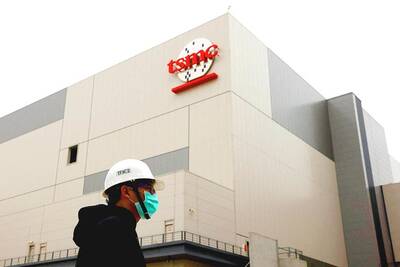
Taiwan Semiconductor Manufacturing Co (TSMC, 台積電) on Wednesday said that a new chip manufacturing technology called “A16” is to enter production in the second half of 2026, setting up a showdown with longtime rival Intel over who can make the fastest chips. TSMC, the world’s biggest contract manufacturer of advanced computing chips and a key supplier to Nvidia and Apple, announced the news at a conference in Santa Clara, California, where TSMC executives said that makers of artificial intelligence (AI) chips will likely be the first adopters of the technology rather than a smartphone maker. Analysts said that the technologies announced on
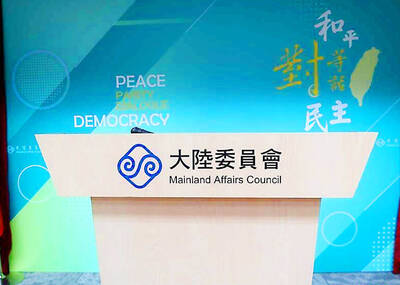
NO RECIPROCITY: Taipei has called for cross-strait group travel to resume fully, but Beijing is only allowing people from its Fujian Province to travel to Matsu, the MAC said The Mainland Affairs Council (MAC) yesterday criticized an announcement by the Chinese Ministry of Culture and Tourism that it would lift a travel ban to Taiwan only for residents of China’s Fujian Province, saying that the policy does not meet the principles of reciprocity and openness. Chinese Deputy Minister of Culture and Tourism Rao Quan (饒權) yesterday morning told a delegation of Chinese Nationalist Party (KMT) lawmakers in a meeting in Beijing that the ministry would first allow Fujian residents to visit Lienchiang County (Matsu), adding that they would be able to travel to Taiwan proper directly once express ferry

CALL FOR DIALOGUE: The president-elect urged Beijing to engage with Taiwan’s ‘democratically elected and legitimate government’ to promote peace President-elect William Lai (賴清德) yesterday named the new heads of security and cross-strait affairs to take office after his inauguration on May 20, including National Security Council (NSC) Secretary-General Wellington Koo (顧立雄) to be the new defense minister and former Taichung mayor Lin Chia-lung (林佳龍) as minister of foreign affairs. While Koo is to head the Ministry of National Defense and presidential aide Lin is to take over as minister of foreign affairs, Tsai Ming-yen (蔡明彥) would be retained as the nation’s intelligence chief, continuing to serve as director-general of the National Security Bureau, Lai told a news conference in Taipei. Koo,
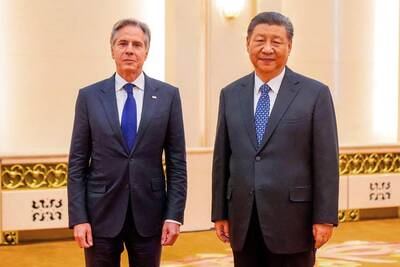
MANAGING DIFFERENCES: In a meeting days after the US president signed a massive foreign aid bill, Antony Blinken raised concerns with the Chinese president about Taiwan US Secretary of State Antony Blinken yesterday met with Chinese President Xi Jinping (習近平) and senior Chinese officials, stressing the importance of “responsibly managing” the differences between the US and China as the two sides butt heads over a number of contentious bilateral, regional and global issues, including Taiwan and the South China Sea. Talks between the two sides have increased over the past few months, even as differences have grown. Blinken said he raised concerns with Xi about Taiwan and the South China Sea, along with China’s support for Russia and its invasion of Ukraine, as well as other issues


 RSS
RSS