


Taiwan and Somaliland are to establish representative offices in each other’s countries, after signing a treaty in Taipei in February, Minister of Foreign Affairs Joseph Wu (吳釗燮) announced yesterday.
The two nations have agreed to establish a “Taiwan Representative Office” and “Somaliland Representative Office,” Wu told a news conference in Taipei, after Democratic Progressive Party Legislator Wang Ting-yu (王定宇) a day earlier shared a foreign media report that Somaliland President Muse Bihi Abdi has appointed a representative to Taiwan.
Taiwan maintains diplomatic ties with 15 countries, with Eswatini being its only ally in Africa.
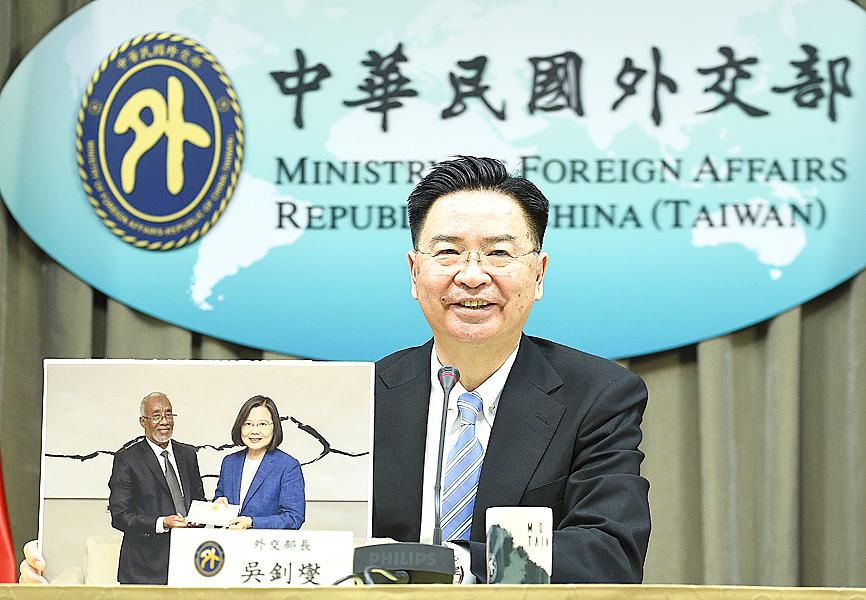
Photo: Chen Chih-chu, Taipei Times
Somaliland, which is on the Horn of Africa and has a population of nearly 3.9 million, does not have formal relations with China.
This is not the first time that a representative office has used the name “Taiwan,” which was gladly received by Somaliland, Wu said, adding that the name “Republic of China” was not used because formal ties have not been established.
Taiwan has not set any limits on what form bilateral relations should take, and both sides finally agreed that representative offices would best reflect their interests, Wu said, adding that discussions began at the end of last year.
He and Somaliland Minister of Foreign Affairs Yasin Hagi Mohamoud Faraton on Feb. 26 signed a treaty at a ceremony in Taipei, after which Faraton also met with President Tsai Ing-wen (蔡英文), Wu said.
The treaty is named the “Bilateral Protocol between and by the Government of the Republic of China (Taiwan) and the Government of the Republic of Somaliland,” the ministry said.
While the exact dates for the offices’ launches are still to be negotiated, Taiwan has since Feb. 6 sent officials to Somaliland to make preparations, he said.
Both sides would collaborate in areas such as agriculture, education, energy, fisheries, health, information and communications, and mining, he added.
Asked if Taiwan recognizes Somaliland as an independent country, as the East African country is not recognized by the UN, Wu said that eight countries or global organizations, including Canada, Denmark, Djibouti, Ethiopia, Turkey, the EU, the UK and the UN, have established representative agencies there.
Somaliland also has representative offices in 22 countries, he said, adding that Taiwan’s measure is no different from that of other countries.
“Somaliland has been independent since 1991 and has held three presidential elections,” Wu said.
It is also recognized by many other countries as a democratic and uncorrupt nation, he added.
Somaliland, which is in northwestern Somalia, in 1991 declared independence from the latter.
Taiwan has since 2009 gradually developed positive relations with Somaliland, with bilateral collaborations focusing on boosting maritime security, medicine and health, and education, Wu said.
Both sides would appoint a senior diplomat and four officers for each new office, Wu said, but withheld the officials’ names.
Yen Chen-shen (嚴震生), a research fellow at National Chengchi University’s Institute of International Relations and an expert on African politics, said that it is a positive development for Taiwan, but the Ministry of Foreign Affairs should have established formal ties with Somaliland in one swoop.
Establishing a representative office does not necessarily lead to establishing formal ties, he added.
While the office might be of “very limited” help in expanding relations with other African nations, given China’s influence on the continent, it symbolizes that “at least we are fighting back,” he said.

Taiwan Semiconductor Manufacturing Co (TSMC, 台積電), the world’s largest foundry service provider, yesterday said that global semiconductor revenue is projected to hit US$1.5 trillion in 2030, after the figure exceeds US$1 trillion this year, as artificial intelligence (AI) demand boosts consumption of token and compute power. “We are still at the beginning of the AI revolution, but we already see a significant impact across the whole semiconductor ecosystem,” TSMC deputy cochief operating officer Kevin Zhang (張曉強) said at the company’s annual technology symposium in Hsinchu City. “It is fair to say that in the past decade, smartphones and other mobile devices were
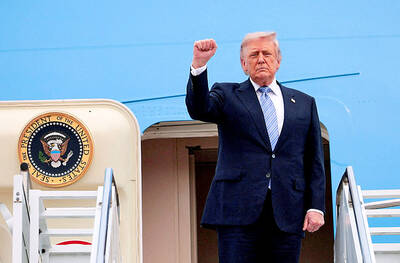
US-CHINA SUMMIT: MOFA welcomed US reassurance of no change in its Taiwan policy; Trump said he did not comment when Xi talked of opposing independence US President Donald Trump yesterday said he has not made a decision on whether to move forward with a major arms package for Taiwan after hearing concerns about it from Chinese President Xi Jinping (習近平). Trump’s comments on Taiwan came as he flew back to Washington after wrapping up critical talks in which both leaders said important progress was made in stabilizing US-China relations even as deep differences persist between the world’s two biggest powers on Iran and Taiwan. “I will make a determination,” Trump said, adding: “I’ll be making decisions. But, you know, I think the last thing we need right
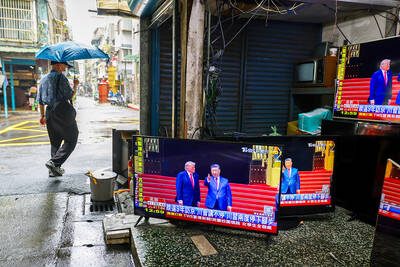
TAIWAN ISSUE: US treasury secretary Scott Bessent said on the first day of meetings that ‘it wouldn’t be a US-China summit without the Taiwan issue coming up’ There were no surprises on the first day of the summit between US President Donald Trump and Chinese President Xi Jinping (習近平), the Mainland Affairs Council (MAC) said yesterday, as the government reiterated that cross-strait stability is crucial to the Asia-Pacific region, as well as the world. As the two presidents met for a highly anticipated summit yesterday, Chinese state media reported that Xi warned Trump that missteps regarding Taiwan could push their two countries into “conflict.” Trump arrived in China with accolades for his host, calling Xi a “great leader” and “friend,” and extending an invitation to visit the White House
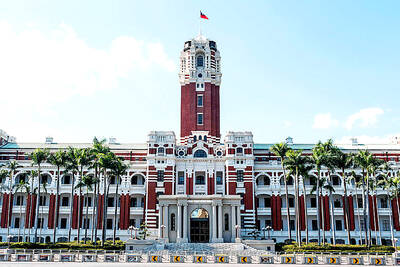
SECURITY: Taipei presses the US for arms supplies, saying the arms sales are not only a reflection of the US security commitment to Taiwan but also serve as a mutual deterrent against regional threats Taiwan is committed to preserving the cross-strait “status quo” and contributing to regional peace and stability, the Presidential Office said yesterday. “It is an undeniable fact that the Republic of China is a sovereign and independent democratic nation,” Presidential Office spokeswoman Karen Kuo (郭雅慧) reiterated, adding that Beijing has no right to claim sovereignty over Taiwan. The statements came after US President Donald Trump warned against Taiwanese independence. Trump wrapped up a state visit to Beijing on Friday, during which Chinese President Xi Jinping (習近平) had pressed him not to support Taiwan. Taiwan depends heavily on US security backing to deter China from carrying


 RSS
RSS