


Health ministers from the G20 economies yesterday began a virtual meeting to work on a joint response to the COVID-19 pandemic, Saudi Arabian state television reported.
The ministers were to be joined by leaders from Spain, Singapore, Jordan and Switzerland as well as international and regional organizations, including the WHO and the World Bank, a separate G20 statement said.
Saudi Arabia holds the G20 presidency.
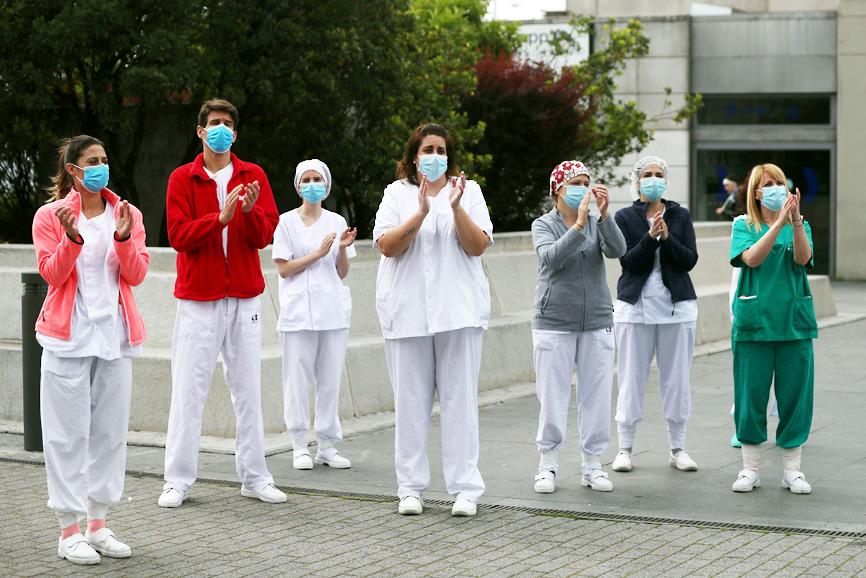
Photo: Reuters
Earlier in the day, the kingdom’s highest religious body, the Council of Senior Scholars, urged Muslims worldwide to pray at home during Ramadan if their nations require social distancing to curb the spread of the disease, the official Saudi Press Agency reported.
The holy fasting month of Ramadan begins later this week.
During the month, believers usually break their fast with families and friends and perform an evening prayer, known as Taraweeh, in large gatherings at mosques.
“Muslims shall avoid gatherings, because they are the main cause of the spread of infection ... and shall remember that preserving the lives of people is a great act that brings them closer to God,” the council said in a statement.
The kingdom’s Grand Mufti Sheikh Abdulaziz Al al-Sheikh on Friday expressed the same sentiment, saying that prayers during Ramadan and for the subsequent Eid al-Fitr feast should be performed at home if the outbreak continues.
Saudi Arabia has reported 8,274 cases of COVID-19 and 92 deaths so far, the highest among the six Gulf Arab states, where the total has reached 24,374 with 156 deaths.
Meanwhile, COVID-19 deaths in the Netherlands have risen by 83, health authorities said yesterday, the smallest reported daily increase since March 26.
The total number of deaths among people known to have been infected with the coronavirus increased to 3,684, while the number of confirmed infections rose by 1,066 to 32,655.
Spain’s death toll rose by 410, down from an increase of 565 on Saturday, the Spanish Ministry of Health said, the lowest daily increase in about a month in one of the world’s hardest-hit countries.
Britain’s hospital death toll from COVID-19 rose by 596 to 16,060 on Saturday, the smallest increase in nearly two weeks, the UK Department of Health and Social Care said yesterday. The daily increase was the lowest since March 22.
The total number of deaths reached 20,453, the department said.
Data published on Sundays has tended to show smaller increases in the number of fatalities. April 6 marked the last time the department reported a smaller increase in the daily death toll.
However, a delivery of protective equipment for British health workers that was due yesterday from Turkey has been delayed, a British government official said, as medics on the front line of the pandemic increasingly report shortages of gear.
Ministers had on Saturday highlighted an 84-tonne consignment that was due to arrive from Turkey containing personal protective equipment, including 400,000 protective gowns.
A British Foreign and Commonwealth Office spokesperson yesterday cited “clearance and paperwork” for the delay.
“It’s not quite ready yet,” the official said, adding that they were “working to get this delivered as soon as possible.”
Russian President Vladimir Putin said that authorities had the outbreak under full control and that everything would work out with God’s help, even as the nation registered a record daily rise in cases.
Russia reported 6,060 new cases in the previous 24 hours, bringing its nationwide tally to 42,853, with an official death toll of 361.
The US still has the highest caseload of any nation, with more than 735,280 confirmed infections, and by Sunday had lost 39,000 people, the Johns Hopkins University tally showed.

SILENCING CRITICS: In addition to blocking Taiwan, China aimed to prevent rights activists from speaking out against authoritarian states, a Cabinet department said The Ministry of Foreign Affairs (MOFA) yesterday condemned transnational repression by Beijing after RightsCon, a major digital human rights conference scheduled to be held in Zambia this week, was abruptly canceled due to Chinese pressure over Taiwanese participation. This year’s RightsCon, the world’s largest conference discussing issues “at the intersection of human rights and technology,” was scheduled to take place from tomorrow to Friday in Lusaka, and expected to draw 2,600 in-person attendees from 150 countries, along with 1,100 online participants. However, organizers were forced to cancel the event due to behind-the-scenes pressure from China, the ministry said, expressing its “strongest condemnation”
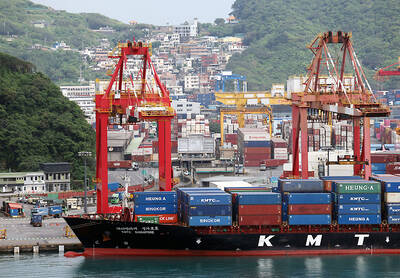
Taiwan’s economy grew far faster than expected in the first quarter, as booming demand for artificial intelligence (AI) applications drove a surge in exports, spilling over into investment and consumption, the Directorate-General of Budget, Accounting and Statistics (DGBAS) said yesterday. GDP growth was 13.69 percent year-on-year during the January-to-March period, beating the DGBAS’ February forecast by 2.23 percentage points and marking the most robust growth in nearly four decades, DGBAS senior official Chiang Hsin-yi (江心怡) told a news conference in Taipei. The result was powered by exports, which remain the backbone of Taiwan’s economy, Chiang said. Outbound shipments jumped 51.12 percent year-on-year to
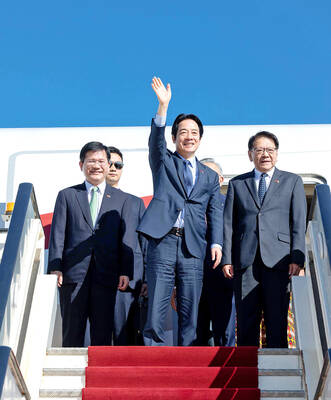
DELAYED BUT DETERMINED: The president’s visit highlights Taiwan’s right to international engagement amid regional pressure from China President Willaim Lai (賴清德) yesterday arrived in Eswatini, more than a week after his planned visit to Taiwan’s sole African ally was suspended because of revoked overflight permits. “The visit, originally scheduled for April 22, was postponed due to unforeseen external factors,” Lai wrote on social media. “After several days of careful arrangements by our diplomatic and national security teams, we successfully arrived today.” Lai said he looked forward to further deepening Taiwan-Eswatini relations through closer cooperation in the economy, agriculture, culture and education, as well as advancing the nation’s international partnerships. The president was initially scheduled to arrive in time to celebrate
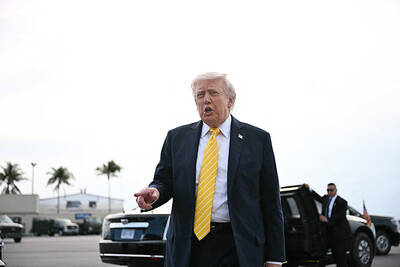
Iran’s Islamic Revolutionary Guard Corp (IRGC) yesterday said the US faced a choice between an “impossible” military operation or a “bad deal” with Tehran, after US President Donald Trump disparaged Iran’s latest peace proposal. Negotiations between the two countries have been deadlocked since a ceasefire came into effect on April 8, with only one round of direct peace talks held so far. Iran’s Tasnim and Fars news agencies reported that Tehran had submitted a 14-point proposal to mediator Pakistan, but Trump was quick to cast doubt on it. “I will soon be reviewing the plan that Iran has just sent to us, but


 RSS
RSS