


Convicted murderer Lee Hung-chi (李宏基), who killed his ex-wife and their six-year-old daughter, was yesterday afternoon executed by shooting in Kaohsiung.
It was the first execution sanctioned by Minister of Justice Tsai Ching-hsiang (蔡清祥) — 46 days since he took office on July 16 — and the first under the administration of President Tsai Ing-wen (蔡英文) since she assumed the presidency on May 20, 2016.
Officials said 39-year-old Lee was informed of the Ministry of Justice’s approval to carry out the order earlier in the day before he was taken to the execution ground at Kaohsiung Second Prison, where he was shot in the heart from behind at 3:37pm.
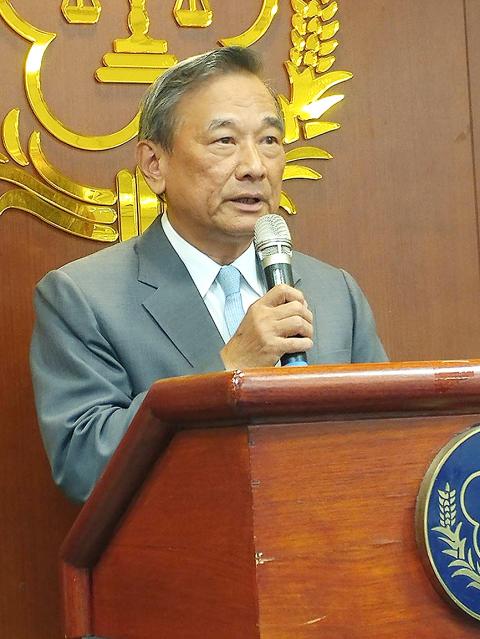
Photo: CNA
In addition to the executioner, the process was watched by prosecutors, a coroner, the prison warden and security guards, Deputy Minister of Justice Chen Ming-tang (陳明堂) said in Taipei.
“Afterward, the body was examined and the coroner made the official announcement certifying Lee’s death at 4:01pm,” Chen said.
Lee and his ex-wife, surnamed Chen (陳), had two daughters. She had filed for a restraining order following domestic violence incidents and later filed for divorce, gaining custody of their two daughters.
On April 16, 2014, Lee waited for his ex-wife at the kindergarten their daughters attended, where he stabbed her to death with a kitchen knife before taking his eldest daughter and driving to the mountains in Hsinchu County.
Lee fed his daughter sleeping pills and then tried to commit suicide by burning charcoal in the car.
They were found unconscious the next day and rushed to a local hospital. Despite the efforts of medical personnel, his daughter died one month later.
Judges rejected an appeal and handed Lee the death sentence, citing his lack of remorse and his vowing in court to complete “unfinished business” and to take revenge on his ex-wife’s family if he were to get out of prison.
Tsai said the ministry assessed the case with the highest prudence and applied the strictest criteria in reviewing and approving the execution warrant.
According to prison officials, when asked for his last words, Lee at first said he did not have any, but later said he felt sorry for his family.
Lee seemed ready to accept his fate and did not eat much of his last meal before requesting to smoke one last cigarette, prison officials said, adding that he walked to the execution ground without the assistance of security personnel.
Members of the Taiwan Alliance to End the Death Penalty held a protest following news of Lee’s execution, saying that it was a step backward for human rights in Taiwan.
Other human rights advocates asked if the government was trying to show the public that it was carrying out justice in the run-up to the Nov. 24 nine-in-one elections, saying that no nation should use the death penalty to score political points.
Carrying out executions would not solve society’s problems, they added.
Additional reporting by Chang Wen-chuan

The Tourism Administration yesterday announced that it would reward repeat international visitors with incentives of up to NT$8,000 to boost inbound tourism. The incentives are available to all international tourists, it said, adding that repeat visitors would be rewarded with NT$5,000 and would receive an additional NT$3,000 if they bring travel companions. The nation received 2,990,657 inbound visitors during the first quarter, marking a 3.8 percent increase from the same period last year, agency data showed. Japanese nationals are among groups visiting Taiwan the most. About 1.48 million Japanese tourists arrived last year, a year-on-year increase of more than 12
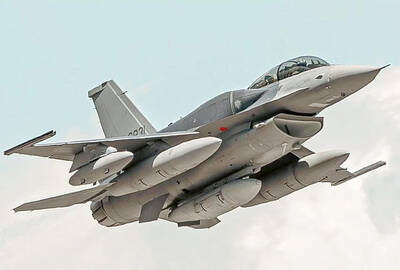
66 FIGHTER JETS: The aircraft is likely undergoing preparations for its transfer to Taiwan — a significant step forward in the nation’s modernization program, a lawmaker said The first of Taiwan’s order of F-16V Block 70 aircraft has been sighted in Texas ahead of delivery, Democratic Progressive Party (DPP) Legislator Wang Ting-yu (王定宇) said. Taiwan’s first F-16V Block 70 two-seat aircraft, tail number 6831, was seen flying from Lockheed Martin’s production facility in Greenville, South Carolina, to Naval Air Station Joint Reserve Base Fort Worth in Texas, Wang wrote on Facebook yesterday. The plane is likely undergoing preparations for its transfer to Taiwan, marking a significant step forward in the Republic of China Air Force’s modernization program, Wang said, citing military analysts. The F-16V Block 70 is a new-build version
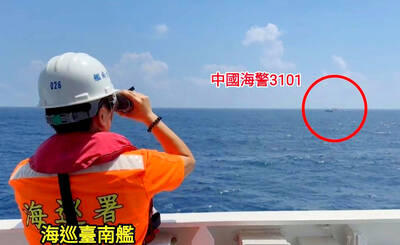
‘BRAZEN’: The holiday did not stop China from activities that infringe on Taiwan’s maritime jurisdiction, but the CGA is ready to defend the nation, Kuan Bi-ling said Beijing is intensifying maritime pressure on Taiwan, but the nation will never yield, Ocean Affairs Council Deputy Minister Sung Chen-en (宋承恩) said. The Coast Guard Administration (CGA) has adopted a “shadowing and monitoring” approach to avoid falling into a Chinese trap to escalate tensions and deepen the conflict, Sung said in an interview published yesterday in the Chinese-language Liberty Times (the Taipei Times’ sister newspaper). China Coast Guard formations patrolling waters east of Taiwan, as well as official Chinese vessels entering areas around Itu Aba Island (Taiping Island, 太平島) and Pratas Islands (Dongsha Islands, 東沙群島) show Beijing’s attempts to significantly step up
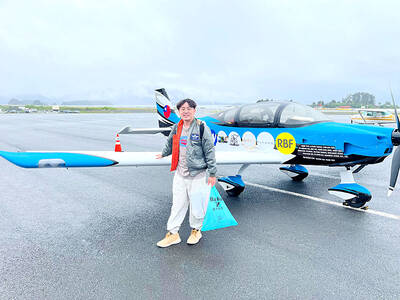
Taiwanese aviator Roger Lin (林睿哲) returned to Taiwan on Saturday after completing a nine-day round-the-world journey in a single-engine aircraft, becoming the first Taiwanese pilot to achieve the feat. Lin departed on June 5 from Los Angeles, California, and continued through Alaska, Japan, Taiwan, the Philippines, Indonesia, Malaysia, Thailand, Nepal, Jordan, Norway, Iceland and Canada before landing at the Taipei International Airport (Songshan) via Los Angeles and Japan. Lin shared numerous photos and videos of his journey on a Facebook page titled “Pilot Roger’s Around the World Flight,” including a video showing his aircraft flying over the Danjiang Bridge and


 RSS
RSS