


Amid backlash from travel agencies and tourists, the Thailand Trade and Economic Office yesterday canceled a proposed NT$470 increase in the handling fee for visa applications.
The office on Tuesday said that beginning in October, Taiwanese visitors to Thailand would have to pay an additional handling fee for visa applications processed by a newly hired Dubai-based consular services provider.
Travel agencies and individuals protested the hike, believing that the office was planning to fully outsource visa services.
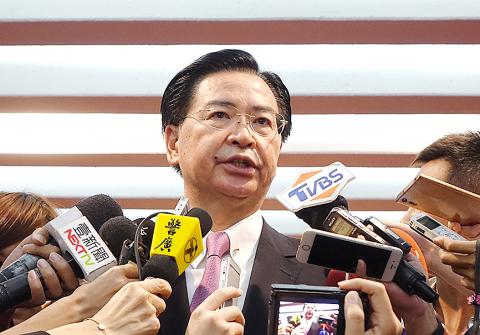
Photo: Liu Hsin-de, Taipei Times
The office yesterday said that applicants could continue to apply directly to the office or a travel agency, while the new third option of applying through VFS Global was added for convenience.
The office said it is investigating ways to improve the visa application process, but no changes have been made so far.
The office said the new option is for those who do not wish to wait in line and are willing to pay more for convenience.
Earlier in the day, Minister of Foreign Affairs Joseph Wu (吳釗燮) at an award ceremony for those who have made notable contributions to foreign affairs, said that Thailand is an important market for the nation’s tourism industry, with the number of Thai tourists increasing by 50 percent since the government in August last year introduced visa-free travel for Thais.
The policy was introduced as part of the government’s New Southbound Policy.
Taiwan earlier this month extended the visa-free trial period for Thai travelers for another year, citing the success of the policy.
Visitor numbers from other parts of Southeast Asia have also increased 30 percent, Wu said.
“There is no doubt that the policy has been successful and we have seen very good reactions to it overall,” he said.
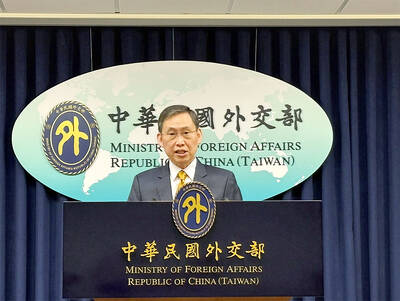
A Ministry of Foreign Affairs official yesterday said that a delegation that visited China for an APEC meeting did not receive any kind of treatment that downgraded Taiwan’s sovereignty. Department of International Organizations Director-General Jonathan Sun (孫儉元) said that he and a group of ministry officials visited Shenzhen, China, to attend the APEC Informal Senior Officials’ Meeting last month. The trip went “smoothly and safely” for all Taiwanese delegates, as the Chinese side arranged the trip in accordance with long-standing practices, Sun said at the ministry’s weekly briefing. The Taiwanese group did not encounter any political suppression, he said. Sun made the remarks when
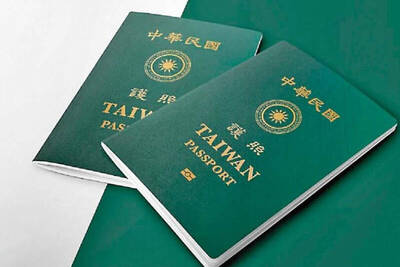
The Taiwanese passport ranked 33rd in a global listing of passports by convenience this month, rising three places from last month’s ranking, but matching its position in January last year. The Henley Passport Index, an international ranking of passports by the number of designations its holder can travel to without a visa, showed that the Taiwan passport enables holders to travel to 139 countries and territories without a visa. Singapore’s passport was ranked the most powerful with visa-free access to 192 destinations out of 227, according to the index published on Tuesday by UK-based migration investment consultancy firm Henley and Partners. Japan’s and
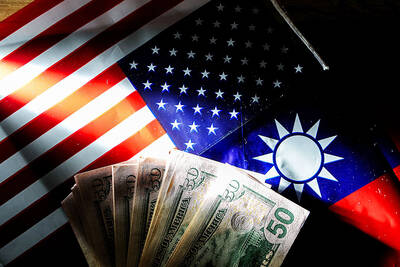
BROAD AGREEMENT: The two are nearing a trade deal to reduce Taiwan’s tariff to 15% and a commitment for TSMC to build five more fabs, a ‘New York Times’ report said Taiwan and the US have reached a broad consensus on a trade deal, the Executive Yuan’s Office of Trade Negotiations said yesterday, after a report said that Washington is set to reduce Taiwan’s tariff rate to 15 percent. The New York Times on Monday reported that the two nations are nearing a trade deal to reduce Taiwan’s tariff rate to 15 percent and commit Taiwan Semiconductor Manufacturing Co (TSMC, 台積電) to building at least five more facilities in the US. “The agreement, which has been under negotiation for months, is being legally scrubbed and could be announced this month,” the paper said,
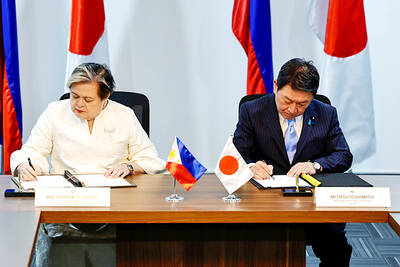
Japan and the Philippines yesterday signed a defense pact that would allow the tax-free provision of ammunition, fuel, food and other necessities when their forces stage joint training to boost deterrence against China’s growing aggression in the region and to bolster their preparation for natural disasters. Japan has faced increasing political, trade and security tensions with China, which was angered by Japanese Prime Minister Sanae Takaichi’s remark that a Chinese attack on Taiwan would be a survival-threatening situation for Japan, triggering a military response. Japan and the Philippines have also had separate territorial conflicts with Beijing in the East and South China


 RSS
RSS