


Advanced Semiconductor Engineering Inc (ASE, 日月光半導體) yesterday cleared the final regulatory hurdle to merge with rival Siliconware Precision Industries Co Ltd (SPIL, 矽品精密) in a deal worth about NT$128 billion (US$4.27 billion) after receiving conditional approval from Chinese regulators.
China’s permission paves the way for ASE to take the merger deal to the next stage, although about five months behind its original plan.
“As ASE and SPIL have now received all necessary anti-trust clearances for the transaction, ASE will immediately proceed with the establishment of a holding company,” the companies said in a joint statement.
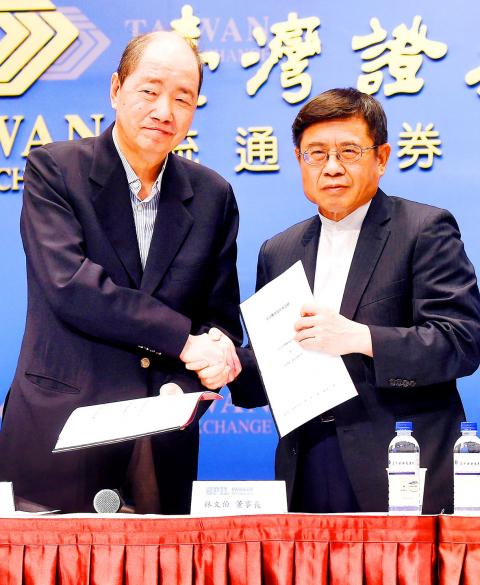
Photo: Chu Pei-hsiung, Taipei Times
The Kaohsiung-based chip testing and packaging services provider plans to create the holding company by the end of May next year after ASE and SPIL shareholders vote on the merger at extraordinary meetings scheduled for February, the statement said.
The holding company, ASE Industrial Holding Co (日月光投資控股), would fully own ASE and SPIL, which are to remain separate legal entities, it said.
The holding company would be listed in Taiwan and the US, and ASE and SPIL would continue to expand their investments in Taiwan, it added.
“ASE and SPIL are aware that certain authorities and industry players in China might have concerns over the potential restrictive effects of the [deal],” the companies said. “In order to mitigate such concerns, ASE and SPIL filed a remedial proposal with the [Chinese] Ministry of Commerce’s Anti-Monopoly Bureau that included the companies’ commitments to maintain independent operations for a limited period.”
According to information posted on the ministry’s Web site, over the next 24 months ASE and SPIL are to operate independently, meaning they would not be allowed to share sensitive information such as pricing, sales strategies, input capacity and raw material sourcing.
“The anti-monopoly investigation shows that ASE and SPIL have overlapping businesses horizontally, as both are leading companies in the world’s semiconductor packaging and testing industry,” the ministry said in a statement.
The ministry said it is concerned that the merger would further lift ASE’s market share, which would give it greater power to adjust pricing strategies that might hinder market competition and exclude potential newcomers.
That could ultimately damage the interests of its clients and consumers, it added.
After the transaction, ASE, the world’s biggest chip tester and packager, would see its market share climb to between 25 percent and 30 percent share, the ministry said.
Separately, SPIL said last night that it has agreed to sell a 30 percent stake in its subsidiary located in Suzhou to China's Tsinghua Unigroup Ltd (清華紫光) for 1.026 billion yuan (US$155 million).
SPIL said the transaction is expected to help the company tap the fast growing Chinese market, while the proceeds will be used to expand its production capacity in Taiwan.
Additional reporting by CNA
This story has been updated since it was first published.
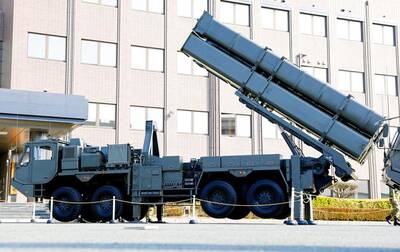
Japan has deployed long-range missiles in a southwestern region near China, the Japanese defense minister said yesterday, at a time when ties with Beijing are at their lowest in recent years. The missiles were installed in Kumamoto in the southern region of Kyushu, as Japan is attempting to shore up its military capacity as China steps up naval activity in the East China Sea. “Standoff defense capabilities enable us to counter the threat of enemy forces attempting to invade our country ... while ensuring the safety of our personnel,” Japanese Minister of Defense Shinjiro Koizumi said. “This is an extremely important initiative for

Chinese Nationalist Party (KMT) Chairwoman Cheng Li-wun (鄭麗文) today accepted an invitation from Chinese President Xi Jinping (習近平) to lead a delegation to China next month, saying she hopes to promote the peaceful development of cross-strait relations and bring stability to the Taiwan Strait. “I am grateful and happy to accept this invitation,” Cheng said in a statement from the KMT chairperson’s office. Cheng said she hopes both sides can work together to promote the peaceful development of cross-strait relations, enhance exchange and cooperation, bring stability to the Taiwan Strait and improve people’s livelihoods. At today's news conference, Cheng said any efforts to
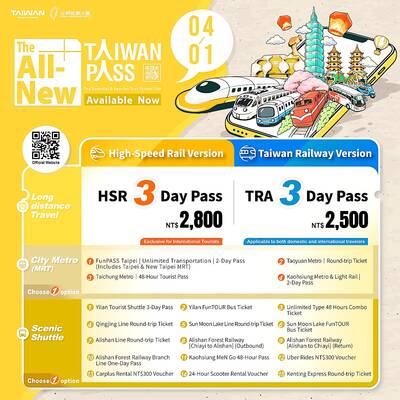
MORE POPULAR: Taiwan Pass sales increased by 59 percent during the first quarter compared with the same period last year, the Tourism Administration said The Tourism Administration yesterday said that it has streamlined the Taiwan Pass, with two versions available for purchase beginning today. The tourism agency has made the pass available to international tourists since 2024, allowing them to access the high-speed rail, Taiwan Railway Corp services, four MRT systems and four Taiwan Tourist Shuttles. Previously, five types of Taiwan Pass were available, but some tourists have said that the offerings were too complicated. The agency said only two types of Taiwan Pass would be available, starting from a three-day pass with the high-speed rail and a three-day pass with Taiwan Railway Corp. The former costs NT$2,800

The nation’s fastest supercomputer, Nano 4 (晶創26), is scheduled to be launched in the third quarter, and would be used to train large language models in finance and national defense sectors, the National Center for High-Performance Computing (NCHC) said. The supercomputer, which would operate at about 86.05 petaflops, is being tested at a new cloud computing center in the Southern Taiwan Science Park in Tainan. The exterior of the server cabinet features chip circuitry patterns overlaid with a map of Taiwan, highlighting the nation’s central position in the semiconductor industry. The center also houses Taiwania 2, Taiwania 3, Forerunner 1 and


 RSS
RSS