


US President Donald Trump yesterday criticized the “very one-sided and unfair” trade relationship between the US and China, but stopped short of castigating Chinese President Xi Jinping (習近平) by saying he does not blame Beijing for having taken advantage of the US.
Speaking after the announcement of new business deals between US and Chinese companies, Trump said China “must immediately address the unfair trade practices that drive” what he said is a “shockingly” large trade deficit, along with barriers to market access, forced technology transfers and intellectual property theft.
“But I don’t blame China,” Trump said. “After all, who can blame a country for being able to take advantage of another country for the benefit of its citizens?”
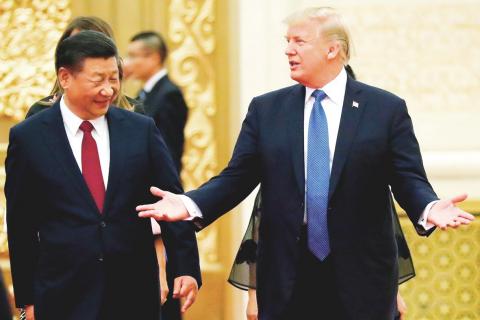
Photo: Reuters
To applause, Trump said: “I give China great credit.”
Trump’s comments came on his second day in China and after lengthy meetings with Xi.
The day included announcements that the US and China had signed agreements valued at more than US$250 billion for products including US-made jet engines, auto parts, liquefied natural gas and beef.
Such contract signings are a fixture of foreign leader visits to Beijing and are intended to defuse foreign complaints about China’s trade policies.
Many of the contracts signed appeared to represent purchases that Chinese mobile phone makers, airlines and other customers would have made anyway, but were saved to be announced during Trump’s visit.
The deals are “a way of distracting from the fact that there’s been no progress in China on structural reform, market access or the big issues that the president has tried to make progress on with regard to China,” Council on Foreign Relations Asia studies director Elizabeth Economy said.
Trump had made narrowing the multibillion-dollar US trade deficit with China a priority for his administration.
During last year’s presidential campaign, he accused China of “raping our country” on trade and pledged to minimize the nations’ trade imbalance.
For his part, Xi promised a more open business environment for foreign companies in China and said his nation was committed to further opening its economy to foreign investment.
“China will not close its doors” and will open them “even wider,” Xi said, pledging that foreign companies in China would find the market “more open, more transparent and more orderly.”
Xi also described US-China relations as standing at a “new historic starting point.”
“The Pacific Ocean is big enough to accommodate both China and the United States,” he said.
Before arriving in China, Trump had delivered a stern message to Beijing, using an address to the National Assembly in South Korea to call on China to do more to confront and isolate North Korea.
“You cannot support, you cannot supply, you cannot accept,” Trump said.
Trump yesterday appeared far more conciliatory, thanking China for its efforts.
“China can fix this problem easily. And quickly. And I am calling on China and your great president to hopefully work on it very hard,” Trump said. “If he works on it hard it will happen. There’s no doubt about it.”
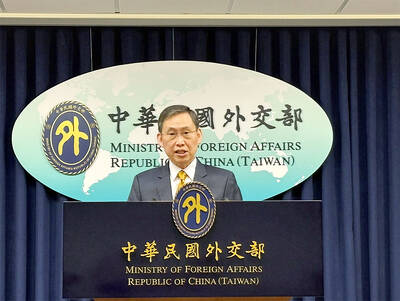
A Ministry of Foreign Affairs official yesterday said that a delegation that visited China for an APEC meeting did not receive any kind of treatment that downgraded Taiwan’s sovereignty. Department of International Organizations Director-General Jonathan Sun (孫儉元) said that he and a group of ministry officials visited Shenzhen, China, to attend the APEC Informal Senior Officials’ Meeting last month. The trip went “smoothly and safely” for all Taiwanese delegates, as the Chinese side arranged the trip in accordance with long-standing practices, Sun said at the ministry’s weekly briefing. The Taiwanese group did not encounter any political suppression, he said. Sun made the remarks when
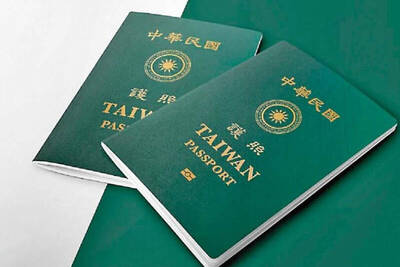
The Taiwanese passport ranked 33rd in a global listing of passports by convenience this month, rising three places from last month’s ranking, but matching its position in January last year. The Henley Passport Index, an international ranking of passports by the number of designations its holder can travel to without a visa, showed that the Taiwan passport enables holders to travel to 139 countries and territories without a visa. Singapore’s passport was ranked the most powerful with visa-free access to 192 destinations out of 227, according to the index published on Tuesday by UK-based migration investment consultancy firm Henley and Partners. Japan’s and
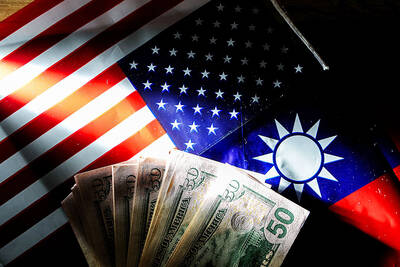
BROAD AGREEMENT: The two are nearing a trade deal to reduce Taiwan’s tariff to 15% and a commitment for TSMC to build five more fabs, a ‘New York Times’ report said Taiwan and the US have reached a broad consensus on a trade deal, the Executive Yuan’s Office of Trade Negotiations said yesterday, after a report said that Washington is set to reduce Taiwan’s tariff rate to 15 percent. The New York Times on Monday reported that the two nations are nearing a trade deal to reduce Taiwan’s tariff rate to 15 percent and commit Taiwan Semiconductor Manufacturing Co (TSMC, 台積電) to building at least five more facilities in the US. “The agreement, which has been under negotiation for months, is being legally scrubbed and could be announced this month,” the paper said,
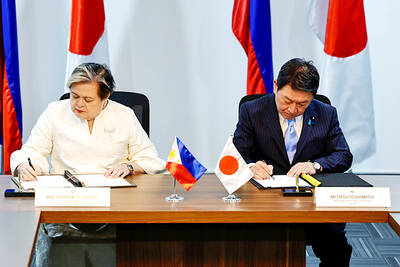
Japan and the Philippines yesterday signed a defense pact that would allow the tax-free provision of ammunition, fuel, food and other necessities when their forces stage joint training to boost deterrence against China’s growing aggression in the region and to bolster their preparation for natural disasters. Japan has faced increasing political, trade and security tensions with China, which was angered by Japanese Prime Minister Sanae Takaichi’s remark that a Chinese attack on Taiwan would be a survival-threatening situation for Japan, triggering a military response. Japan and the Philippines have also had separate territorial conflicts with Beijing in the East and South China


 RSS
RSS