


Taiwanese military observers will participate in a US anti-submarine warfare exercise in March next year with unprecedented levels of access, a military official said yesterday, calling it “actual participation.”
The US military has previously only permitted observers to see the details of its anti-submarine tactics and technology during the exercise, the official said on condition of anonymity.
“Instead of spectating on the sidelines, observers will actually participate in parts of the anti-submarine exercise. For example, they are authorized to be present on US Navy helicopters that are actively engaged in anti-submarine drills,” the official said.
Taiwanese officers would observe how the US trains anti-submarine specialists and its operational procedures, the official added.
High-ranking officers from the navy’s marine patrol aviation groups will participate as observers in the exercise, the official said.
In the past decade, the Chinese People’s Liberation Army Navy has rapidly upgraded its submarine fleet and added more than 70 new boats, the official said.
“The threat to Taiwan is serious and we have detected signs of suspected Chinese submarine activities on the edges of Taiwan’s sovereign seas,” the official said.
Taiwan’s and the US’ armed forces used to conduct joint marine patrol exercises on a regular basis during the period of direct US military assistance, which came to a halt after the US severed diplomatic ties with Taipei, the official said.
“Agreement from the US to let our military observers actually participate in the exercises next year is a major breakthrough and will significantly help the nation’s overall anti-submarine warfare capabilities,” the official said.
According to the budget plan the Ministry of National Defense has submitted to the Legislative Yuan, the observers will be invited to a wide range of exercises by US combat units next year under the project “Kuan Wu 107.”
The Republic of China Marine Corps will also send military observers to the US to participate in an amphibious warfare exercise with the US Marine Corps, according to the plan.
The budget highlighted several areas of interest for Taiwan’s marines, including amphibious combined-arms operations, the movement of a fire support coordination center from ship to shore during an amphibious operation and the use of naval medical services in humanitarian aid.
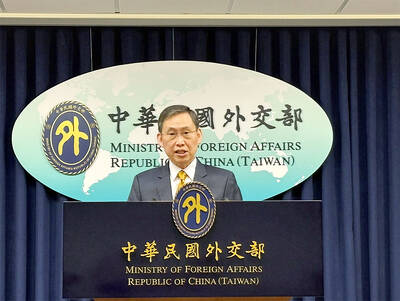
A Ministry of Foreign Affairs official yesterday said that a delegation that visited China for an APEC meeting did not receive any kind of treatment that downgraded Taiwan’s sovereignty. Department of International Organizations Director-General Jonathan Sun (孫儉元) said that he and a group of ministry officials visited Shenzhen, China, to attend the APEC Informal Senior Officials’ Meeting last month. The trip went “smoothly and safely” for all Taiwanese delegates, as the Chinese side arranged the trip in accordance with long-standing practices, Sun said at the ministry’s weekly briefing. The Taiwanese group did not encounter any political suppression, he said. Sun made the remarks when
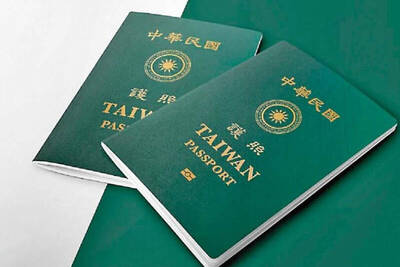
The Taiwanese passport ranked 33rd in a global listing of passports by convenience this month, rising three places from last month’s ranking, but matching its position in January last year. The Henley Passport Index, an international ranking of passports by the number of designations its holder can travel to without a visa, showed that the Taiwan passport enables holders to travel to 139 countries and territories without a visa. Singapore’s passport was ranked the most powerful with visa-free access to 192 destinations out of 227, according to the index published on Tuesday by UK-based migration investment consultancy firm Henley and Partners. Japan’s and
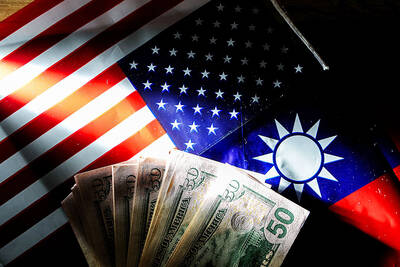
BROAD AGREEMENT: The two are nearing a trade deal to reduce Taiwan’s tariff to 15% and a commitment for TSMC to build five more fabs, a ‘New York Times’ report said Taiwan and the US have reached a broad consensus on a trade deal, the Executive Yuan’s Office of Trade Negotiations said yesterday, after a report said that Washington is set to reduce Taiwan’s tariff rate to 15 percent. The New York Times on Monday reported that the two nations are nearing a trade deal to reduce Taiwan’s tariff rate to 15 percent and commit Taiwan Semiconductor Manufacturing Co (TSMC, 台積電) to building at least five more facilities in the US. “The agreement, which has been under negotiation for months, is being legally scrubbed and could be announced this month,” the paper said,
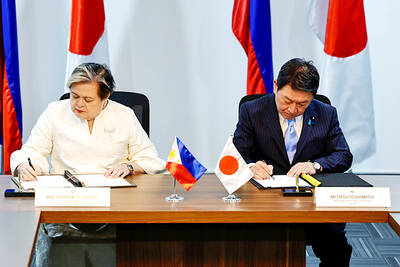
Japan and the Philippines yesterday signed a defense pact that would allow the tax-free provision of ammunition, fuel, food and other necessities when their forces stage joint training to boost deterrence against China’s growing aggression in the region and to bolster their preparation for natural disasters. Japan has faced increasing political, trade and security tensions with China, which was angered by Japanese Prime Minister Sanae Takaichi’s remark that a Chinese attack on Taiwan would be a survival-threatening situation for Japan, triggering a military response. Japan and the Philippines have also had separate territorial conflicts with Beijing in the East and South China


 RSS
RSS