


Moscow’s top intelligence agency has warned that 10 Syrians linked to the Islamic State group have entered Thailand to target Russians, the kingdom’s police said yesterday.
A leaked letter, marked “top secret” and “urgent,” and signed by the deputy head of Thailand’s special branch, was widely circulated in Thai media late on Thursday.
It said Moscow’s Federal Security Service (FSB) had told Thai police that the group of Syrians entered the nation between Oct. 15 and Oct. 31 potentially to target Russian interests.
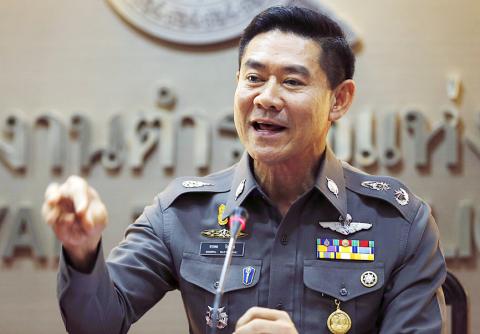
Photo: Reuters
“They [the Syrians] traveled separately. Four went to Pattaya, two to Phuket, two to Bangkok and the other two to [an] unknown location,” the letter said, citing information from the FSB.
“Their purpose is to create bad incidents to affect Russians and Russia’s alliance with Thailand,” the letter said, without naming the suspects.
More than 1.6 million Russian tourists visited Thailand last year, the largest number from European nations. Arrivals from Russia spike during the Christmas and New Year holiday season.
The Russian embassy in Bangkok would not immediately comment on the letter, but Thai National Police Chief Jakthip Chaijinda told reporters the “document was real.”
Since the middle of October more than 200 Syrians have entered Thailand.
“Twenty remain here,” Jakthip said, adding that he did not know if the 10 people referenced in the letter were counted among the 200 who have entered this autumn.
Police spokesman Krissana Phattanacharoen confirmed “the content of [the] letter is genuine,” but played down a specific threat to the nation.
“Yes it’s a threat, not only to my country, but also to other countries as well,” he added, referring to the potential danger posed by the Islamic State group.
Thailand is in its peak holiday season, during which international arrivals surge, bringing huge sums of money to the economy.
Confirmation that members of Islamic State have entered the nation would likely send jitters through the tourist industry, especially in busy resort areas such as Phuket and Pattaya — both popular with Russians.
Pattaya police urged tourists not to be alarmed by the reports, although they said security would be beefed up.
Russia launched air strikes against Islamic State targets in Syria in September. A month later, a Russian passenger plane was downed by a bomb over the Sinai desert in Egypt killing 224 people, mainly Russian holidaymakers.
Islamic State later claimed responsibility for the bombing, as well as the Nov. 13 terror attacks in Paris that killed 130 people.
The brazen attacks have further raised global alarm over the possibility of assaults by Islamic State gunmen and bombers. Thailand was hit by a bomb in August that left 20 people dead at a shrine in downtown Bangkok, rattling the tourist industry.
Mystery still shrouds the motive for that unclaimed attack, but two men from China’s Uighur minority have been charged over the blast. That has heightened speculation of a link with supporters of the Uighurs, who say they face Chinese persecution. Thailand deported 109 Uighurs to China just weeks before the bombing.
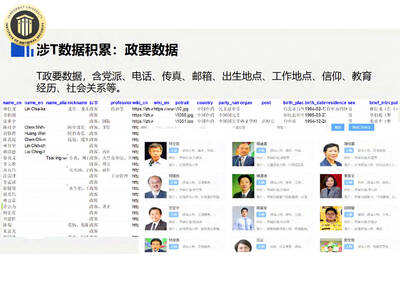
NETWORK-MAPPING PROJECT: The database contains 170 detailed files of Taiwanese politicians and about 23 million records of household registration data in Taiwan China has developed a network-mapping project targeting political figures and parties in Taiwan to monitor public opinion during elections and to craft tailored influence campaigns aimed at dividing Taiwanese society, according to documents leaked by Chinese technology firm GoLaxy (中科天璣). The documents, collected by Taipei-based Doublethink Lab, showed a database was specifically created to gather detailed information on Taiwanese political figures, including their political affiliations, job histories, birthplaces, residences, education, religion and a brief biography about them. Several notable Taiwanese politicians are in the database, including President William Lai (賴清德), former president Tsai Ing-wen (蔡英文), Minister of Foreign Affairs Lin Chia-lung (林佳龍),
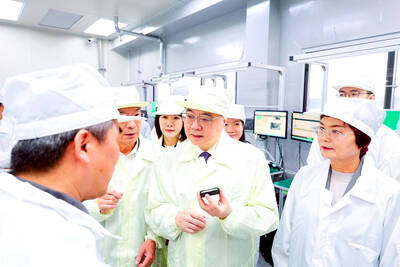
KEY INDUSTRY: The vice premier discussed a plan to create a non-red drone supply chain by next year, which has been allocated a budget of more than NT$7.2 billion The government has budgeted NT$44.2 billion (US$1.38 billion) to cultivate Taiwan’s uncrewed aerial vehicle (UAV) industry over the next five years, which would make the nation a major player in the industry’s democratic supply chain in the Asia-Pacific region, Premier Cho Jung-tai (卓榮泰) said yesterday. Cho made the remarks during a visit to the facilities of Cub Elecparts Inc (為升電裝). Democratic Progressive Party (DPP) Legislator Chen Su-yueh (陳素月) and Chinese Nationalist Party (KMT) Legislator Hsieh Yi-fong (謝依鳳) also participated in the trip. Cub Elecparts has transitioned from the automotive industry to the defense industry, which is the top priority among the nation’s
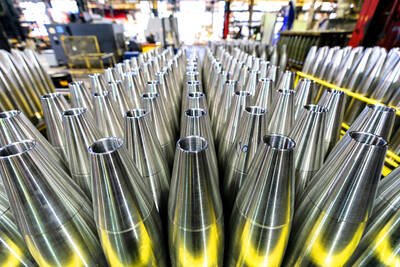
UPGRADED MISSILE: The Chungshan Institute of Science and Technology is reportedly to conduct a live-fire test of the Hsiung Feng III anti-ship missile on Thursday next week The US Army is planning to build new facilities to boost explosives production and strengthen its supply chain, a move aimed at addressing munitions shortages and supporting obligations to partners including Taiwan, Ukraine and Israel, Defense News reported. The army has issued a sources sought notice for a proposed Center of Excellence at the Blue Grass Army Depot in Kentucky, the report said. The facility would serve as a hub within the US industrial base for the production of key military explosives, including research department explosives (RDX) and high melting explosives (HMX), while also supporting research and development of next-generation materials. The proposed
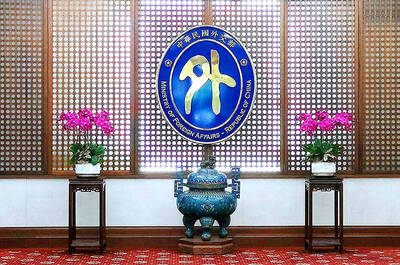
SOUTH KOREA DISPUTE: If Seoul continues to ignore its request, Taiwan would change South Korea’s designation on its arrival cards, the foreign ministry said If South Korea does not reply appropriately to a request to correct Taiwan’s name on its e-Arrival card system before March 31, the government would take corresponding measures to change how South Korea is labeled on the online Taiwan Arrival Card system, the Ministry of Foreign Affairs said yesterday. South Korea’s e-Arrival card system lists Taiwan as “China (Taiwan)” in the “point of departure” and “next destination” fields. Taipei has asked Seoul to change the wording. Since March 1, South Koreans who hold government-issued Alien Resident Certificates (ARC) have been identified as from “South Korea” rather than the “Republic of Korea,” the


 RSS
RSS