


Against a backdrop of chants from supporters of Deputy Legislative Speaker Hung Hsiu-chu (洪秀柱) outside, the Chinese Nationalist Party’s (KMT) extempore congress yesterday voted by a wide margin in favor of a motion to rescind Hung’s nomination as the party’s presidential candidate.
The motion was passed by a landslide vote of 812 to 79 at the congress at the National Sun Yat-sen Memorial Hall in Taipei in the afternoon, putting an end to Hung’s candidacy, which had been dogged by rumors about the KMT leadership’s plan to replace her since the beginning.
Among the supporters of the motion were President Ma Ying-jeou (馬英九) and Legislative Speaker Wang Jin-pyng (王金平), as well as former KMT chairmen Lien Chan (連戰) and Wu Poh-hsiung (吳伯雄).
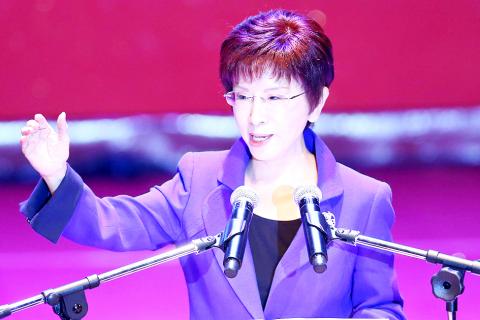
Photo: CNA
The conference briefly descended into chaos when pro-Hung representative Yu Hao (游顥) spoke against a proposal by the meeting’s chairman, former KMT vice chairman Lin Feng-cheng (林豐正), to vote on the motion by a show of hands — as opposed to KMT congress’ traditional voting through applause — due to the significance of the matter.
Yu proposed putting the motion to a secret vote, a suggestion dismissed by many other party representatives at the meeting, with some shouting: “Just vote by a show of hands.”
The congress came just 10 days after the KMT set in motion plans to force Hung out of the Jan. 16 election. The party’s Central Standing Committee on Oct. 7 unanimously passed a motion — without putting it to a vote — to hold a provisional party congress aimed at changing the candidate and forging party unity.

Photo: Huang Wen-huang, Taipei Times
With unusual speed, KMT headquarters finalized the date for the congress only five days later, before the committee on Wednesday passed another motion calling for Hung’s nomination to be rescinded, in an effort to create a basis for the congress’ plan to put Hung’s candidacy to a vote at yesterday’s convention.
In her opening address earlier to the special congress, Hung said she had qualms about “troubling party representatives to come here again” to deliberate on her presidential nomination.
“Reminiscing about the cheering [I received] at the July 19 national congress, I am here today in the same place and with the same group of people, but the ideas harbored in their minds might be vastly different than they were three months ago,” she said.
Hung said the KMT’s disastrous defeat in last year’s nine-in-one elections crushed almost every ounce of the party’s courage to stand up and fight in the presidential and legislative elections.
Early this year, amid a dismal atmosphere, all of the KMT’s heavyweights declined to compete in the upcoming race, despite repeated calls from party members and supporters, Hung said.
“To spare the KMT from potential ridicule stirred up by having no one to contest the elections, I shouldered the responsibility and joined the primary in the hope of encouraging other party members to come forward at such a difficult time for the party,” Hung said.
Having fulfilled the KMT’s primary requirements of signature and poll thresholds, Hung said she is the first KMT presidential candidate to be nominated through the party’s democratic primary mechanism.
“The Republic of China [ROC] has been a beacon of democracy for all people of Chinese ethnicity. The decision reached at today’s congress will not only be closely watched by KMT members, but also by Taiwanese and every ethnic Chinese who cares about democracy,” Hung said.
The choice KMT representatives made has to answer to the public and to history, Hung said.
“Should we base our decisions on social perceptions, public opinions and our beliefs, or sacrifice the KMT’s democratic systems and put the party’s integrity, principles and spirits in jeopardy for the mere sake of election results?” she asked.
Hung said that the KMT might abandon her, but she would never forsake the party.
During the congress, Ma urged party members to support and unite behind the decision made by the congress, the KMT’s highest organ.
Lien said he was moved by Hung’s speech and praised her dedication and willingness to step up at the KMT’s most difficult time.
Wu said Hung’s address would be an important page in the KMT’s history.
Speaking prior to the vote, Wu said Hung would be the biggest winner, regardless of whether the congress nullified her nomination.

The Legislative Yuan’s Finance Committee yesterday approved proposed amendments to the Amusement Tax Act (娛樂稅法) that would abolish taxes on films, cultural activities and competitive sporting events, retaining the fee only for dance halls and golf courses. The proposed changes would set the maximum tax rate for dance halls and golf courses at 50 and 20 percent respectively, with local governments authorized to suspend the levies. Article 2 of the act says that “amusement tax shall be levied on tickets sold or fees charged by amusement places, facilities or activities” in six categories: “Cinema; professional singing, story-telling, dancing, circus, magic show, acrobatics

Tainan, Taipei and New Taipei City recorded the highest fines nationwide for illegal accommodations in the first quarter of this year, with fines issued in the three cities each exceeding NT$7 million (US$220,639), Tourism Administration data showed. Among them, Taipei had the highest number of illegal short-term rental units, with 410. There were 3,280 legally registered hotels nationwide in the first quarter, down by 14 properties, or 0.43 percent, from a year earlier, likely indicating operators exiting the market, the agency said. However, the number of unregistered properties rose to 1,174, including 314 illegal hotels and 860 illegal short-term rental
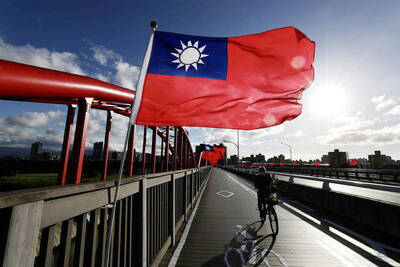
INFLATION UP? The IMF said CPI would increase to 1.5 percent this year, while the DGBAS projected it would rise to 1.68 percent, with GDP per capita of US$44,181 The IMF projected Taiwan’s real GDP would grow 5.2 percent this year, up from its 2.1 percent outlook in January, despite fears of global economic disruptions sparked by the US-Iran conflict. Taiwan’s consumer price index (CPI) is projected to increase to 1.5 percent, while unemployment would be 3.4 percent, roughly in line with estimates for Asia as a whole, the international body wrote in its Global Economic Outlook Report published in the US on Monday. The figures are comparatively better than the IMF outlook for the rest of the world, which pegged real GDP growth at 3.1 percent, down from 3.3 percent
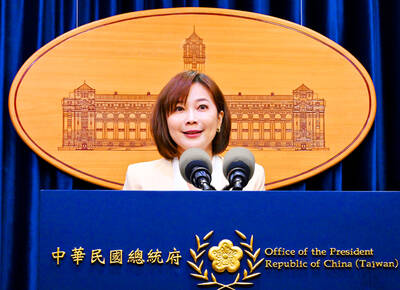
ECONOMIC COERCION: Such actions are often inconsistently applied, sometimes resumed, and sometimes just halted, the Presidential Office spokeswoman said The government backs healthy and orderly cross-strait exchanges, but such arrangements should not be made with political conditions attached and never be used as leverage for political maneuvering or partisan agendas, Presidential Office spokeswoman Karen Kuo (郭雅慧) said yesterday. Kuo made the remarks after China earlier in the day announced 10 new “incentive measures” for Taiwan, following a landmark meeting between Chinese President Xi Jinping (習近平) and Chinese Nationalist Party (KMT) Chairwoman Cheng Li-wun (鄭麗文) in Beijing on Friday. The measures, unveiled by China’s Xinhua news agency, include plans to resume individual travel by residents of Shanghai and China’s Fujian


 RSS
RSS