


Rescuers dug through shattered homes yesterday looking for survivors of a strong earthquake in southern China’s Yunnan Province as the death toll rose to at least 398 people, with more than 1,800 injured.
About 12,000 homes collapsed when the quake struck on Sunday afternoon in impoverished Ludian County, about 370km northeast of Yunnan’s capital, Kunming, Xinhua news agency reported.
Ma Yaoqi, an 18-year-old volunteer in the quake zone, said by telephone that at least half of the buildings had collapsed on the road from the city center of Zhaotong to the hardest hit town of Longtou. The rest of the buildings were damaged, she said.
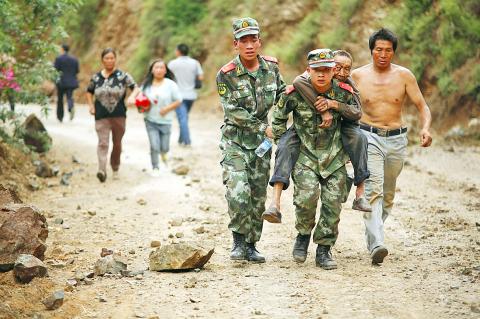
Photo: AFP
“I saw dead bodies being wrapped in quilts and carried away,” said Ma, who had arrived with 20 other volunteers yesterday. “Some were wrapped with small quilts. Those must be kids.”
Overhead footage of the quake zone shot by state broadcaster CCTV showed older houses flattened, but newer multistory buildings still standing.
The magnitude 6.1 earthquake struck at 4:30pm on Sunday at a depth of 10km, according to the US Geological Survey.
China’s earthquake monitoring agency put the magnitude at 6.5.
Rain and thunderstorms were forecast for the area yesterday afternoon, complicating efforts to take tents, water, food and other relief supplies to survivors. Roads had caved in and rescuers were forced to travel on foot.
Repeated aftershocks also were making the rescue work dangerous. The US Geological Survey registered four aftershocks of magnitude 4.5 and higher hitting after the initial quake.
The Yunnan Civil Affairs Bureau said on its Web site that 398 people were killed and 1,801 injured. Another 29,400 people were evacuated, CCTV said.
The death toll is expected to rise after rescuers reach remote communities to assess casualties.
Many of the homes that collapsed in Ludian, which has a population of about 429,000, were old and made of brick, Xinhua said, adding that electricity and telecommunications were cut off in the county.
The mountainous region where the quake occurred is largely agricultural, with farming and mining the top industries, and it is particularly prone to earthquakes.
Relief efforts are underway, with more than 2,500 troops dispatched to the disaster region, Xinhua said.
The Red Cross Society of China allocated quilts, jackets and tents for those made homeless by the quake, while Red Cross branches in Hong Kong, Macau and neighboring Sichuan Province also sent relief supplies.
Chinese Premier Li Keqiang (李克強) reached the worst-hit area yesterday afternoon to oversee the relief efforts, Xinhua said.
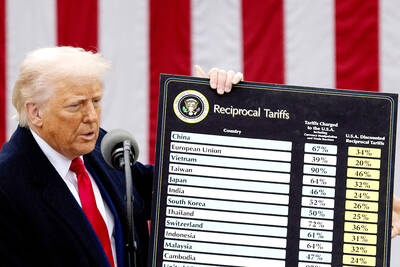
WAITING GAME: The US has so far only offered a ‘best rate tariff,’ which officials assume is about 15 percent, the same as Japan, a person familiar with the matter said Taiwan and the US have completed “technical consultations” regarding tariffs and a finalized rate is expected to be released soon, Executive Yuan spokeswoman Michelle Lee (李慧芝) told a news conference yesterday, as a 90-day pause on US President Donald Trump’s “reciprocal” tariffs is set to expire today. The two countries have reached a “certain degree of consensus” on issues such as tariffs, nontariff trade barriers, trade facilitation, supply chain resilience and economic security, Lee said. They also discussed opportunities for cooperation, investment and procurement, she said. A joint statement is still being negotiated and would be released once the US government has made

Authorities have detained three former Taiwan Semiconductor Manufacturing Co (TMSC, 台積電) employees on suspicion of compromising classified technology used in making 2-nanometer chips, the Taiwan High Prosecutors’ Office said yesterday. Prosecutors are holding a former TSMC engineer surnamed Chen (陳) and two recently sacked TSMC engineers, including one person surnamed Wu (吳) in detention with restricted communication, following an investigation launched on July 25, a statement said. The announcement came a day after Nikkei Asia reported on the technology theft in an exclusive story, saying TSMC had fired two workers for contravening data rules on advanced chipmaking technology. Two-nanometer wafers are the most
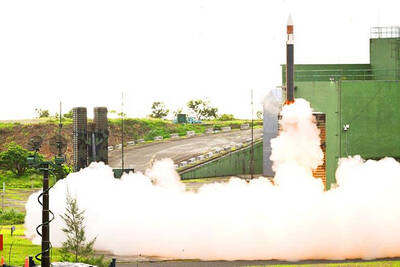
NEW GEAR: On top of the new Tien Kung IV air defense missiles, the military is expected to place orders for a new combat vehicle next year for delivery in 2028 Mass production of Tien Kung IV (Sky Bow IV) missiles is expected to start next year, with plans to order 122 pods, the Ministry of National Defense’s (MND) latest list of regulated military material showed. The document said that the armed forces would obtain 46 pods of the air defense missiles next year and 76 pods the year after that. The Tien Kung IV is designed to intercept cruise missiles and ballistic missiles to an altitude of 70km, compared with the 60km maximum altitude achieved by the Missile Segment Enhancement variant of PAC-3 systems. A defense source said yesterday that the number of
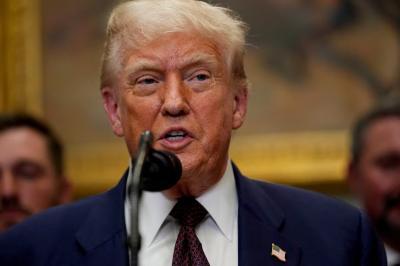
Taiwanese exports to the US are to be subject to a 20 percent tariff starting on Thursday next week, according to an executive order signed by US President Donald Trump yesterday. The 20 percent levy was the same as the tariffs imposed on Vietnam, Sri Lanka and Bangladesh by Trump. It was higher than the tariffs imposed on Japan, South Korea and the EU (15 percent), as well as those on the Philippines (19 percent). A Taiwan official with knowledge of the matter said it is a "phased" tariff rate, and negotiations would continue. "Once negotiations conclude, Taiwan will obtain a better


 RSS
RSS