


Fallout from the scandal involving former Executive Yuan secretary-general Lin Yi-shih (林益世) could spread as Lin reportedly told the man from whom he allegedly demanded a bribe that he needed the money “to buy off some people” to help his company secure procurement contracts.
One day ahead of its scheduled publication date, the Chinese-language Next Magazine yesterday printed what it said was a transcript of conversations between Lin and Chen Chi-hsiang (陳啟祥), head of Kaohsiung-based Ti Yung Co (地勇選礦公司), a metal-recycling firm, that took place on Feb. 25 and March 10.
According to the transcript, Lin demanded that Chen give him NT$83 million (US$2.78 million) when Ti Yung was to renew contracts with CHC Resource Corp (中聯資源) and Chung Yao Corp (中耀企業), from which Lin had helped Ti Yung win contracts in 2010, in return for a NT$63 million bribe from Chen.

Photo: Liu Hsin-de, Taipei Times
CHC Resource Corp and Chung Yao Corp are subsidiaries of state-controlled China Steel Corp (CSC, 中鋼), the nation’s biggest steel maker.
The transcript showed that Chen did not agree to the demand and repeatedly expressed his wish that Lin could decrease the amount, but Lin refused.
“This time is different from last time because it was easy last time. This time it is difficult. The reason why I am imposing [such a large bribe] this time is that I am now in a different position ... I need to nobble some people to keep them quiet,” Lin said, according to the transcript.
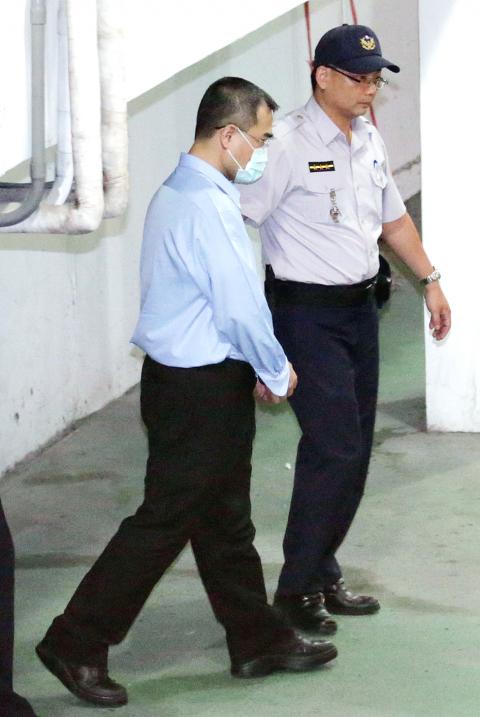
Photo: Chien Jung-fong, Taipei Times
In 2010, Lin was a Chinese Nationalist Party (KMT) lawmaker representing a constituency in Greater Kaohsiung. He lost his re-election bid in January this year and was appointed secretary-general of the Executive Yuan in February.
The transcript said Lin told Chen that he needed to buy off several “weiyuan (委員),” but he did not clearly specify what positions they held.
Local media suspected the term weiyuan may have meant lawmakers, lifa weiyuan (立法委員).
In the transcript, Lin brought up the name of KMT Legislator Wang Jin-shih (王進士), based in Pingtung County, but it was not clear whether Wang was involved in this case.
Wang, who is visiting China, issued a statement yesterday saying he had nothing to do with Lin’s case. Wang said he had contacted CSC and CHC Resource Corp once to ask them if they could provide one of his constituents with slag because the petitioner’s company needed the raw material, but his attempt was in vain.
“I don’t know why Lin Yi-shih talked about me,” said Wang, who pledged to cooperate with prosecutors if necessary.
According to the magazine, Chen said he was repeatedly called by Lin’s assistant, Neih Tsun-hsien (聶存賢), to meet with Lin earlier this year.
Chen reportedly said he did follow Neih’s instructions and only decided to record his conversations with Lin in late February after Lin earlier went berserk in response to his unresponsive attitude.
In an eight-minute telephone call late in February, Chen said Lin yelled obscenities at him. After the phone tirade, Neih called him repeatedly to request a meeting, prompting Chen to buy a recording device before he went to see Lin on Feb. 25.
Chen said he did not decide to report the case to Next Magazine until early last month after CSC, CHC Resource Corp and Chung Yao Corp refused to supply his company with materials.
Their refusal to restore supplies to Ti Yung was in defiance of a decision by the Greater Kaohsiung Government on June 1 that Ti Yung had addressed environmental pollution concerns, Chen said.
After June 1, Chen said he called Neih and told him that he wished Lin could “let go” of his businesses. Lin refused and instead gave him an ultimatum, Chen said.
Chen said he was “driven to rebellion by tyranny.”
Lin reportedly told Chen that he had the sole mandate to decide on the heads of CHC Resource Corp and Chung Yao Corp.
Asked to comment yesterday, Premier Sean Chen (陳冲) dismissed Lin’s claims. He said the government appointed executives to state-owned and state-controlled businesses in accordance with procedure, rather than based on a decision made by a single person.
Lin probably said so to bluff Chen Chi-hsiang into thinking that he had that kind of power, the premier said.
The case surfaced on Wednesday last week when Next Magazine reported that Lin accepted a bribe of NT$63 million in 2010 from Chen to help the company secure a slag treatment contract from CSC’s subsidiary.
It was reported that President Ma Ying-jeou (馬英九) learned of the case on Tuesday last week before the magazine went to press.
Next Magazine reported yesterday that Ma failed to distance himself from the case at the very beginning because he believed Lin when he told him that Legislative Speaker Wang Jin-pyng (王金平), who also hails from Greater Kaohsiung, had fabricated the story to tarnish the Ma administration.
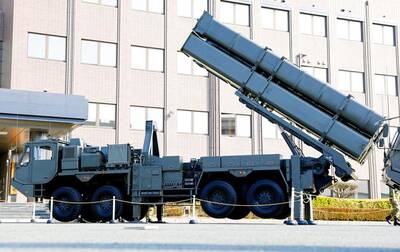
Japan has deployed long-range missiles in a southwestern region near China, the Japanese defense minister said yesterday, at a time when ties with Beijing are at their lowest in recent years. The missiles were installed in Kumamoto in the southern region of Kyushu, as Japan is attempting to shore up its military capacity as China steps up naval activity in the East China Sea. “Standoff defense capabilities enable us to counter the threat of enemy forces attempting to invade our country ... while ensuring the safety of our personnel,” Japanese Minister of Defense Shinjiro Koizumi said. “This is an extremely important initiative for
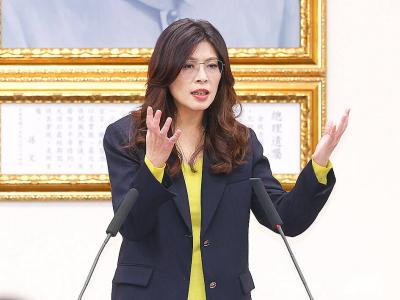
Chinese Nationalist Party (KMT) Chairwoman Cheng Li-wun (鄭麗文) today accepted an invitation from Chinese President Xi Jinping (習近平) to lead a delegation to China next month, saying she hopes to promote the peaceful development of cross-strait relations and bring stability to the Taiwan Strait. “I am grateful and happy to accept this invitation,” Cheng said in a statement from the KMT chairperson’s office. Cheng said she hopes both sides can work together to promote the peaceful development of cross-strait relations, enhance exchange and cooperation, bring stability to the Taiwan Strait and improve people’s livelihoods. At today's news conference, Cheng said any efforts to

MORE POPULAR: Taiwan Pass sales increased by 59 percent during the first quarter compared with the same period last year, the Tourism Administration said The Tourism Administration yesterday said that it has streamlined the Taiwan Pass, with two versions available for purchase beginning today. The tourism agency has made the pass available to international tourists since 2024, allowing them to access the high-speed rail, Taiwan Railway Corp services, four MRT systems and four Taiwan Tourist Shuttles. Previously, five types of Taiwan Pass were available, but some tourists have said that the offerings were too complicated. The agency said only two types of Taiwan Pass would be available, starting from a three-day pass with the high-speed rail and a three-day pass with Taiwan Railway Corp. The former costs NT$2,800

The nation’s fastest supercomputer, Nano 4 (晶創26), is scheduled to be launched in the third quarter, and would be used to train large language models in finance and national defense sectors, the National Center for High-Performance Computing (NCHC) said. The supercomputer, which would operate at about 86.05 petaflops, is being tested at a new cloud computing center in the Southern Taiwan Science Park in Tainan. The exterior of the server cabinet features chip circuitry patterns overlaid with a map of Taiwan, highlighting the nation’s central position in the semiconductor industry. The center also houses Taiwania 2, Taiwania 3, Forerunner 1 and


 RSS
RSS