


Taiwan is trying to cut its crude oil imports from Iran after the US expressed its wish for Taiwan’s inclusion in a collaborative international sanctions scheme to curb Iran’s nuclear program, sources told the Taipei Times yesterday.
The US and the EU last month approved sanctions on imports of Iranian crude oil and a freeze of assets of the Iranian central bank, agreeing on a July 1 deadline for countries to end their oil contracts with Iran.
They have been trying to persuade a list of countries, including China, India, Japan, South Korea and Taiwan, to make a commitment on the joint effort. Japan and South Korea have agreed to implement the sanctions, while China and India have refused.
“We have discussed with our international partners, including Taiwan, the implementation of new US sanctions on Iran. These sanctions intensify pressure on Iran and strengthen the impact of existing measures by targeting transactions with the Central Bank of [the Islamic Republic of] Iran and designated Iranian financial institutions and Iran’s ability to earn revenue from its oil imports,” Christopher Kavanagh, spokesperson of the American Institute in Taiwan, wrote in an e-mail.
Taiwan would agree to gradually cut crude oil imports from Iran, despite it being difficult to implement, a national security official said on condition of anonymity because he was not authorized to speak on the matter.
At 6.8 percent of total imports, Iran was Taiwan’s third-largest source of crude in 2010, behind Saudi Arabia at 33.4 percent and Kuwait at 22.5 percent. Iran accounted for about 21.4 million barrels in 2010, statistics from the Bureau of Energy show.
Shares of Taiwan’s Iranian crude oil imports dramatically increased under former president Chen Shui-bian’s (陳水扁) administration, peaking at 18.3 percent in 2003.
That gradually went down between 2008 and 2010, from 12.94 percent in 2008 to 7.8 percent in 2009 and 6.8 percent in 2010.
Implementing the sanctions will be difficult because Taiwan would be at risk of breaching contracts, the same issues Japan and South Korea would be dealing with, the official said.
Moreover, even though the government can order CPC Corp, Taiwan (台灣中油) to reduce imports from Iran, it cannot demand that privately owned Formosa Petrochemical Corp (台塑石化) to do so, the official said, adding that it would be difficult to track Iranian oil imports transported via a third country.
Taiwan has always been keen on adhering to resolutions reached by international organizations, including the UN and EU, a Ministry of Foreign Affairs official said on condition of anonymity.
The ministry official declined to confirm whether Taipei had been approached by Washington, but said that Taiwan would do its best to implement the sanction if asked by the US.
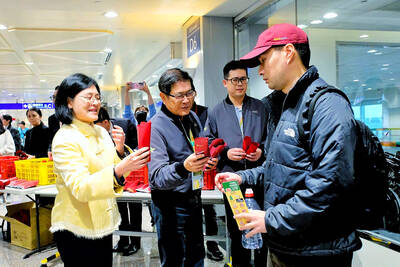
An Emirates flight from Dubai arrived at Taiwan Taoyuan International Airport yesterday afternoon, the first service of the airline since the US and Israel launched strikes against Iran on Saturday. Flight EK366 took off from the United Arab Emirates (UAE) at 3:51am yesterday and landed at 4:02pm before taxiing to the airport’s D6 gate at Terminal 2 at 4:08pm, data from the airport and FlightAware, a global flight tracking site, showed. Of the 501 passengers on the flight, 275 were Taiwanese, including 96 group tour travelers, the data showed. Tourism Administration Deputy Director-General Huang He-ting (黃荷婷) greeted Taiwanese passengers at the airport and

POSSIBILITIES EMERGE: With Taiwan’s victory and Japan’s narrow win over Australia, Taiwan now have a chance to advance if South Korea also beat the Aussies Taiwan has high hopes that the national baseball team would advance to the World Baseball Classic (WBC) quarter-finals after clinching a crucial 5-4 victory over South Korea in a nail-biting extra-inning game at the Tokyo Dome yesterday. Boosted by three home runs — two solo shots by Yu Chang (張育成) and Cheng Tsung-che (鄭宗哲) and a two-run homer by Stuart Fairchild — the triumph gave Taiwan a much-needed second victory in the five-team Pool C, where only the top two finishers would advance to the knockout stage in Miami, Florida. Entering extra innings with the game tied at four apiece, Taiwan scored
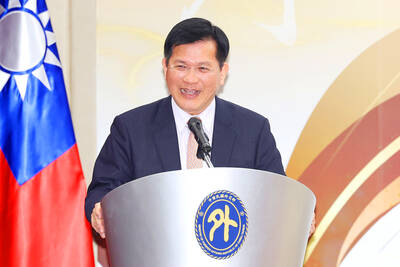
MISSION OF PEACE: The foreign minister urged Beijing to respect Taiwan’s existence as an independent nation, and work together to ensure peace and stability in the region Minister of Foreign Affairs Lin Chia-lung (林佳龍) yesterday rejected Chinese Minister of Foreign Affairs Wang Yi’s (王毅) comments about Taiwan, criticizing China as a “troublemaker” in the international community and a disruptor of cross-strait peace. Speaking at a news conference on the sidelines of the Chinese National People’s Congress, Wang said that Taiwan has always been a territory of China and that it would be impossible for it to become its own country. The “return” of Taiwan to China was the natural outcome of the Chinese people’s resistance against Japan in World War II, and that any pursuit of independence was “doomed
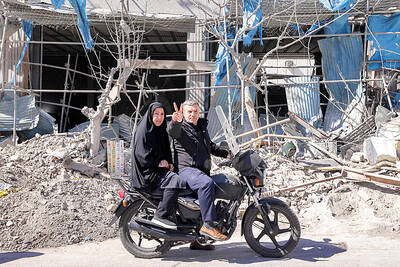
STRAIT OF HORMUZ: In the case of a prolonged blockade by Iran, Taiwan would look to sources of LNG outside the Middle East, including Australia and the US Taiwan would not have to ration power due to a shortage of natural gas, Minister of Economic Affairs Kung Ming-hsin (龔明鑫) said yesterday, after reports that the Strait of Hormuz was closed amid the conflict in the Middle East. The government has secured liquefied natural gas (LNG) supplies for this month and contingency measures are in place if the conflict extends into next month, Kung told lawmakers. Saying that 25 percent of Taiwan’s natural gas supplies are from Qatar, Chinese Nationalist Party (KMT) caucus secretary-general Lin Pei-hsiang (林沛祥) asked about the situation in light of the conflict. There would be “no problems” with


 RSS
RSS