


The Centers for Disease Control (CDC) yesterday said it was keeping an eye on the spread of superbug NDM-1, an enzyme that causes bacteria to become antibiotic-resistant. It has been confirmed in at least 10 countries.
Japan on Monday confirmed that it had found the NDM-1 gene in bacteria affecting a man in his 50s. The patient had received medical care in India and returned to Japan to be hospitalized in April last year.
The superbug is widespread in India, but has also been found in at least 10 countries, including the US, Australia, Canada, the Netherlands, Sweden and the UK.
Taiwanese health authorities are considering heightening the alert level on the superbug to a type-4 infectious disease, which means that hospitals and clinics that find the superbug, especially on a patient that has recently traveled to India or Pakistan, must immediately report the case to the CDC.
In the meantime, although there has not yet been a confirmed case of the superbug in Taiwan, the CDC has issued warnings to medical staff to wash their hands frequently to prevent a possible spread of NDM-1.
In other news, the CDC yesterday reported that last month, as many as 66 newly reported cases of dengue fever were brought into the country, setting the record for the highest number of new cases in a single month since 1998.
The CDC said that 18 new indigenous cases of dengue fever were reported in the country last week. A majority of the cases, 13 in total, were reported from various parts of Kaohsiung City, where the dengue fever outbreak has been the most severe, while the remaining five indigenous cases originated in Tainan County.
CDC Deputy Director-General Chou Jih-haw (周志浩) said that local health authorities have stepped up efforts to contain the spread of the disease and made rounds to check for conditions that allow mosquitoes carrying the dengue virus to proliferate, such as ditches, vases and containers that gather water, especially after afternoon showers during the hot, humid months.
Authorities said that in lieu of the heightened risk that the disease would become widespread, officials would step up efforts to warn residents and conduct inspections, as well as issue fines between NT$3,000 to NT$15,000 when they find violators.
Health authorities said that people who come down with fever or experience drowsiness after being bitten by mosquitoes should seek medical treatment immediately because these could be signs of serious illness.
In a related development, the CDC yesterday said influenza had claimed two more lives in Taiwan last week, bringing the total number of flu deaths since July to 13.
“In both cases, the patients died of influenza AH3 virus infections,” Chou said. “Neither of them had been immunized against flu viruses.”
ADDITIONAL REPORTING BY CNA


FORCED LABOR: A US court listed three Taiwanese and nine firms based in Taiwan in its indictment, with eight of the companies registered at the same address Nine companies registered in Taiwan, as well as three Taiwanese, on Tuesday were named by the US Department of the Treasury’s Office of Foreign Assets Control (OFAC) as Specially Designated Nationals (SDNs) as a result of a US federal court indictment. The indictment unsealed at the federal court in Brooklyn, New York, said that Chen Zhi (陳志), a dual Cambodian-British national, is being indicted for fraud conspiracy, money laundering and overseeing Prince Holding Group’s forced-labor scam camps in Cambodia. At its peak, the company allegedly made US$30 million per day, court documents showed. The US government has seized Chen’s noncustodial wallet, which contains
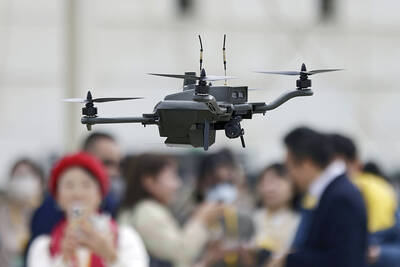
SUPPLY CHAIN: Taiwan’s advantages in the drone industry include rapid production capacity that is independent of Chinese-made parts, the economic ministry said The Executive Yuan yesterday approved plans to invest NT$44.2 billion (US$1.44 billion) into domestic production of uncrewed aerial vehicles over the next six years, bringing Taiwan’s output value to more than NT$40 billion by 2030 and making the nation Asia’s democratic hub for the drone supply chain. The proposed budget has NT$33.8 billion in new allocations and NT$10.43 billion in existing funds, the Ministry of Economic Affairs said. Under the new development program, the public sector would purchase nearly 100,000 drones, of which 50,898 would be for civil and government use, while 48,750 would be for national defense, it said. The Ministry of

SENATE RECOMMENDATION: The National Defense Authorization Act encourages the US secretary of defense to invite Taiwan’s navy to participate in the exercises in Hawaii The US Senate on Thursday last week passed the National Defense Authorization Act (NDAA) for Fiscal Year 2026, which strongly encourages the US secretary of defense to invite Taiwan’s naval forces to participate in the Rim of the Pacific (RIMPAC) exercise, as well as allocating military aid of US$1 billion for Taiwan. The bill, which authorizes appropriations for the military activities of the US Department of Defense, military construction and other purposes, passed with 77 votes in support and 20 against. While the NDAA authorizes about US$925 billion of defense spending, the Central News Agency yesterday reported that an aide of US

NINE-IN-ONE ELECTIONS: Prosecutors’ offices recorded 115 cases of alleged foreign interference in the presidential election campaign from August 2023 to Dec. 13 last year The National Security Bureau (NSB) yesterday said that it has begun planning early to counter Chinese interference in next year’s nine-in-one elections as its intelligence shows that Beijing might intensify its tactics, while warning of continued efforts to infiltrate the government and military. The bureau submitted a report to the Legislative Yuan ahead of a meeting today of the Foreign Affairs and National Defense Committee. “We will research situations in different localities and keep track of abnormalities to ensure that next year’s elections proceed without disruption,” the bureau said. Although the project is generally launched during election years, reports of alleged Chinese interference


 RSS
RSS