


Thousands of spectators and athletes gathered at Taipei Municipal Stadium last night to celebrate as the 2009 Summer Deaflympics came to a close.
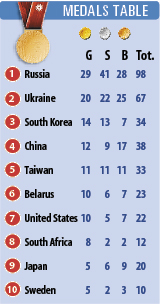
The Russian Federation bagged the most golds and the most medals at the Games — 29 gold, 41 silver and 28 bronze for a total of 98 medals.
Second and third in terms of gold medals were Ukraine and South Korea, with 20 and 14 medals respectively. Taiwan ranked fifth with 33 medals in total — 11 gold, 11 silver and 11 bronze.
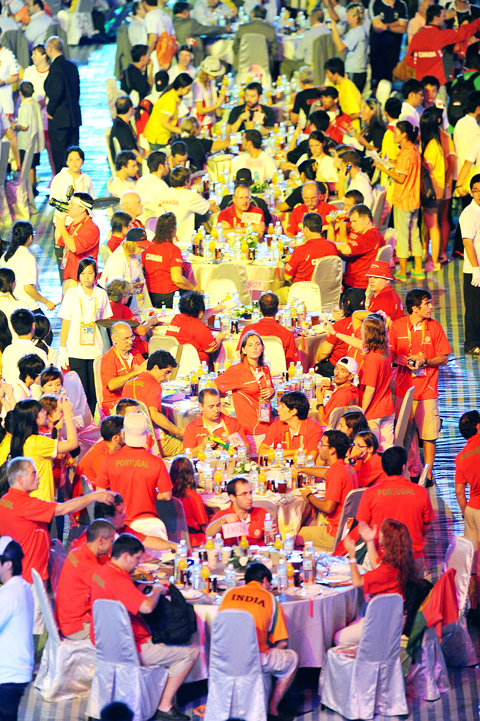
PHOTO: CHANG CHIA-MING, TAIPEI TIMES
The closing festivities included drummers from U Theatre (優人神鼓), the Minghuayuan (明華園) Taiwanese Opera Troupe and Hong Kong singer Aaron Kwok (郭富城).
While watching the performances, athletes enjoyed a banquet of 11 traditional Taiwanese dishes and desserts. Organizers designed the closing ceremony to be unique, and it was the first time a banquet had been held for the celebration.
The dishes included steamed buns, tempura fish cakes, beef noodle soup, minced pork with rice, mango shaved ice, bubble tea and other treats. Each athlete also received pineapple cakes, nougat, coffee-flavored plums and oolong tea to take home.
Spectators in the stands each received a box of snacks and a glowing tambourine during the festivities.
Athletes celebrated the conclusion of the Games by dancing along with the cheerleaders, forming long lines and weaving in and out among the tables.
The Widex Fair Play Award went to Gabor Mathe of Hungary, who won the bronze in the men’s singles tennis.
Mathe took home US$5,000 in prize money. The winner of the award must be under 25 years old or younger and demonstrate sportsmanship, respect and fairness in the Olympic spirit.
The sports director and president of the International Committee of Sports for the Deaf (ICSD) reviews nominations submitted by ICSD technical directors in each sport. The final nominee is selected and presented to the Widex representative for approval.
ICSD president Donalda Ammons also presented Athens as the host city of 2013 Summer Deaflympics.
The Chinese delegation, which did not attend the opening ceremony on Sept. 5, did show up for the closing ceremony. Deputy director of the Chinese Deaflympics team Zhao Su-jing (趙素京) said at a press conference before the closing ceremony that the team still had about 52 competitors and staff in Taipei who would attend.
The Chinese team did not carry the Chinese flag upon entering the stadium, instead holding up a banner reading: “Go, Taiwanese compatriots in the disaster zone.”
China attended neither the opening nor closing ceremonies of the World Games in Kaohsiung in July.
Zhao said China sent 78 athletes to the Games this year.
As they were from different provinces and had to gather in Beijing before coming to Taiwan, the team had not been able to make it to the opening ceremony, she said.
Also See: DEAFLYMPICS TAIPEI 2009: Ukraine wins Taipei soccer gold

PROVOCATIVE: Chinese Deputy Ambassador to the UN Sun Lei accused Japan of sending military vessels to deliberately provoke tensions in the Taiwan Strait China denounced remarks by Japan and the EU about the South China Sea at a UN Security Council meeting on Monday, and accused Tokyo of provocative behavior in the Taiwan Strait and planning military expansion. Ayano Kunimitsu, a Japanese vice foreign minister, told the Council meeting on maritime security that Tokyo was seriously concerned about the situation in the East China and South China seas, and reiterated Japan’s opposition to any attempt to change the “status quo” by force, and obstruction of freedom of navigation and overflight. Stavros Lambrinidis, head of the EU delegation to the UN, also highlighted South China Sea

SILENCING CRITICS: In addition to blocking Taiwan, China aimed to prevent rights activists from speaking out against authoritarian states, a Cabinet department said The Ministry of Foreign Affairs (MOFA) yesterday condemned transnational repression by Beijing after RightsCon, a major digital human rights conference scheduled to be held in Zambia this week, was abruptly canceled due to Chinese pressure over Taiwanese participation. This year’s RightsCon, the world’s largest conference discussing issues “at the intersection of human rights and technology,” was scheduled to take place from tomorrow to Friday in Lusaka, and expected to draw 2,600 in-person attendees from 150 countries, along with 1,100 online participants. However, organizers were forced to cancel the event due to behind-the-scenes pressure from China, the ministry said, expressing its “strongest condemnation”
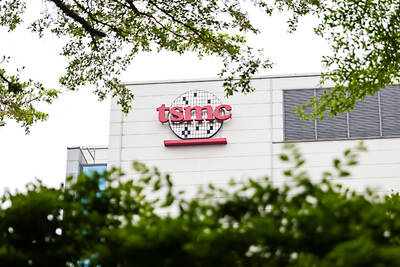
Taiwan Semiconductor Manufacturing Co (TSMC, 台積電), the world’s largest contract chipmaker, said it expects its 2-nanometer (2nm) chip capacity to grow at a compound annual rate of 70 percent from this year to 2028. The projection comes as five fabs begin volume production of 2-nanometer chips this year — two in Hsinchu and three in Kaohsiung — TSMC senior vice president and deputy cochief operating officer Cliff Hou (侯永清) said at the company’s annual technology symposium in Silicon Valley, California, last week. Output in the first year of 2-nanometer production, which began in the fourth quarter of last year, is expected to
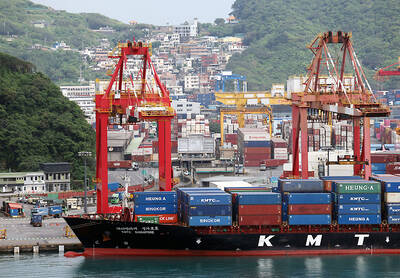
Taiwan’s economy grew far faster than expected in the first quarter, as booming demand for artificial intelligence (AI) applications drove a surge in exports, spilling over into investment and consumption, the Directorate-General of Budget, Accounting and Statistics (DGBAS) said yesterday. GDP growth was 13.69 percent year-on-year during the January-to-March period, beating the DGBAS’ February forecast by 2.23 percentage points and marking the most robust growth in nearly four decades, DGBAS senior official Chiang Hsin-yi (江心怡) told a news conference in Taipei. The result was powered by exports, which remain the backbone of Taiwan’s economy, Chiang said. Outbound shipments jumped 51.12 percent year-on-year to


 RSS
RSS