


US authorities on Friday announced a recall of 1 million cribs made in China after at least two babies became trapped and died and more than 60 other incidents were reported.
The recall of Simplicity Inc cots was the latest to hit Chinese-made consumer products, after the large-scale recalls of millions of Mattel toys found to contain lead paint or dangerous parts.
The US Consumer Product Safety Commission (CPSC) said on Friday it was recalling older-style Simplicity cots because the drop-side could became detached, creating a gap which could either trap or suffocate a child.
A nine-month-old baby and a six-month-old were known to have died when the drop-side of their cots were installed upside down and collapsed, the commission said in a statement.
The commission was also investigating the death of a one-year-old in a newer Simplicity crib in which the drop-side was installed upside down.
"CPSC is warning parents and caregivers to check all Simplicity cribs to make sure the drop-side is installed right side up," the commission said in a statement.
"The drop-side failures result from both the hardware and crib design, which allow consumers to unintentionally install the drop-side upside down.
"This, in turn, can weaken the hardware and cause the drop-side to detach from the crib. When the drop-side detaches, it creates a gap in which infants can become entrapped," it said.
The commission added it was aware of seven cases where babies had become trapped in their cribs and 55 other incidents. It was also investigating two cases that occurred even though the cot had been correctly put together.
The cribs "were sold in department stores, children's stores and mass merchandisers nationwide from January 1998 through May 2007 for between 100 and 300" US dollars, the commission said.
The recall follows consumer concern about the safety of Chinese products after a series of scares involving popular toys such as Thomas the Tank Engine, Barbies and Polly Pockets.
MATTEL APOLOGY
But earlier on Friday, US toy giant Mattel issued a startling apology to China, saying the vast majority of the recent recalls of Chinese-made products were due to design flaws it had committed itself.
"It is very important for everyone to understand that the vast majority of those products recalled were the result of a design flaw in Mattel, not through the manufacturing flaw in China's manufacturers," said Thomas Debrowski, Mattel's executive vice president of worldwide operations.
"Mattel takes full responsibility for those recalls," Debrowski told Li Changjiang (
"I would like to apologize personally to you, the Chinese people and all of the customers who have received toys that have been manufactured," Debrowski said in a meeting in Beijing.
The unusual move reflects how dependent El Segundo, California-based Mattel has become on China.
"Mattel certainly must have been facing some pressure to do that, because you can't imagine why they would be trying to push this story along any further," said Eric Johnson, a professor of operations management at Tuck School of Business at Dartmouth College in New Hampshire.
He suggested Mattel may want to prevent China from imposing more taxes or regulations.
"China's embarrassment in all this could lead to that, and I think they were trying to head that off with this apology," Johnson said.
Peter Navarro, a business professor at the University of California, Irvine, and the author of The Coming China Wars, also suggested Mattel was trying to avoid punitive measures.
"Mattel is worried that the Chinese government is going to make it difficult for them to produce, put their costs up and hurt their stock price," Navarro said.
In a prepared statement issued later on Friday, the company said some media accounts of its meeting with Chinese officials had been mischaracterized.
"Since Mattel toys are sold the world over, Mattel apologized to the Chinese today just as it has wherever its toys are sold," the company said.
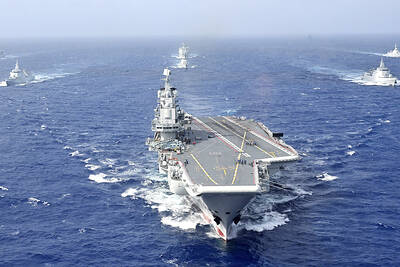
A Chinese aircraft carrier group entered Japan’s economic waters over the weekend, before exiting to conduct drills involving fighter jets, the Japanese Ministry of Defense said yesterday. The Liaoning aircraft carrier, two missile destroyers and one fast combat supply ship sailed about 300km southwest of Japan’s easternmost island of Minamitori on Saturday, a ministry statement said. It was the first time a Chinese aircraft carrier had entered that part of Japan’s exclusive economic zone (EEZ), a ministry spokesman said. “We think the Chinese military is trying to improve its operational capability and ability to conduct operations in distant areas,” the spokesman said. China’s growing
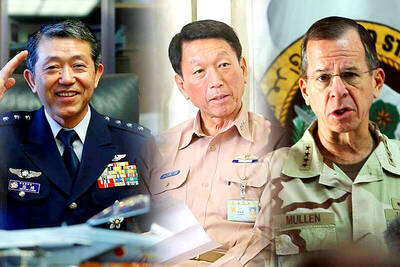
Nine retired generals from Taiwan, Japan and the US have been invited to participate in a tabletop exercise hosted by the Taipei School of Economics and Political Science Foundation tomorrow and Wednesday that simulates a potential Chinese invasion of Taiwan in 2030, the foundation said yesterday. The five retired Taiwanese generals would include retired admiral Lee Hsi-min (李喜明), joined by retired US Navy admiral Michael Mullen and former chief of staff of the Japan Self-Defense Forces general Shigeru Iwasaki, it said. The simulation aims to offer strategic insights into regional security and peace in the Taiwan Strait, it added. Foundation chair Huang Huang-hsiung

PUBLIC WARNING: The two students had been tricked into going to Hong Kong for a ‘high-paying’ job, which sent them to a scam center in Cambodia Police warned the public not to trust job advertisements touting high pay abroad following the return of two college students over the weekend who had been trafficked and forced to work at a cyberscam center in Cambodia. The two victims, surnamed Lee (李), 18, and Lin (林), 19, were interviewed by police after landing in Taiwan on Saturday. Taichung’s Chingshui Police Precinct said in a statement yesterday that the two students are good friends, and Lin had suspended her studies after seeing the ad promising good pay to work in Hong Kong. Lee’s grandfather on Thursday reported to police that Lee had sent

BUILDUP: US General Dan Caine said Chinese military maneuvers are not routine exercises, but instead are ‘rehearsals for a forced unification’ with Taiwan China poses an increasingly aggressive threat to the US and deterring Beijing is the Pentagon’s top regional priority amid its rapid military buildup and invasion drills near Taiwan, US Secretary of Defense Pete Hegseth said on Tuesday. “Our pacing threat is communist China,” Hegseth told the US House of Representatives Appropriations Subcommittee on Defense during an oversight hearing with US General Dan Caine, chairman of the Joint Chiefs of Staff. “Beijing is preparing for war in the Indo-Pacific as part of its broader strategy to dominate that region and then the world,” Hegseth said, adding that if it succeeds, it could derail


 RSS
RSS