


China's respect for religious freedom remains "poor," with people being thrown in jail and reportedly facing death due to torture for practising their faiths, an annual US report on international religious freedom said on Friday.
It cited widely reported "repression" of unregistered Protestant church networks and "house" churches, "tightly controlled" religious activity in the predominantly Muslim Xinjiang Uighur Autonomous Region and "restrictions" on Tibetan Buddhism.
Beijing also repressed groups that it categorized as "cults," including small Christian-based groups and the Falun Gong spiritual movement, said the US State Department's International Religious Freedom Report 2006.
"Falun Gong practitioners continued to face arrest, detention, and imprisonment, and there have been credible reports of deaths due to torture and abuse," it said.
Practitioners who refuse to recant their beliefs, the report said, were sometimes subjected to harsh treatment in prisons, and re-education through labor camps and extra-judicial "legal education" centers.
The State Department has been designating China a "country of particular concern," in terms of protecting religious freedom, every year since 1999. Going by the report, Beijing is widely expected to remain on the blacklist this year.
The report said religious reforms which came into effect in China last year resulted in little change on the ground.
"It's been a disappointing time, where the general trend has stalled over the last two or three years," John Hanford, US envoy for international religious freedom, told a media briefing on Friday.
The reforms "seemed to open the door maybe for some previously unregistered groups to be registered, and also the idea that house gatherings of friends and family would be fine," he said.
"But repeatedly we find problems here where the government continues to raid these sorts of meetings in some cases, and arrest people and throw them in jail," he said.
Hanford said Beijing also did not keep its word on the "very critical issue" about freedom of children being able to receive religious education.
"You'll find, for example, among Uighur Muslims, that mothers can be arrested and thrown in jail for extensive periods of time simply for training their children in their faith," Hanford said.
"And we find Sunday school teachers in Catholic and Protestant settings are sometimes arrested as well," he said.
Hanford also said that the Catholic Church had "great difficulty in trying to move forward to receive recognition."
"There seemed to be some progress earlier this year, but then a setback over the appointment of certain bishops," he said.
Beijing and the Vatican broke off diplomatic relations in the 1950s and since then two Catholic churches have coexisted in China -- an underground one loyal to the Pope and the state-sanctioned church, which does not recognize the Vatican's authority.

Nvidia Corp yesterday unveiled its new high-speed interconnect technology, NVLink Fusion, with Taiwanese application-specific IC (ASIC) designers Alchip Technologies Ltd (世芯) and MediaTek Inc (聯發科) among the first to adopt the technology to help build semi-custom artificial intelligence (AI) infrastructure for hyperscalers. Nvidia has opened its technology to outside users, as hyperscalers and cloud service providers are building their own cost-effective AI chips, or accelerators, used in AI servers by leveraging ASIC firms’ designing capabilities to reduce their dependence on Nvidia. Previously, NVLink technology was only available for Nvidia’s own AI platform. “NVLink Fusion opens Nvidia’s AI platform and rich ecosystem for
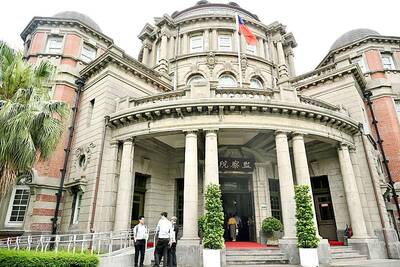
WARNING: From Jan. 1 last year to the end of last month, 89 Taiwanese have gone missing or been detained in China, the MAC said, urging people to carefully consider travel to China Lax enforcement had made virtually moot regulations banning civil servants from making unauthorized visits to China, the Control Yuan said yesterday. Several agencies allowed personnel to travel to China after they submitted explanations for the trip written using artificial intelligence or provided no reason at all, the Control Yuan said in a statement, following an investigation headed by Control Yuan member Lin Wen-cheng (林文程). The probe identified 318 civil servants who traveled to China without permission in the past 10 years, but the true number could be close to 1,000, the Control Yuan said. The public employees investigated were not engaged in national
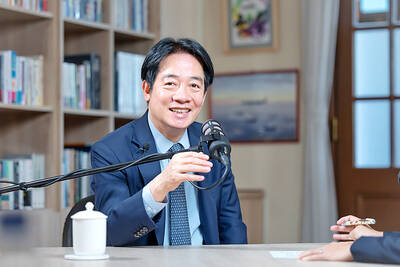
CAUSE AND EFFECT: China’s policies prompted the US to increase its presence in the Indo-Pacific, and Beijing should consider if this outcome is in its best interests, Lai said China has been escalating its military and political pressure on Taiwan for many years, but should reflect on this strategy and think about what is really in its best interest, President William Lai (賴清德) said. Lai made the remark in a YouTube interview with Mindi World News that was broadcast on Saturday, ahead of the first anniversary of his presidential inauguration tomorrow. The US has clearly stated that China is its biggest challenge and threat, with US President Donald Trump and US Secretary of Defense Pete Hegseth repeatedly saying that the US should increase its forces in the Indo-Pacific region
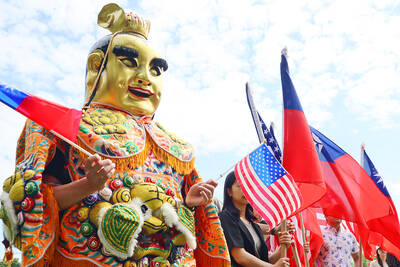
ALL TOGETHER: Only by including Taiwan can the WHA fully exemplify its commitment to ‘One World for Health,’ the representative offices of eight nations in Taiwan said The representative offices in Taiwan of eight nations yesterday issued a joint statement reiterating their support for Taiwan’s meaningful engagement with the WHO and for Taipei’s participation as an observer at the World Health Assembly (WHA). The joint statement came as Taiwan has not received an invitation to this year’s WHA, which started yesterday and runs until Tuesday next week. This year’s meeting of the decisionmaking body of the WHO in Geneva, Switzerland, would be the ninth consecutive year Taiwan has been excluded. The eight offices, which reaffirmed their support for Taiwan, are the British Office Taipei, the Australian Office Taipei, the


 RSS
RSS