


The government wants to change the name of the Chiang Kai-shek International Airport to "Taiwan Taoyuan International Airport," pending approval during next Wednesday's weekly Cabinet meeting.
"It is difficult to change the name, but it is definitely not impossible," President Chen Shui-bian (
The president announced the proposed name change at a ceremony at which soldiers received awards for outstanding service ahead of Soldier's Day tomorrow, although his remarks were not directly related to the military.
PHOTO: CHU PEI-HSIUNG, TAIPEI TIMES
In addition to promoting the name change, Chen said that the four Kidd-class destroyers which the Navy bought from the US would be given names that are relevant to Taiwan.
"These destroyers should be named after cities in Taiwan," Chen said. "In the past, the navy named its vessels after historical heroes or cities in China."
"How can we bring the nation closer to the military if the new ships are named after something or somebody unrelated to us?" he said.
Premier Su Tseng-chang (蘇貞昌) backed the president's name-change proposal.
The premier said that "Taiwan Taoyuan International Airport" had been the original name for the airport when it was established 27 yeas ago, but the Cabinet later decided to change the name to Chiang Kai-shek Memorial International Airport in memory of the late dictator.
Su said that Taoyuan residents have for years been hoping to have the airport's name changed.
"I have discussed the issue with Taoyuan County Commissioner Chu Li-lun (
The premier said that it was the government's job to introduce Taiwan to more foreign friends, and that the new name would clearly reflect its location and help promote Taiwan abroad.
"Most major airports in the world are named after cities, and this is what we are doing," Su said.
The opposition parties yesterday responded to the proposal with caution.
Chinese Nationalist Party (KMT) Chairman Ma Ying-jeou (
"We don't know the detailed situation yet. ... The government has done too many things that we can't predict," he said at a municipal event in Taipei.
Legislative Speaker Wang Jin-Pyng (
He refused to comment on the move's possible impact.
The KMT legislative caucus expressed partial support for the proposal.
KMT caucus whip Tsai Chin-lung (
"We suggest using `Taiwan Taoyuan Chiang Kai-shek International Airport,' out of consideration for people's historical feelings," Tsai said.
But People First Party legislative caucus whip Lee Hung-chun (
"Changing the name won't do any good to reverse the drop in air traffic at the airport," Lee said.
Democratic Progressive Party caucus whip Yeh Yi-ching (
Taiwan Solidarity Union legislative caucus whip Liao Pen-yen (廖本煙) also spoke in favor of the idea, calling it the most welcome move in Chen's six-year presidency.
Ministry of Transportation and Communications Minister Tsai Duei (蔡堆) said yesterday that the ministry had been planning to name the airport "Tao-yuan International Airport" when construction was completed in 1979, but then transport minister Lin Chin-sheng (林金生) suggested that the Cabinet name it after former president Chiang Kai-shek (蔣介石) instead.
Tsai yesterday appeared flabbergasted when asked whether the ministry had conducted a public opinion survey of the name change.
Terminal I of the airport was completed and opened on Feb. 26, 1979, and Terminal II was opened on July 29, 2000. Approximately 29 million passengers and 149,000 airplanes land and take off from this airport every year.
The airport has two main runways and 28 taxiways. There are 18 gates at Terminal I and another 20 gates at Terminal II, with a total of 126 apron positions for passenger and cargo aircraft.
Additional reporting by Mo Yan-chih and Shelley Shan
also see story:
Editorial: Goodbye `CKS,' you won't be missed
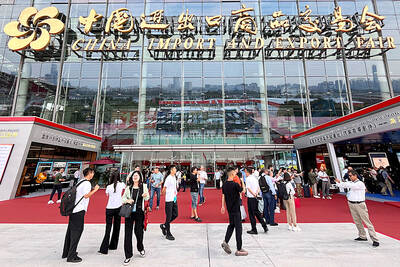
CARROT AND STICK: While unrelenting in its military threats, China attracted nearly 40,000 Taiwanese to over 400 business events last year Nearly 40,000 Taiwanese last year joined industry events in China, such as conferences and trade fairs, supported by the Chinese government, a study showed yesterday, as Beijing ramps up a charm offensive toward Taipei alongside military pressure. China has long taken a carrot-and-stick approach to Taiwan, threatening it with the prospect of military action while reaching out to those it believes are amenable to Beijing’s point of view. Taiwanese security officials are wary of what they see as Beijing’s influence campaigns to sway public opinion after Taipei and Beijing gradually resumed travel links halted by the COVID-19 pandemic, but the scale of
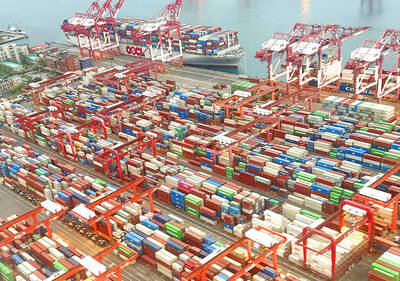
TRADE: A mandatory declaration of origin for manufactured goods bound for the US is to take effect on May 7 to block China from exploiting Taiwan’s trade channels All products manufactured in Taiwan and exported to the US must include a signed declaration of origin starting on May 7, the Bureau of Foreign Trade announced yesterday. US President Donald Trump on April 2 imposed a 32 percent tariff on imports from Taiwan, but one week later announced a 90-day pause on its implementation. However, a universal 10 percent tariff was immediately applied to most imports from around the world. On April 12, the Trump administration further exempted computers, smartphones and semiconductors from the new tariffs. In response, President William Lai’s (賴清德) administration has introduced a series of countermeasures to support affected
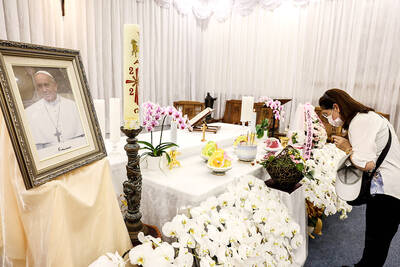
Pope Francis is be laid to rest on Saturday after lying in state for three days in St Peter’s Basilica, where the faithful are expected to flock to pay their respects to history’s first Latin American pontiff. The cardinals met yesterday in the Vatican’s synod hall to chart the next steps before a conclave begins to choose Francis’ successor, as condolences poured in from around the world. According to current norms, the conclave must begin between May 5 and 10. The cardinals set the funeral for Saturday at 10am in St Peter’s Square, to be celebrated by the dean of the College
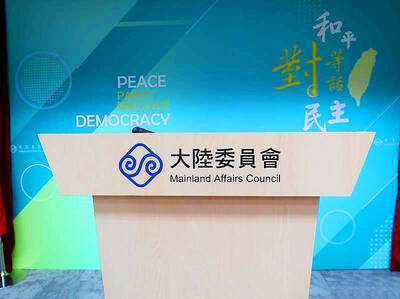
CROSS-STRAIT: The vast majority of Taiwanese support maintaining the ‘status quo,’ while concern is rising about Beijing’s influence operations More than eight out of 10 Taiwanese reject Beijing’s “one country, two systems” framework for cross-strait relations, according to a survey released by the Mainland Affairs Council (MAC) on Thursday. The MAC’s latest quarterly survey found that 84.4 percent of respondents opposed Beijing’s “one country, two systems” formula for handling cross-strait relations — a figure consistent with past polling. Over the past three years, opposition to the framework has remained high, ranging from a low of 83.6 percent in April 2023 to a peak of 89.6 percent in April last year. In the most recent poll, 82.5 percent also rejected China’s


 RSS
RSS