


Fans of MP3 players might find it frustrating when the batteries run out in the middle of listening to their favorite tunes. Help is at hand, however, as a local company has produced a solution to battery-life problems, which it will unveil at the CeBIT technology and communications trade show next week in Hanover, Germany.
Micro-Star International Co (
"There are just too many MP3 players available on the market presently, and with Apple's iPods taking the market by storm, we have to make our products stand out somehow," Vincent Lai (
The prototype MP3 player will have a small solar cell that supplies power the unit. This will come in handy as a support option in addition to the standard electrical charging mechanism, he said.
In the near future, the company has plans to produce MP3 players that run entirely on solar power, replacing electricity altogether, added Ryan Yang (
The new MP3 player, whose production costs will be 10 percent higher than other players in the same category, is expected to come with a 1.8-inch liquid-crystal-display screen and hard drive options of 4GB and 8GB.
"The prototype will make its debut at the CeBIT show in Germany next week, and depending on the response and the number of orders, we intend to introduce it locally around the middle of this year. Production will start on a small scale initially," Yang said.
MP3 players are not the first Micro-Star product to make use of solar energy, as the company has previously experimented with using it on portable computers, which were unveiled in January at the International Consumer Electronics Show in Las Vegas.
The second-generation of notebooks now come with a separate, modular solar cell instead of a bulky attached cell, which will make the battery recharging easier and increase performance, according to Lai.
However, the notebooks are still in the "concept product" stage, and they are not expected to be mass produced in the near term until the technology is more mature, he added.
In a bid to diversify the company's business portfolio, the motherboard maker started to tap into the consumer electronics segment in 2003, unveiling MP3 players, portable media players and notebooks.
The segment now contributes over 10 percent to the company's total revenues and the percentage is expected to pass the 20 percent mark sometime this year, Lai said.
Motherboards and graphics cards still make up the bulk of revenues contribution at over 60 percent, he added.
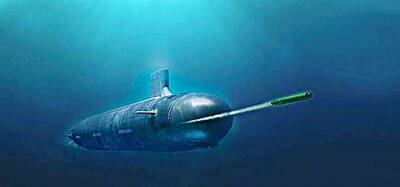
FIREPOWER: On top of the torpedoes, the military would procure Kestrel II anti-tank weapons systems to replace aging license-produced M72 LAW launchers Taiwan is to receive US-made Mark 48 torpedoes and training simulators over the next three years, following delays that hampered the navy’s operational readiness, the Ministry of National Defense’s latest budget proposal showed. The navy next year would acquire four training simulator systems for the torpedoes and take receipt of 14 torpedoes in 2027 and 10 torpedoes in 2028, the ministry said in its budget for the next fiscal year. The torpedoes would almost certainly be utilized in the navy’s two upgraded Chien Lung-class submarines and the indigenously developed Hai Kun, should the attack sub successfully reach operational status. US President Donald Trump
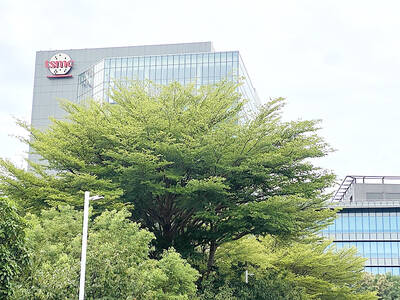
Taiwan Semiconductor Manufacturing Co (TSMC, 台積電) is expected to start construction of its 1.4-nanometer chip manufacturing facilities at the Central Taiwan Science Park (CTSP, 中部科學園區) as early as October, the Chinese-language Liberty Times (the Taipei Times’ sister newspaper) reported yesterday, citing the park administration. TSMC acquired land for the second phase of the park’s expansion in Taichung in June. Large cement, construction and facility engineering companies in central Taiwan have reportedly been receiving bids for TSMC-related projects, the report said. Supply-chain firms estimated that the business opportunities for engineering, equipment and materials supply, and back-end packaging and testing could reach as high as

ALL QUIET: The Philippine foreign secretary told senators she would not respond to questions about whether Lin Chia-lung was in the country The Ministry of Foreign Affairs on Wednesday confirmed that a business delegation is visiting the Philippines, but declined to say whether Minister of Foreign Affairs Lin Chia-lung (林佳龍) is part of the group, as Philippine lawmakers raised questions over Lin’s reported visit. The group is being led by Deputy Minister of Agriculture Huang Chao-chin (黃昭欽), Chinese International Economic Cooperation Association (CIECA) chairman Joseph Lyu (呂桔誠) and US-Taiwan Business Council (USTBC) vice president Lotta Danielsson, the ministry said in a statement. However, sources speaking on condition of anonymity said that Lin is leading the delegation of 70 people. Filinvest New Clark City Innovation Park
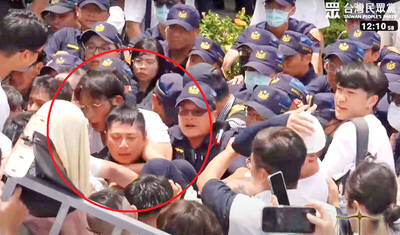
TPP RALLY: The clashes occurred near the Chiang Kai-shek Memorial Hall on Saturday at a rally to mark the anniversary of a raid on former TPP chairman Ko Wen-je People who clashed with police at a Taiwan People’s Party (TPP) rally in Taipei on Saturday would be referred to prosecutors for investigation, said the Ministry of the Interior, which oversees the National Police Agency. Taipei police had collected evidence of obstruction of public officials and coercion by “disorderly” demonstrators, as well as contraventions of the Assembly and Parade Act (集會遊行法), the ministry said in a statement on Sunday. It added that amid the “severe pushing and jostling” by some demonstrators, eight police officers were injured, including one who was sent to hospital after losing consciousness, allegedly due to heat stroke. The Taipei


 RSS
RSS