


A probe into the scandal-plagued Kaohsiung MRT construction project found no evidence that the officials responsible for the adoption of the build-operate-transfer (BOT) model for the project had any conflicts of interest or were negligent. Those officials included Premier and former Kaohsiung mayors Frank Hsieh (謝長廷) and Wu Den-yih (吳敦義).
But the "Kaohsiung MRT Investigation Report" found that the former vice chairman of the Kaohsiung Rapid Transit Corp (KRTC), Chen Min-hsien (
Chen abused his power to help Tieng Cheng Co win 11 contracts out of 14 public biddings for concrete construction.
The report was conducted two weeks ago by a five-member investigative team.
During a press conference held to announce the results yesterday, acting Kaohsiung Mayor Yeh Chu-lan (葉菊蘭) said the report was based on an investigation into written statements and interviews collected by the team. It also talked to Hsieh and Chou Li-liang (周禮良) -- a Ministry of Transportation and Communications vice minister and former director general of the Kaohsiung Department of Rapid Transit Systems.
"The report is fair and objective," Yeh said. "There has been absolutely no politics involved in the investigation."
According to the report, the the central government and the city government reached a consensus to adopt the BOT model for the project.
"Since there were no specific private companies involved in the decision-making process back then, it is hard to say that there was any conflict of interest," Yeh said.
The report did find "administrative misconduct" in the management of Thai laborers.
The report said there was no evidence of "misconduct" by Hsieh, Wu or former acting mayor Chen Chi-mai (陳其邁). But it did not address whether they should be held accountable for their part in adopting a BOT model that many consider to have been flawed.
Yeh said that the prosecutors and the courts will follow up on possibly illegal activities uncovered by the probe.
"The report will not comment on whether the whole decision of the BOT model was right, and we will leave further investigation to the judiciary," she added.
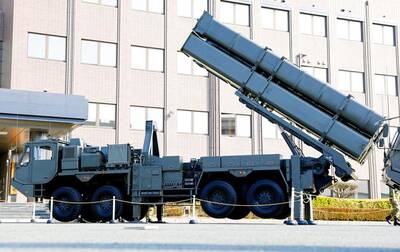
Japan has deployed long-range missiles in a southwestern region near China, the Japanese defense minister said yesterday, at a time when ties with Beijing are at their lowest in recent years. The missiles were installed in Kumamoto in the southern region of Kyushu, as Japan is attempting to shore up its military capacity as China steps up naval activity in the East China Sea. “Standoff defense capabilities enable us to counter the threat of enemy forces attempting to invade our country ... while ensuring the safety of our personnel,” Japanese Minister of Defense Shinjiro Koizumi said. “This is an extremely important initiative for
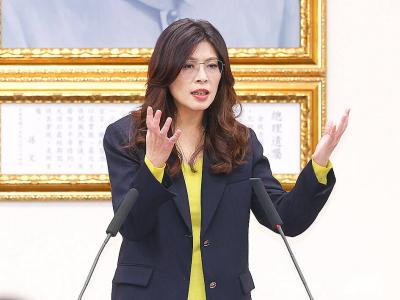
Chinese Nationalist Party (KMT) Chairwoman Cheng Li-wun (鄭麗文) today accepted an invitation from Chinese President Xi Jinping (習近平) to lead a delegation to China next month, saying she hopes to promote the peaceful development of cross-strait relations and bring stability to the Taiwan Strait. “I am grateful and happy to accept this invitation,” Cheng said in a statement from the KMT chairperson’s office. Cheng said she hopes both sides can work together to promote the peaceful development of cross-strait relations, enhance exchange and cooperation, bring stability to the Taiwan Strait and improve people’s livelihoods. At today's news conference, Cheng said any efforts to
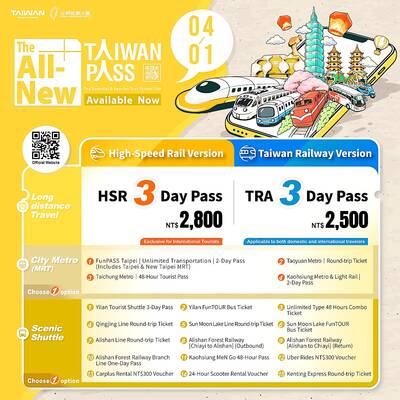
MORE POPULAR: Taiwan Pass sales increased by 59 percent during the first quarter compared with the same period last year, the Tourism Administration said The Tourism Administration yesterday said that it has streamlined the Taiwan Pass, with two versions available for purchase beginning today. The tourism agency has made the pass available to international tourists since 2024, allowing them to access the high-speed rail, Taiwan Railway Corp services, four MRT systems and four Taiwan Tourist Shuttles. Previously, five types of Taiwan Pass were available, but some tourists have said that the offerings were too complicated. The agency said only two types of Taiwan Pass would be available, starting from a three-day pass with the high-speed rail and a three-day pass with Taiwan Railway Corp. The former costs NT$2,800

The nation’s fastest supercomputer, Nano 4 (晶創26), is scheduled to be launched in the third quarter, and would be used to train large language models in finance and national defense sectors, the National Center for High-Performance Computing (NCHC) said. The supercomputer, which would operate at about 86.05 petaflops, is being tested at a new cloud computing center in the Southern Taiwan Science Park in Tainan. The exterior of the server cabinet features chip circuitry patterns overlaid with a map of Taiwan, highlighting the nation’s central position in the semiconductor industry. The center also houses Taiwania 2, Taiwania 3, Forerunner 1 and


 RSS
RSS