


Council of Labor Affairs (CLA) Chairwoman Chen Chu (
Chen, along with the director-general of the Employment and Vocational Training Administration, Kuo Fong-yu (郭芳煜), will examine changes made by the Indonesian government since Taiwan put a ban on workers from that country.
"Since the ban was placed on Indonesian migrant workers on Aug. 1, 2002, Taiwan had been requesting the Indonesian government make improvements regarding labor conditions but had received no proper response," said Hsu Li-ming (
"We have been blocking the importation of Indonesia migrant workers for about for the past few months. This time, Indonesia showed a positive response in co-operating with the CLA," Hsu said.
According to Hsu, the Indonesian government indicated that it had made significant improvements regarding the problems that led to Taiwan's embargo on Indonesian workers, such as the high abscondence rate and the high brokerage fees requested by the Indonesian government.
A Chinese-language newspaper said Chen's delegation would be meeting with the head of Indonesia's labor department.
"This trip is simply to take a look at the results of attempted improvements and discuss issues regarding Indonesian workers in Taiwan," Hsu said.
"As to the question of whether the ban on labor imports will be lifted, it requires further observation," Hsu said.
Hsu said there are as many as 60,000 Indonesians working in Taiwan, and their employment outlook remains bleak.
"These workers and their employers are concerned about the workers' future in Taiwan; therefore, it is critical that a bilateral discussion settle issues concerning these people," Hsu said.
As long as the ban continues, the Indonesian workers in Taiwan are not allowed to renew their contracts and may face deportation once their three-year contracts expire.
Of the 5,089 foreign workers who absconded from Taiwan, 2,804 of them were from Indonesia. Some 3.2 percent of Indonesians absconded, compared with 1.22 percent of workers from the Philippines.
According to Hsu, the Indonesian government has requested that Taiwanese brokerage agencies keep NT$3,000 from each Indonesian worker's salary during their first year of employment in Taiwan.
"This request goes against the principle of our labor law as it would be like extortion. Therefore, our government could not agree with this request," Hsu said.
Hsu said keeping the number of foreign migrant workers low and having a diversity of them have been the goals of the CLA.
"With the introduction of Mongolian workers, the CLA hopes to have a greater diversity of foreign workers, as well as to gain stronger bargaining power with other governments regarding the issue of foreign workers in Taiwan," Hsu said.

An Emirates flight from Dubai arrived at Taiwan Taoyuan International Airport yesterday afternoon, the first service of the airline since the US and Israel launched strikes against Iran on Saturday. Flight EK366 took off from the United Arab Emirates (UAE) at 3:51am yesterday and landed at 4:02pm before taxiing to the airport’s D6 gate at Terminal 2 at 4:08pm, data from the airport and FlightAware, a global flight tracking site, showed. Of the 501 passengers on the flight, 275 were Taiwanese, including 96 group tour travelers, the data showed. Tourism Administration Deputy Director-General Huang He-ting (黃荷婷) greeted Taiwanese passengers at the airport and

POSSIBILITIES EMERGE: With Taiwan’s victory and Japan’s narrow win over Australia, Taiwan now have a chance to advance if South Korea also beat the Aussies Taiwan has high hopes that the national baseball team would advance to the World Baseball Classic (WBC) quarter-finals after clinching a crucial 5-4 victory over South Korea in a nail-biting extra-inning game at the Tokyo Dome yesterday. Boosted by three home runs — two solo shots by Yu Chang (張育成) and Cheng Tsung-che (鄭宗哲) and a two-run homer by Stuart Fairchild — the triumph gave Taiwan a much-needed second victory in the five-team Pool C, where only the top two finishers would advance to the knockout stage in Miami, Florida. Entering extra innings with the game tied at four apiece, Taiwan scored
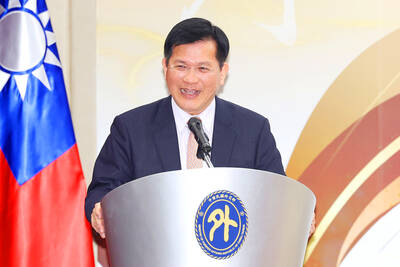
MISSION OF PEACE: The foreign minister urged Beijing to respect Taiwan’s existence as an independent nation, and work together to ensure peace and stability in the region Minister of Foreign Affairs Lin Chia-lung (林佳龍) yesterday rejected Chinese Minister of Foreign Affairs Wang Yi’s (王毅) comments about Taiwan, criticizing China as a “troublemaker” in the international community and a disruptor of cross-strait peace. Speaking at a news conference on the sidelines of the Chinese National People’s Congress, Wang said that Taiwan has always been a territory of China and that it would be impossible for it to become its own country. The “return” of Taiwan to China was the natural outcome of the Chinese people’s resistance against Japan in World War II, and that any pursuit of independence was “doomed
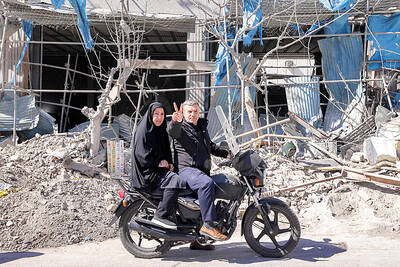
STRAIT OF HORMUZ: In the case of a prolonged blockade by Iran, Taiwan would look to sources of LNG outside the Middle East, including Australia and the US Taiwan would not have to ration power due to a shortage of natural gas, Minister of Economic Affairs Kung Ming-hsin (龔明鑫) said yesterday, after reports that the Strait of Hormuz was closed amid the conflict in the Middle East. The government has secured liquefied natural gas (LNG) supplies for this month and contingency measures are in place if the conflict extends into next month, Kung told lawmakers. Saying that 25 percent of Taiwan’s natural gas supplies are from Qatar, Chinese Nationalist Party (KMT) caucus secretary-general Lin Pei-hsiang (林沛祥) asked about the situation in light of the conflict. There would be “no problems” with


 RSS
RSS