


A Control Yuan task force investigating the Mirage 2000-5 procurement scandal has uncovered an unusual NT$6 billion deposit, a source at the Control Yuan said yesterday.
The source said that, according to the committee's investigation, the NT$6 billion was paid by the Ministry of National Defense to France to secure the 60 fighter jets.
However, the deposit was made sometime in July 1991, before the official contract was signed by Taiwan and France on Nov. 18 of that same year. The committee is now trying to determine the deposit's whereabouts.
Control Yuan members Chao Chang-ping (
As of press time yesterday, none of the five Control Yuan members had confirmed the information.
When approached by reporters, Deputy Chief Auditor Lee Chin-lung (
Lee said a deposit like this is unreasonable and illogical and that it is impossible for the ministry to approve such a payment.
"I have never heard of such a deposit and I would not believe such a thing, either," Lee said.
The Mirage procurement was listed as a classified military secret. As a result, it is possible that the ministry did not submit the proposal for the deposit to the Ministry of Audit for approval .
The jets, which Taiwan purchased from French manufacturer Dassault Aviation, cost twice as much as the basic Mirage 2000-5 model.
The original purchase price per aircraft was to have been NT$2 billion, making the total cost NT$120 billion. But a price increase caused the Legislative Yuan to budget a further NT$10 billion for the 60 planes.
With three crashes since 1999, only 57 Mirage fighters remain. The three crashes killed two pilots.
Mirage 2000-5s, together with the nation's F-16As, F-16Bs and IDFs are referred to as the second-generation fighters to differentiate them from older fighters such as F-5Es and F-104Gs.
The first combat wing of Mirage 2000-5s was formally commissioned on May 10, 2001.
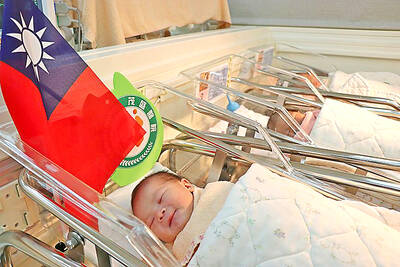
AGING: As of last month, people aged 65 or older accounted for 20.06 percent of the total population and the number of couples who got married fell by 18,685 from 2024 Taiwan has surpassed South Korea as the country least willing to have children, with an annual crude birthrate of 4.62 per 1,000 people, Ministry of the Interior data showed yesterday. The nation was previously ranked the second-lowest country in terms of total fertility rate, or the average number of children a woman has in her lifetime. However, South Korea’s fertility rate began to recover from 2023, with total fertility rate rising from 0.72 and estimated to reach 0.82 to 0.85 by last year, and the crude birthrate projected at 6.7 per 1,000 people. Japan’s crude birthrate was projected to fall below six,
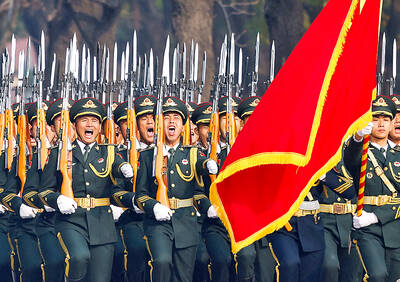
Conflict with Taiwan could leave China with “massive economic disruption, catastrophic military losses, significant social unrest, and devastating sanctions,” a US think tank said in a report released on Monday. The German Marshall Fund released a report titled If China Attacks Taiwan: The Consequences for China of “Minor Conflict” and “Major War” Scenarios. The report details the “massive” economic, military, social and international costs to China in the event of a minor conflict or major war with Taiwan, estimating that the Chinese People’s Liberation Army (PLA) could sustain losses of more than half of its active-duty ground forces, including 100,000 troops. Understanding Chinese
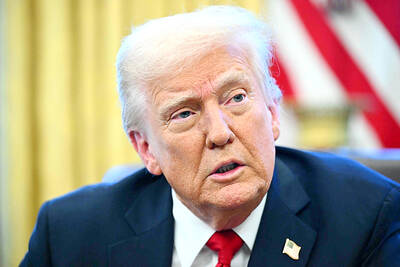
US President Donald Trump in an interview with the New York Times published on Thursday said that “it’s up to” Chinese President Xi Jinping (習近平) what China does on Taiwan, but that he would be “very unhappy” with a change in the “status quo.” “He [Xi] considers it to be a part of China, and that’s up to him what he’s going to be doing, but I’ve expressed to him that I would be very unhappy if he did that, and I don’t think he’ll do that. I hope he doesn’t do that,” Trump said. Trump made the comments in the context
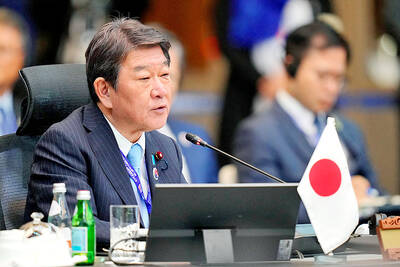
SELF-DEFENSE: Tokyo has accelerated its spending goal and its defense minister said the nation needs to discuss whether it should develop nuclear-powered submarines China is ramping up objections to what it sees as Japan’s desire to acquire nuclear weapons, despite Tokyo’s longstanding renunciation of such arms, deepening another fissure in the two neighbors’ increasingly tense ties. In what appears to be a concerted effort, China’s foreign and defense ministries issued statements on Thursday condemning alleged remilitarism efforts by Tokyo. The remarks came as two of the country’s top think tanks jointly issued a 29-page report framing actions by “right-wing forces” in Japan as posing a “serious threat” to world peace. While that report did not define “right-wing forces,” the Chinese Ministry of Foreign Affairs was


 RSS
RSS