


Cambodian drinkers were flocking to their favorite haunts for one last beer yesterday as police geared-up to enforce the nationwide closure of all nighttime entertainment establishments and bars. The radical decision was apparently prompted by an incident involving Prime Minister Hun Sen's nephew.
The order to close by 6pm yesterday was issued by the prime minister on Tuesday as part of a crackdown on legal and illegal bars which have become a haven for prostitution, drugs and organized crime.
Bar owners said they had received documents from the authorities demanding that they "close voluntarily" and have been confronted by police who insisted the prime minister's orders would be carried out.
"Most are signing because they have no choice. If there's any chance of reopening your bar later, then you have to volunteer to close now," said one bar manager who declined to be named.
Targets include Phnom Penh's famed nightspot, The Heart Of Darkness, the drinking strip along the Tonle Sap riverfront and other favored spots for expats and tourists, Sharky's and Martini's.
No details have been given on how long the closures would last and, in issuing the order, Hun Sen said crime was damaging national traditions, hurting Cambodia's prestige and heightening concerns among parents.
Shootouts among bodyguards of this country's elite are not uncommon at popular nightspots. In one notorious incident, a man was shot dead in a karaoke bar after a fight erupted between two men who wanted to sing the same song.
About three weeks ago Hun Sen was extremely upset after learning his nephew was involved in a drunken bar shooting after being told by his parents that he was too young to marry his girlfriend.
Critics argue that the laws are draconian and indiscriminate and will throw thousands of people out of work, including some 30,000 women, as well as hurting the government's ability to raise desperately needed tax revenue.
However, Cambodian Finance Minister Keat Chhon said social values were more important than tax from alcohol and impact would be minimal.
"The closing down of karaoke bars, bars, and nightclubs will not impact on the government's ability to raise revenue," he said.
Cambodia has embarked on an ambitious attempt to clean up the capital through infrastructure projects and eliminating the seedier side of the city.
"We are 70 percent sure that we will close," one bar owner spokesman said. "But this doesn't make any sense as there are many bars, including ours, which are legitimate. We don't have any fights, or prostitutes."
The order does not affect restaurants or massage parlors, prompting speculation that nightclubs operating as fronts for brothels will simply reinvent themselves as food houses or advertise as massage specialists.
According to the Cambodian Daily at least 20 nightclubs and karaoke bars in the northeast town of Siem Reap were planning to turn themselves into massage parlors.
It quoted first deputy governor of Siem Reap, Un Oeurn, as saying police would monitor the parlors to ensure they were operating as legitimate businesses.

Authorities have detained three former Taiwan Semiconductor Manufacturing Co (TMSC, 台積電) employees on suspicion of compromising classified technology used in making 2-nanometer chips, the Taiwan High Prosecutors’ Office said yesterday. Prosecutors are holding a former TSMC engineer surnamed Chen (陳) and two recently sacked TSMC engineers, including one person surnamed Wu (吳) in detention with restricted communication, following an investigation launched on July 25, a statement said. The announcement came a day after Nikkei Asia reported on the technology theft in an exclusive story, saying TSMC had fired two workers for contravening data rules on advanced chipmaking technology. Two-nanometer wafers are the most
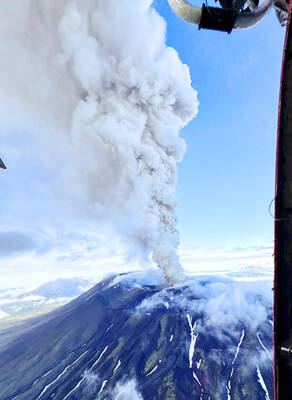
Tsunami waves were possible in three areas of Kamchatka in Russia’s Far East, the Russian Ministry for Emergency Services said yesterday after a magnitude 7.0 earthquake hit the nearby Kuril Islands. “The expected wave heights are low, but you must still move away from the shore,” the ministry said on the Telegram messaging app, after the latest seismic activity in the area. However, the Pacific Tsunami Warning System in Hawaii said there was no tsunami warning after the quake. The Russian tsunami alert was later canceled. Overnight, the Krasheninnikov volcano in Kamchatka erupted for the first time in 600 years, Russia’s RIA
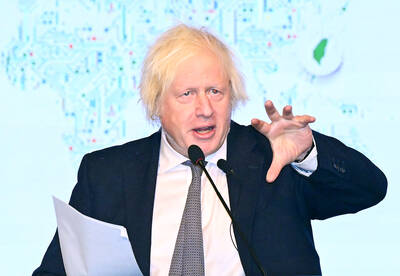
CHINA’s BULLYING: The former British prime minister said that he believes ‘Taiwan can and will’ protect its freedom and democracy, as its people are lovers of liberty Former British prime minister Boris Johnson yesterday said Western nations should have the courage to stand with and deepen their economic partnerships with Taiwan in the face of China’s intensified pressure. He made the remarks at the ninth Ketagalan Forum: 2025 Indo-Pacific Security Dialogue hosted by the Ministry of Foreign Affairs and the Prospect Foundation in Taipei. Johnson, who is visiting Taiwan for the first time, said he had seen Taiwan’s coastline on a screen on his indoor bicycle, but wanted to learn more about the nation, including its artificial intelligence (AI) development, the key technology of the 21st century. Calling himself an
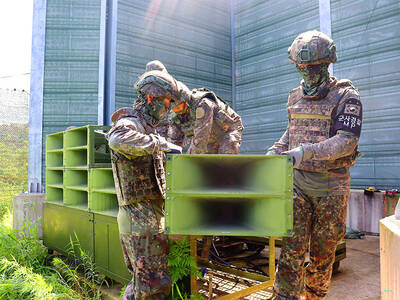
South Korea yesterday said that it was removing loudspeakers used to blare K-pop and news reports to North Korea, as the new administration in Seoul tries to ease tensions with its bellicose neighbor. The nations, still technically at war, had already halted propaganda broadcasts along the demilitarized zone, Seoul’s military said in June after the election of South Korean President Lee Jae-myung. It said in June that Pyongyang stopped transmitting bizarre, unsettling noises along the border that had become a major nuisance for South Korean residents, a day after South Korea’s loudspeakers fell silent. “Starting today, the military has begun removing the loudspeakers,”


 RSS
RSS