

A February 2023 paper by Andrew Chubb for the Asia Society Policy Institute explores the possibilities and consequences of an attempt by the armed forces of the People’s Republic of China (PRC) to seize an island currently held by the Republic of China (ROC). After discussing the Fujian coastal islands and the ROC-held islands in the South China Sea, Chubb moves to Penghu.
“The most consequential target for a PRC island seizure would be the Penghu archipelago,” Chubb writes.
The Penghu archipelago, with its major port in Makung City (馬公), has long been a stepping stone to Taiwan. The pirate Lin Feng (林阿鳳, Limahong) established a base there in 1574. The Dutch first arrived there in 1604, blown by a storm. In 1622 they began constructing a fortress there. The Ming drove them out, and they retreated to Taiwan. After the Dutch, the pirate lord Zheng Zhilong (鄭芝龍) controlled the Taiwan Strait from bases on the Fujian coast, Taiwan and Penghu. It was in Penghu that the Manchu (Qing) empire crushed the navy of the Zheng family’s statelet on Taiwan in 1683. The French captured the islands in 1885, late in the Sino-French war. When the Japanese invaded in 1895, one of their first moves was to seize Penghu. The Japanese would later use it as the jumping off point for their invasion of the Philippines, just as Lin Feng had done four centuries earlier.
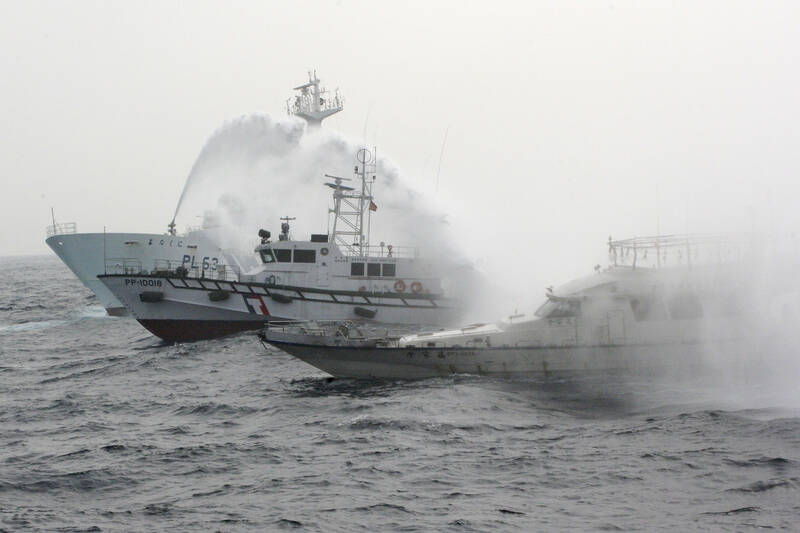
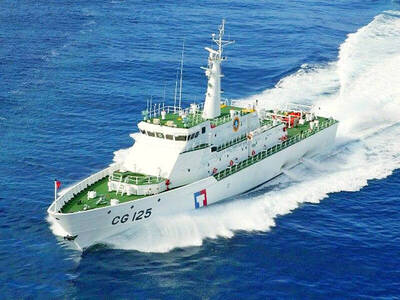
Photo: Taiwanese Coast Guard Administration / Reuters
Chubb’s analysis points to the many problems that the PRC would encounter when attempting to take Penghu. The civilian population exceeds 100,000, and the main island is well defended. But what if the PRC decides to seize an uninhabited island, he asks, using a small force or even a paramilitary maritime militia unit or a “patriotic” organization? An uninhabited island would pose fewer problems than occupying an island filled with people. Taipei would have to respond. Yet, any response could be construed as escalation. I would add that this is especially true because there is a whole world of commentators who treat all responses to PRC expansionism as “escalation.” Chubb also observes that the possibility of US intervention in a Penghu island seizure is also unclear.
COVETING PENGHU
The PRC has long thirsted over Penghu. The US China Aerospace Studies Institute (CASI), recently defunded by the Trump Administration in one of its many suicidal policy moves, translated a “Course Book on the Taiwan Strait’s Military Geography,” intended for masters students at the Academy of Military Sciences. The book’s section on Penghu says: “The Penghu Archipelago is a key point of communication between Fujian and Taiwan, and it controls the throat of the Taiwan Strait, and is known as the ‘key to the southeast,’ and its strategic position is very important.”
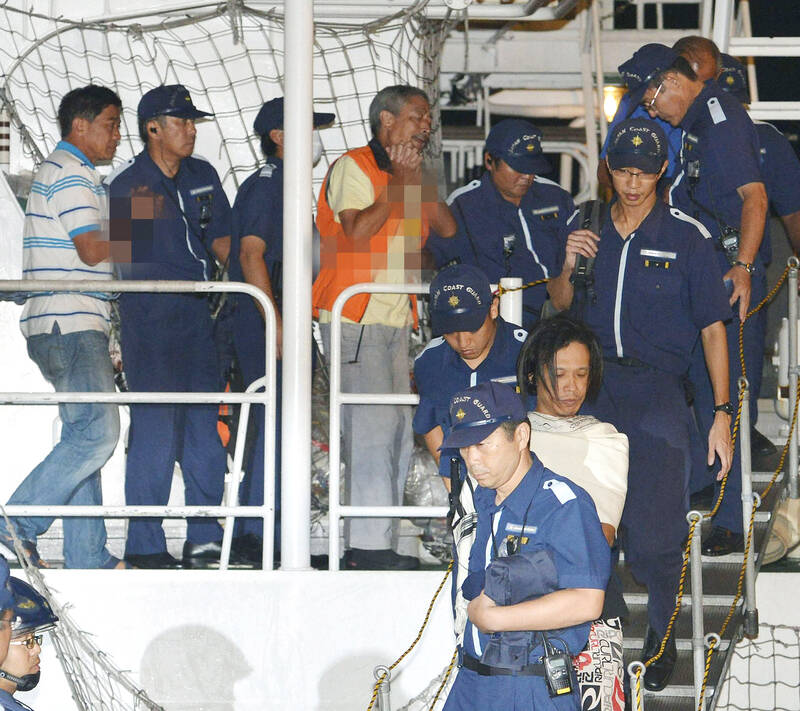
Photo: Reuters/Kyodo
The discussion lists, among other things, four airports on Penghu, the two small civil aviation fields on Qimei island and Wangan island, the major modern dual-use airport of Makong city and the old airport at Zhumushui (豬母水) (Wude, 五德) near Makong city, though it ceased operating in 1964.
A more recent piece by Chubb and other scholars in the March edition of The Pacific Review examines the changing Taiwanese public perception of the outlying islands and its consequences for their defense. Based on two waves of surveys in 2023-4, they found that respondents, irrespective of their view of the islands’ importance politically and strategically, “expressed similar levels of approval for militarily defending all of them in the event of a PRC attack or blockade.”
The 2024 survey contained an experiment that found that there was “surprisingly little difference” between Taiwanese willingness to defend Taiwan and to defend the offshore islands. Even Taiwanese independence supporters “express significantly stronger approval of using military force,” they found.
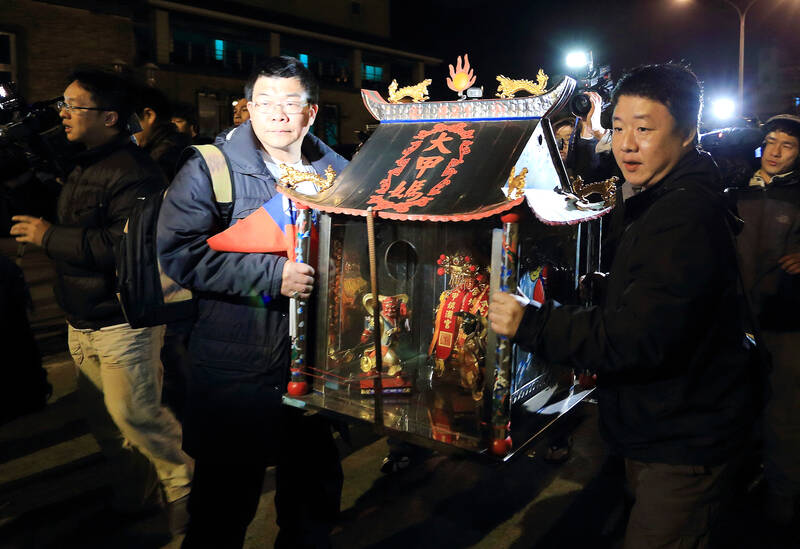
Photo: CNA
Chubb et al contend that this growing inclusion of the offshore islands in the Taiwanese idea of what constitutes “Taiwan” implies that if one is occupied, there will be considerable domestic pressure on the government to recover it. This would go double for the Penghu islands, which have long been treated as part of Taiwan. Indeed, the Taiwan Relations Act (TRA) explicitly defines the Penghu (“Pescadores”) as part of “Taiwan” in its list of definitions.
In fact we already have several examples of “patriotic” activists striking at uninhabited islands. Remember this from January 2013? “The voyage was a voluntary action by private citizens.” That was said by Su Chii-cherng (蘇啟誠), the deputy director-general of the Department of East Asian and Pacific Affairs of the Ministry of Foreign Affairs (MOFA). A group of “activists” had chartered a fishing boat out of Shenao Port (深澳漁港) in New Taipei City (新北市) and headed to the Senkakus (Diaoyutai Islands, 釣魚台) to enshrine a Mazu statue on one of the islands, ostensibly to protect Taiwan’s fishermen. Readers will no doubt know that Mazu is the patron deity of annexation, her cult a key vector of PRC influence in Taiwan.
The fishing boat was escorted by Taiwan Coast Guard ships, but it was intercepted by a flotilla of eight Japanese coast guard vessels, who forced it to turn back.
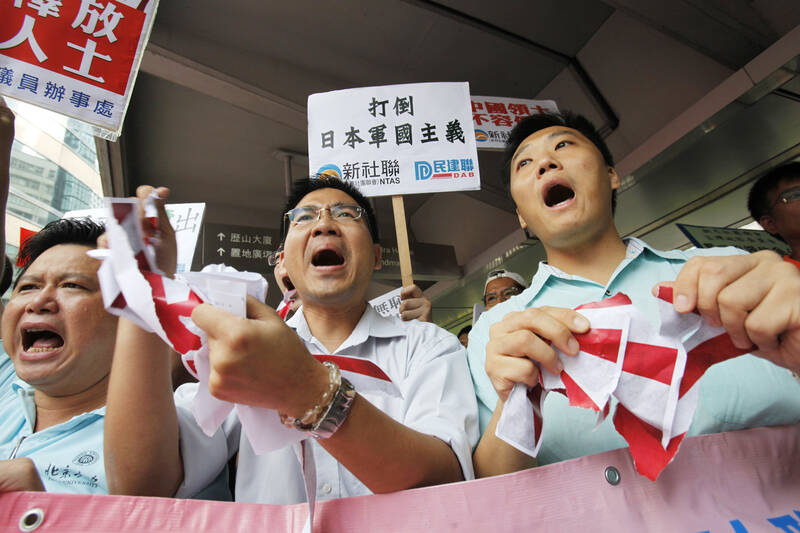
Photo: Reuters
That incident came a year after “activists” from China, Hong Kong and Macao had slipped into the Senkakus and planted flags representing those three governments, the Chinese Nationalist Party (KMT) flag and the ROC flag. The administration of KMT president Ma Ying-jeou (馬英九) not only publicly cheered the appearance of the ROC flag, but had provided provisions to the boat on its way to the Senkakus on his direct orders.
‘GRAY ZONE’ GRAB
Though Chubb did not discuss them in his 2023 paper, the Senkaku incidents highlight important and scary aspects of “gray zone” island-grabbing. For one thing, the “activists” in 2012 framed their actions as religious. Another issue they raise is cross-border cooperation between subnational actors — the actions of “patriotic activists” coordinate with actions by pro-China groups, or organized crime, in Taiwan. The 2012 crowd carried a multitude of regional flags and had official help from the Ma Administration.
Also shedding light on the “activist” occupation scenario was the run of small boat incursions over the last couple of years that featured PRC citizens entering Taiwan illegally. One of these allegedly planted a PRC flag on a beach in Taoyuan and posted it to Douyin.
Unauthorized entry can already attract up to five years’ imprisonment and a fine of up to NT$500,000. But as an AP round up of these cases last year noted, the penalties are usually not applied if no one is harmed. One thing the government can do is toughen these penalties. This would enhance the government’s ability to treat an activist incursion in Penghu as a criminal law-enforcement matter involving arrests, fines and prison. It should be easy to discredit the operation politically, especially if gangsters are involved. Officials could hint that the op was a sham and the “activists” actually criminals covering the establishment of a base to smuggle drugs and guns into Taiwan.
Whatever decisions about political aspects the government makes, as the small boat incursions show, the government needs to step up the monitoring of the waters and uninhabited islands and areas in the islands in the Strait. What if a Penghu island is seized and nobody knows?
Notes from Central Taiwan is a column written by long-term resident Michael Turton, who provides incisive commentary informed by three decades of living in and writing about his adoptive country. The views expressed here are his own.
Much attention is being paid to increasing security ties between Taiwan and the Philippines, and rightfully so. The stakes are potentially existential, as explored in “ Donovan’s Deep Dives: Taiwan, Japan and the Philippines need to face the common threat from Beijing” (Sept. 12, page 12). Getting less attention is that across the board the relationship is growing stronger, and both sides appear to be planning to put more of their eggs in each other’s baskets. Minister of Foreign Affairs Lin Chia-lung (林佳龍) in August last year confirmed plans to open a second Taipei Economic and Cultural Office (TECO) representative
On Oct. 2, after years of delays, Taiwan’s air force took delivery of the first two F-16V Block 70 fighter jets at Chihhang Air Base in Taitung County. In a sign of how eagerly anticipated this arrival was, speculation and rumors had been flying as to why they had been sitting for weeks in Hawaii en route to Taiwan. These are part of a total of 66 F-16V Block 70s on order. There are hopes the rest will arrive by the end of next year, but no one will be surprised if that extends into 2029 or even later. Worse,
Several years ago, the Ministry of Economic Affairs began encouraging legacy manufacturing enterprises to reposition themselves as tourist factories. In these places — which draw busloads of Taiwanese tourists but few international travelers — visitors can learn about the history of particular industries, observe production, join DIY workshops and gain an appreciation of the unglamorous but valuable skills that underpin Taiwan’s economy. Among the country’s most successful tourist factories are sites which make balloons, braised foods, cookies, fishing gear, ribbons and whisky. Few are so closely tied to local traditional culture, however, as Singang Incense Artistic Culture Garden (新港香藝文化園區) in

Daniela Cesin was 14 when she began thinking about her looks. “I was a little bit chubby and I started to work out at home and lose weight. I saw the difference in my body: my abs, the muscles in my arms, and I started liking it,” she says. By 31, she had the slim, toned body she had hoped for, but something was still missing. “I wanted to have that guitar hourglass shape,” she says. In August, Cesin travelled from Miami, where she has lived for the past 15 years, to her native Venezuela for liposuction and a fat transfer


 RSS