

Every day, Shanti Dangol stares down at Nepal’s Trishuli River from her makeshift shelter, searching for traces of the home she lost and wondering when she will have a roof over her head again.
Dangol is among hundreds of people living in tent shelters following a catastrophic Himalayan flood triggered by a mountain and glacier collapse near Nepal’s border with China on Aug. 26.
More than 1,400 people died and over 5,000 remain missing after tsunami-like waves swept through northern mountainous areas, destroying homes, roads, bridges and settlements.
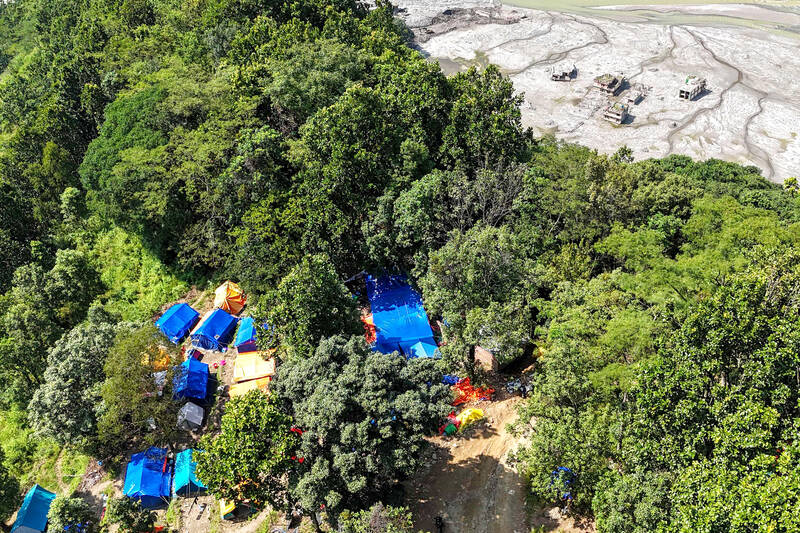
Dangol, a former hotel owner, now lives in a tent in a forest clearing in Betrawati, Rasuwa district.
She shares the plot with 25 other families who also lost their homes.
“Where are we supposed to go? What are we supposed to do? The river now flows where our house once stood,” Dangol said.
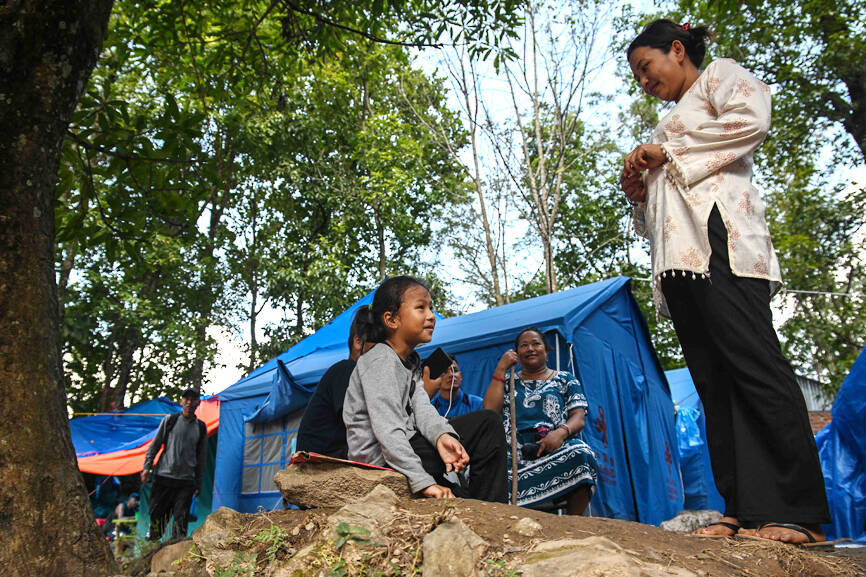
Photo: AFP
“Where will the government settle us?”
Dangol lost 18 relatives in the disaster, as well as two four-story houses. Four employees from her hotel are still missing. “We just want somewhere to live, we don’t need anything more,” she said. “That is what worries us more than anything else.”
Prime Minister Balendra Shah told the UN last month that the flooding “was a warning to the world” about the rising dangers of climate change.
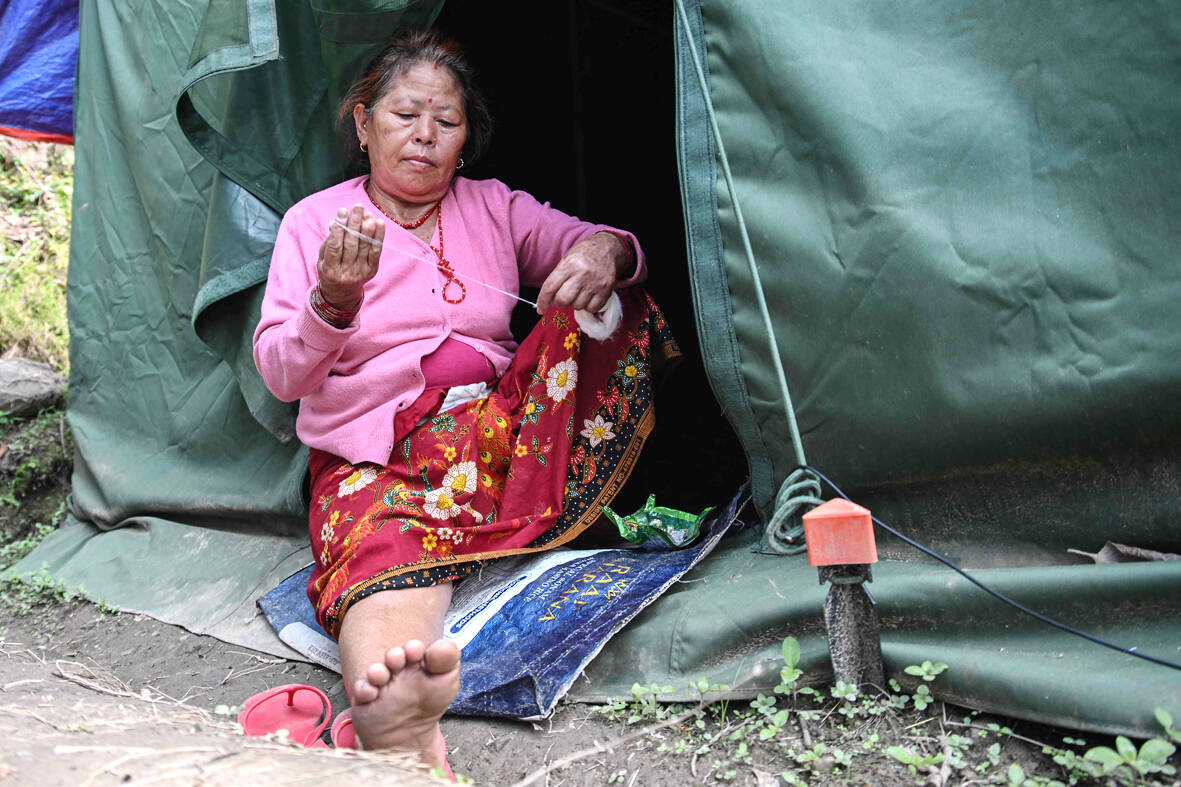
Photo: AFP
Government report shows that more than 7,500 private houses were damaged in the floods.
‘NO PROPER PLACE’
In Rasuwa district alone, more than 1,000 people are in temporary shelters, said Kamal Prasad Pandey, the district’s chief administrative officer.
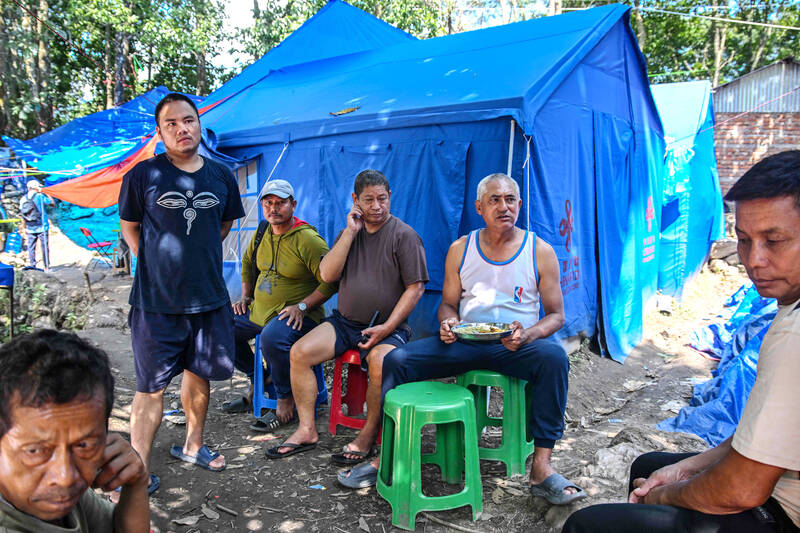
Photo: AFP
“We are also equally concerned about their permanent settlement, their hygiene and mental health issues,” he said.
Aarati Magar, 26, who lost her newly opened hotel in the disaster, lives in the same plot in a tent with her daughters, aged eight and three, worrying about their safety and education.
“It is tough to stay here. There is no bathing place and no proper place to live,” she said. For 58-year-old Narayan Man Dangol, the prospect of spending months in a tent is particularly worrying as winter approaches. “I don’t see a situation where we can stay in the tent for a long time,” he said.
“The wind will carry it away, and then it will rain again. This is just cloth. Living inside a cloth house is very difficult,” he said.
He said he had lost his life’s earnings. “Life will never be the same for us, we can no longer work in the fields and earn at this age,” he said.
‘RESTORE THEIR LIVELIHOODS’
Dharam Raj Uprety, chief of Nepal’s disaster agency, said authorities were “moving to the search and recovery phase”, and were working on “transitional shelters and identifying resettlement areas.” Families have also lost businesses, jobs and access to essential services, leaving many uncertain about how they will rebuild their lives.
“Recovery is about much more than rebuilding damaged infrastructure,” said Kyoko Yokosuka, the UN Development Program head in Nepal.
“It is about helping people restore their livelihoods, reopening local economies, restoring essential services and ensuring communities can move forward with dignity and hope,” she said.
For Dangol, the former hotel owner, the immediate concern is finding somewhere safe to live.
“We were victims of this flood, but we don’t want the next generation to be homeless like us,” she said.
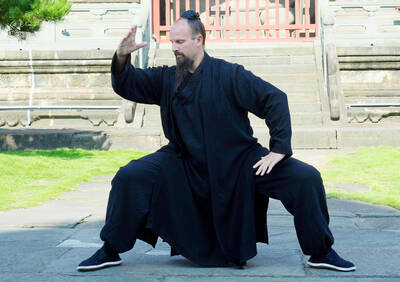
There was a time when Chinese master Yuan Shimao thought martial arts were all about punching and kicking. As a young practitioner, he focused on speed and strength. “I trained that way for many years without becoming still enough to search within myself,” said Yuan, who founded a kung fu academy in central China in 2004. “But as you gradually settle into stillness, you begin to understand what the scriptures mean by spirit,” he added. “You can begin to rediscover yourself.” That process is known as “entering the Dao” in martial arts. It is a guiding principle at Yuan’s academy in the sacred

There was a time, a few decades ago, when the men who owned the world’s biggest pornography businesses were happy to be famous. They paraded a lifestyle they hoped looked glamorous, appearing in public dressed in silk pajamas or with a woman in swimwear on each arm. Porn moguls like Hustler’s Larry Flynt or Playboy’s Hugh Hefner were household names. “Say what you want about these old perverts, who once set the tone of our sexual culture, but at least you knew who they were and what they were selling,” Patricia Nilsson writes in her new book, Guilty Pleasure: The Pornification

In 1904 the Japanese introduced caning to Taiwan. As a punishment, caning was applied by the Japanese to Taiwanese and Chinese subjects, never to the Japanese themselves (it had been outlawed in Japan in 1882). An imperial and colonial act, caning thus functioned to define and display social class boundaries. So it is with the new legislation permitting caning proposed by Chinese Nationalist Party (KMT) legislators last week. According to the KMT proposal, individuals committing major fraud, aggravated sexual assault, driving under the influence of drugs and child abuse may be subject to caning. These are high-profile offenses that generate great
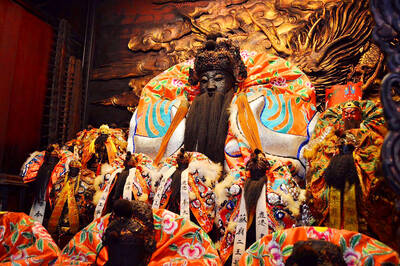
OCT. 5 to OCT. 11 Many worshippers of Taoist deity Lord Su (蘇府王爺) had never witnessed his “north-south grand inspection tour” of central Taiwan. The historic procession last took place in 1969, and before that, in 1893. Lukang’s Fengtian Temple (奉天宮) in Changhua County last Sunday completed Lord Su’s sixth grand inspection tour ever, featuring its three main statues. Why did it take 57 years for the event to happen again? Temple officials say the procession is held only when a spirit medium receives instructions from Lord Su. Folklorist Lee Hsiu-e (李秀娥) writes in a study of Fengtian Temple’s grand


 RSS
RSS