


Last year’s Superman ended with Iggy Pop singing “Because I’m a punk rocker, yes I am” — an ironic coda for a superlatively square hero. But it rings straightforwardly true for Superman’s cousin.
Milly Alcock’s Kara Zor-El, or Supergirl, sports not a spandex suit but a Blondie T-shirt. When we meet her in Supergirl, she’s been on an interstellar bender for days. She’s more Courtney Love than Clark Kent.
Nonchalant and sarcastic, Kara is also a little Han Solo-ish, you might say, given that she moves capriciously through the galaxy in her junky spaceship while getting in fights in extraterrestrial bars. She’s a welcome, jagged riff on more buttoned-up superheroes, and Alcock is terrific in the role. If only Supergirl was as good as she is.
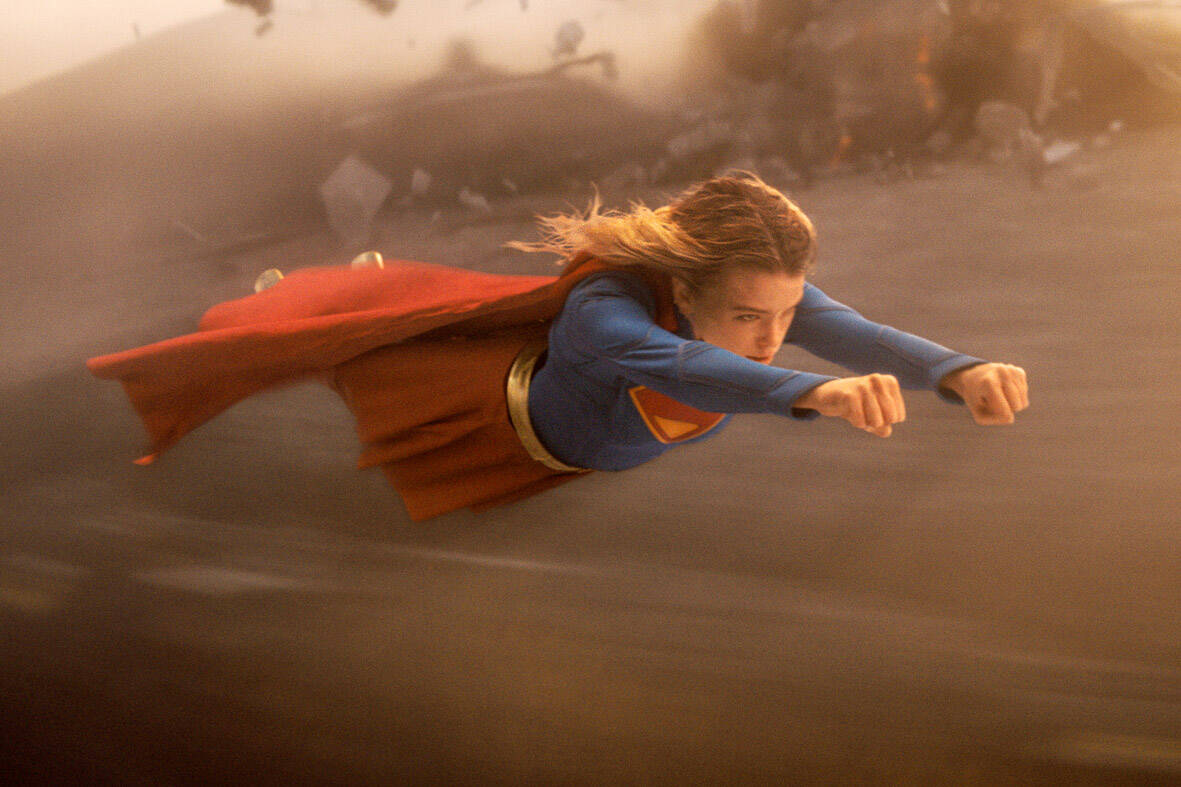
Photo: AP
While the latest DC release, and second under James Gunn’s stewardship, has its moments, Supergirl struggles to match Kara’s punk-rock energy with an equally spirited supporting cast and story.
Skepticism seems to have gathered for Supergirl ahead of its release. Many fans have argued it wasn’t the right next step for DCU. But I’m not so sure. Alcock’s breezy cameo in Superman was one of that movie’s highlights. Handing the follow-up to her, and her faithful floating dog Krypto, strikes me as an extremely natural next step. When in doubt, follow the dog.
And much of Supergirl is winning. It resides almost entirely in space, touching down only momentarily on Earth. In its consistently creative production design, clever needle drops and underdog story arc, Supergirl resides a little closer to Gunn’s Guardians of the Galaxy movies than other DC entries. Its outer space is filled with cosmic detritus, mean characters and cute critters. Seth Rogen as the voice of a tiny alien co-piloting a space bus is an inspired concoction, as is a shabbier sci-fi realm with rest stops along the intergalactic highway.
Kara, drunk and disheveled as she celebrates her 23rd birthday, prefers such environs even if it means, thanks to the distance from a yellow sun, her powers don’t work. But as much as she’d like to remain off the superhero grid, Kara is reluctantly compelled into action. A young girl, Ruthye Marye Knoll (Eve Ridley), whose family is slain by space pirates known as the Brigands, enlists her to avenge their deaths. Kara wants no part in it, but when the Brigand leader, Krem (Matthias Schoenaerts), poisons Krypto, she sets off to get the antidote that hangs around Krem’s neck.
Little in the story, scripted by Ana Nogueira and inspired by the comic-book series Supergirl: Woman of Tomorrow, will bowl you over for its originality. But it’s a sturdy enough vessel — a Western, really, with Kara playing the hired-gun part of John Wayne in True Grit. It inevitably leads Kara to superhero maturity, with Krypton flashbacks that reveal the roots of the pain she’s trying to drink away.
Less ideal are some of Kara’s companions. Ruthye is too soberly hellbent on revenge to be much fun. Jason Momoa’s bounty hunter, Lobo, who rides a space motorcycle and looks ready to sing for a Kiss cover band, is a bit much even for a movie with a flying dog. Schoenaerts menacingly grins his way through the movie, with appealingly bulging eyes. But no characteristic of the bland Krem is as interesting as his studded face.
His metallic touches and the movie’s biker-gang flourishes, not to mention a plot that involves “brides” trapped by the all-male Brigands, will no doubt bring Mad Max to mind. But to the credit of Supergirl, the film often feels like it’s striving for fresh ground in big-screen superhero-dom. Modest Mouse and Jenny Lewis are heard here, after all. Director Craig Gillespie, who made I, Tonya and Dumb Money, utilizes the IMAX cameras to vivid effect, even if his grip on the material isn’t convincing.
The zip the movie needs isn’t quite there, though. Alcock does her best to keep Supergirl aloft, but she’s let down by too much of what’s around her — most of whom are men, truth be told. Maybe the mistake all along was taking the dog out of the story. John Wayne, after all, always had his horse.
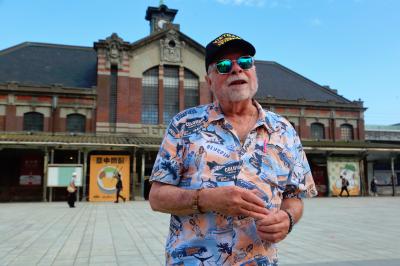
I was 18 and a naive US Air Force airman when I first set foot on Taiwan in 1968. I left as a more mature, somewhat wiser 23-year-old. Despite transitioning to an adult in those important, formative years, I didn’t think much about coming back. Until recently. Last month, I returned to Taiwan for the first time in 53 years. It was not even remotely like the country I left in 1973. When I departed, Taiwan was a slow-moving, impoverished developing nation under martial law. Outside of the cities, people in conical bamboo hats hand-tilled expansive rice fields that dominated the countryside.

The last time Taiwan’s foreign correspondents were invited to a special briefing with a sitting president was in 2015. That was two presidents ago under Ma Ying-jeou (馬英九). But Thursday morning, President William Lai (賴清德) welcomed the nation’s international press corps warmly, speaking specifically to the theme of press freedom. Lai addressed Taiwan’s foreign press corps saying, “You live, work and report in Taiwan.” “Thank you for your professionalism and upholding the spirit of press freedom,” he continued. “As you engage in your work of journalism, you let the world see Taiwan.” The timing of this event, hosted by the Taiwan Foreign
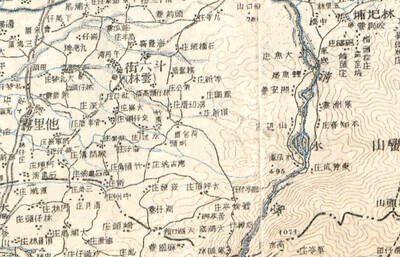
June 22 to June 28 “There are no good civilians within Yunlin’s jurisdiction,” declared Yunlin subprefecture head Yunoshin Matsumura before launching a bloody suppression campaign. Between June 19 and June 22, 1896, thousands of unarmed villagers were killed. Official reports recorded 4,947 houses burnt down in 55 settlements spanning today’s Douliu (斗六), Dounan (斗南), Gukeng (古坑), Tapi (大埤), Cihtong (莿桐), Linnei (林內) townships, as well as Jhushan (竹山) in Nantou County. Angukeng Village (庵古坑), located near the resistance’s mountain headquarters, suffered the heaviest destruction, with 505 households affected. Even Japanese accounts noted the
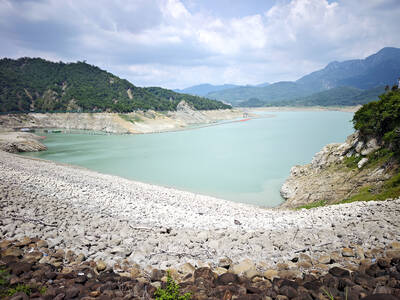
The rarest media reports involve things that work. It is not news that the traffic lights function normally or medicines are dispensed routinely from hospital pharmacies. Trains come and go on time with nary a peep from the media. Only when systems fail do reporters rush to the scene. The first half of the year saw the worst drought in 75 years in Taiwan. The Water Resources Agency (WRA) said that reservoirs south of the Hsinchu-Yilan line this winter received between 7 and 37 percent of the rainfall they received during the same period last year. Rainfall at reservoirs in Hsinchu


 RSS
RSS