


The dancers of Legend Lin Dance Theatre (無垢舞蹈劇場) are no less captivating in a performance where they don’t dance: Intimate Encounters (觸身·實境). Unfortunately, despite the performers’ undeniable magnetism, staying focused throughout the 2.5-hour performance is still a difficult task.
Intimate Encounters depicts the preparation the dancers undergo to prepare for their characters, White Bird and Sanwoo, from the acclaimed work Song of Pensive Beholding (觀). Originally premiering in 2014, the work finds lead dancers Wu Ming-jing (吳明璟) and Lee Gen-ang (李亙卬) slowly transforming “physically, mentally, outward and inward” onstage.
The performance begins with the entire troupe chanting the Heart Sutra from Mahayana Buddhism, which choreographer Lin Lee-chen (林麗珍) says is an integral part of the piece. Wu and Lee each claim half of the stage and begin the first movement: combing their hair. Every step is ritualized and carried out in silence.
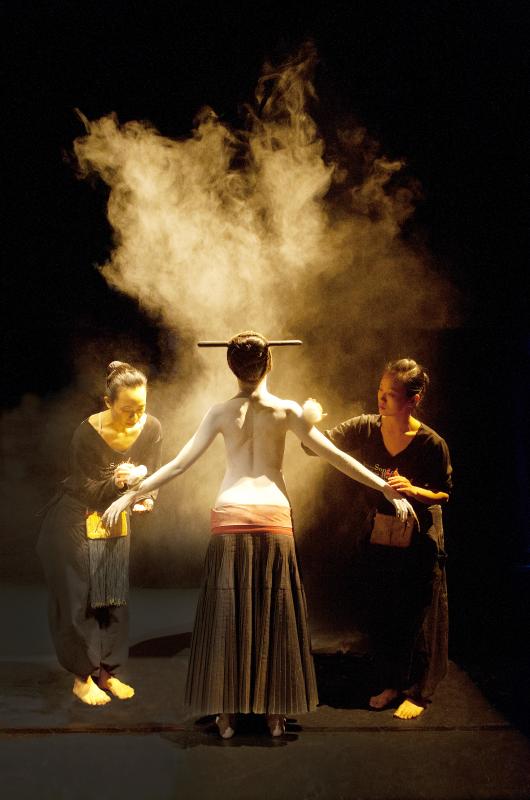
Photo courtesy of Legend Lin Dance Theatre
They stand while helpers carefully sponge paint onto their bodies in long strokes and quick dabs. Li is bronzed and earthen, planted firmly on the ground. Wu is ghostlike in white, swaying balletically as powder drifts through the air. The transformation process is mesmerizing — but soon turns repetitive.
Intimate Encounters is a test of patience and focus, for both the performers and audience. I felt embarrassed whenever I shifted in my seat, while those onstage never betrayed the twitch of a muscle.
For those without a preexisting obsession with dance or Lin’s work, the performance could feel tedious. Nevertheless, the ripples of taut muscles and single-minded intensity of the performers make for a far more intriguing focus than candle-gazing to bring you into a meditative state.
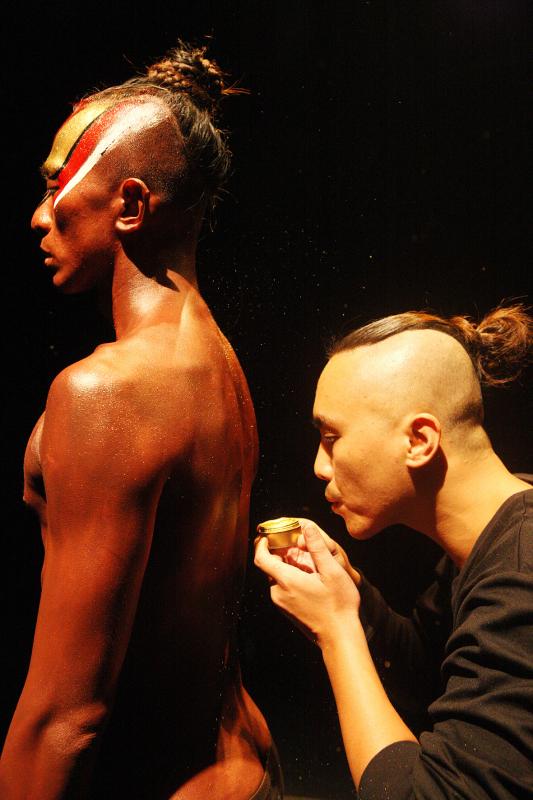
Photo courtesy of Legend Lin Dance Theatre
When Wu and Lee are finally polished to perfection, meticulously clothed and accessorized, they glide towards each other in the opening steps of Song.
Then the lights dim, the music stops. The dancers are ready, but the performance has ended. Despite my exhaustion, a sudden wave of disappointment surges up.
It feels almost voyeuristic to be granted access to the inner workings of this preparation, watching them examine a body part in the mirror or reapply a dab of makeup. The dancers are no less controlled and graceful than they’d be in a big production on a national stage, but a sense of intimacy is present.
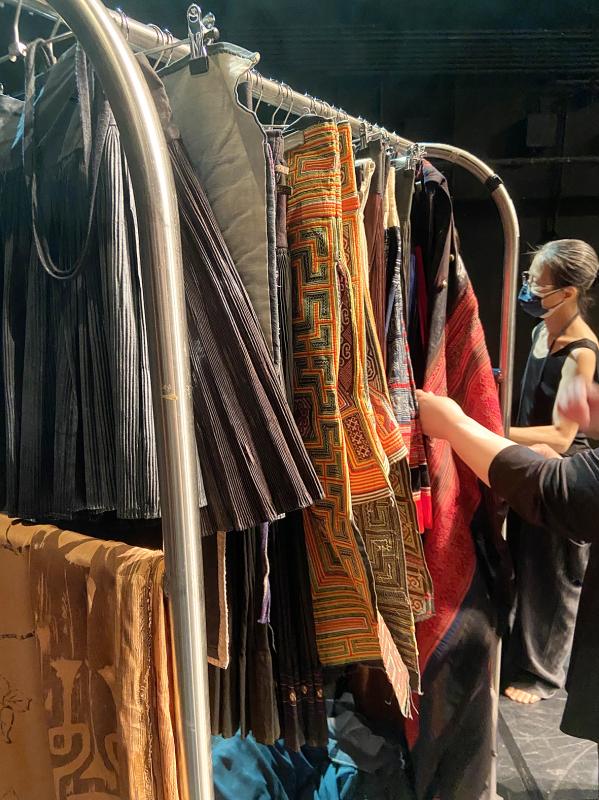
Photo: Deanna Durben
A few times during the performance, something falls in the audience, and I feel a collective flinch. No one wants the trance-like state to be broken. I don’t know how much time has slipped by, and I’m not sure I want to find out.

Taiwan’s English education system is being pulled apart by three opposing forces. Bilingual Nation 2030 pulls students toward English and global communication. Artificial Intelligence (AI) readiness pulls them toward digital judgment, verification and AI-mediated work. But Taiwan’s old exam culture pulls them back toward memorization, grammar drills, timed reading and correct answers. If the education system keeps using old exams to define success, it risks producing graduates who are neither genuinely bilingual nor genuinely AI-ready, but trained for tasks machines can already perform. The first force is Bilingual Nation 2030. Launched in 2018, the policy aimed to “help Taiwan’s workforce connect
It seems every few days one bumps into one of those “real man” comments in which Taiwan is urged to “face reality” or similar, and “make a deal,” with the speaker implying that soon it will be too late. “Deal” advocates always present themselves as having a superior grip on reality, and the manly ability to make the “hard choice.” Their testosterone-laden language often echoes that of Taiwan sellout advocates. Note that such commentary always specifies a process (“make a deal, work with, make progress”), never the end state of what occupation by a violent authoritarian colonialist state will entail. In

There are shadowy cabals plotting to sell out Taiwan to be annexed by China, by invasion if necessary. Fortunately, they are buffoons. In 2019, former Bamboo Union gangster and founder of the China Unification Promotion Party (CUPP), Chang An-le (張安樂, colorfully known as “White Wolf”), led a protest at the Legislative Yuan against comments made by then-premier Su Tseng-chang (蘇貞昌) that in the event of an attack by China, he would never surrender, but would protect the nation by fighting to the end, even if he only had a broom. Chang had party members bring a wooden casket that they
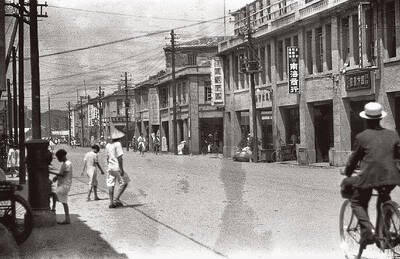
June 1 to June 7 "If all Taiwanese were as afraid of dying as you, then what would happen?” Physician Shih Chiang-nan (施江南) reportedly said this to his wife Chen Chiao-tung (陳焦桐) after she urged him to stop intervening on behalf of Taiwanese soldiers stranded overseas after serving in the Japanese Army during World War II. Shih had clashed with high-ranking officials over the issue, engaged in several heated arguments with Taiwan governor-general Chen Yi (陳儀) and allegedly shouted at general Ko Yuan-fen (柯遠芬), chief of staff of the Taiwan Garrison Command, over


 RSS
RSS